

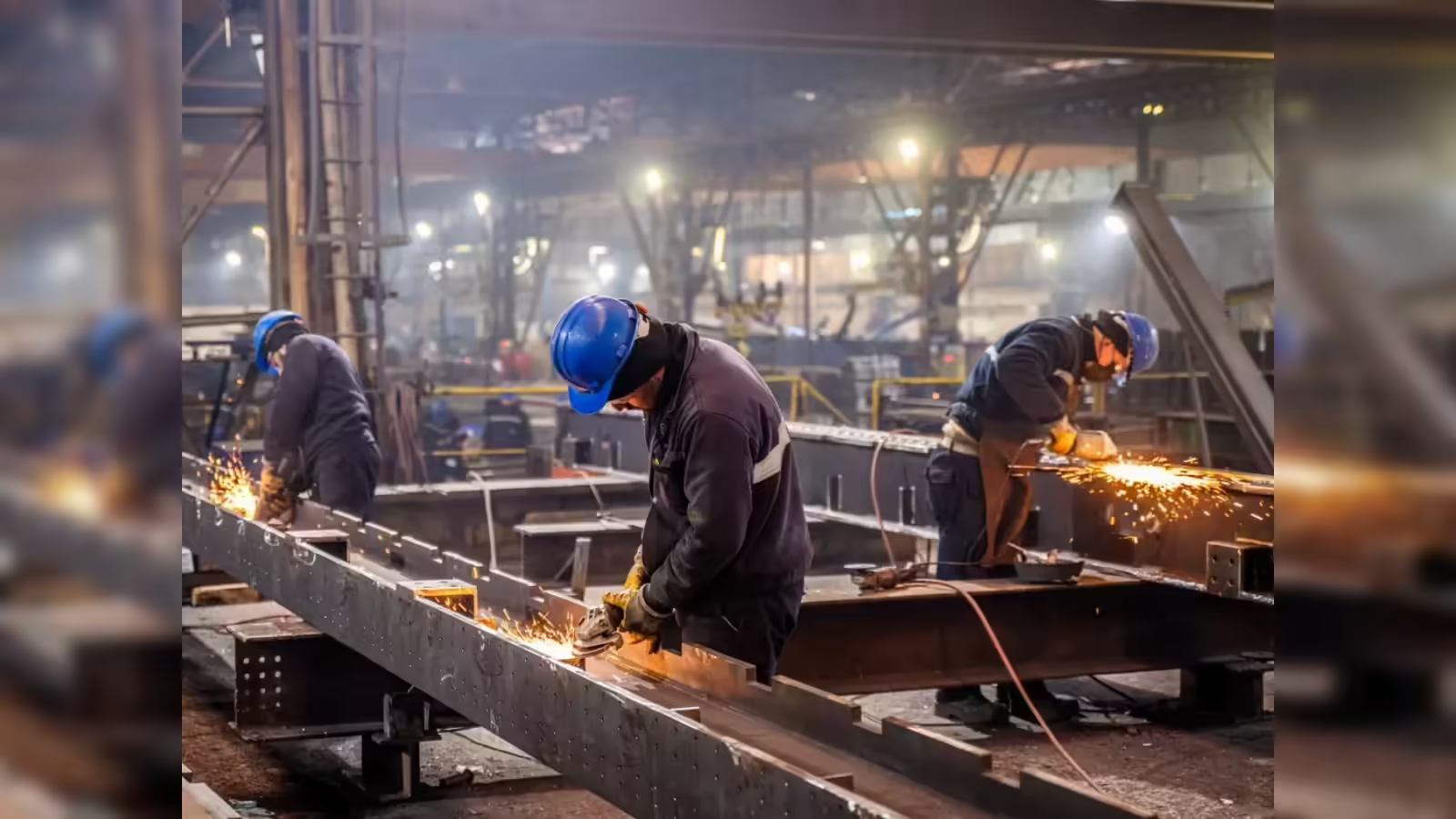
India’s manufacturing push in 2026 is creating fresh opportunities for Tier-2 industrial hubs across the country. Rising domestic production, infrastructure investment, and supply chain diversification are helping smaller industrial cities attract factories, logistics networks, and employment growth beyond traditional metro regions.
India’s manufacturing sector is undergoing a major expansion phase as government policies, global supply chain shifts, and domestic demand encourage businesses to increase local production capacity. While large industrial centers such as Pune, Chennai, Ahmedabad, and Bengaluru continue to dominate manufacturing output, Tier-2 industrial hubs are becoming increasingly important to the country’s economic strategy.
Cities like Nagpur, Aurangabad, Rajkot, Coimbatore, Indore, Vadodara, Surat, Kanpur, Hosur, and Lucknow are attracting new manufacturing investments across sectors including electronics, automobiles, textiles, engineering goods, pharmaceuticals, renewable energy equipment, and consumer products.
This shift reflects a broader attempt to decentralize industrial growth and reduce dependence on overcrowded metro regions. Lower land costs, improving logistics infrastructure, and state-level industrial incentives are making smaller cities more attractive for manufacturers seeking long-term expansion.
Industry experts believe India’s manufacturing growth in the coming decade will rely heavily on the development of regional industrial ecosystems.
Government Policies Are Accelerating Industrial Expansion
Government-backed manufacturing initiatives have played a major role in strengthening Tier-2 industrial hubs. Programs linked to Make in India, the Production Linked Incentive scheme, industrial corridor development, and logistics modernization are encouraging businesses to expand domestic manufacturing operations.
Several states are actively competing to attract investments through tax benefits, faster approvals, land allocation support, and infrastructure upgrades. Industrial parks and special economic zones are being developed in multiple non-metro regions to support factory expansion and export-oriented production.
Improved highway connectivity, freight corridors, railway modernization, and port-linked logistics systems are also helping smaller industrial cities integrate more efficiently into national supply chains.
For manufacturers, operating outside major metro cities can significantly reduce operational expenses. Land acquisition, labor costs, and warehousing expenses are often lower in Tier-2 locations compared to large urban centers where industrial expansion has become expensive and space-constrained.
This cost advantage is encouraging both domestic and international companies to diversify production locations.
Tier-2 Cities Are Becoming Specialized Manufacturing Clusters
Many Tier-2 industrial hubs are developing sector-specific strengths that attract related businesses and suppliers. Coimbatore continues strengthening its engineering and textile industries, Rajkot remains important for machine tools and auto components, while Surat is expanding its textile and diamond-related manufacturing ecosystem.
Nagpur and Aurangabad are seeing increased activity in logistics-linked manufacturing and automobile components due to their strategic geographic positioning. Uttar Pradesh and Tamil Nadu are also expanding electronics and mobile manufacturing operations in multiple non-metro districts.
Cluster-based industrial development helps businesses reduce transportation costs and improve supplier coordination. When manufacturers, vendors, logistics providers, and skilled labor networks operate within the same region, production efficiency improves significantly.
Local MSMEs are also benefiting from these developments by becoming suppliers to larger manufacturing companies. Small and medium businesses involved in packaging, engineering support, fabrication, warehousing, and maintenance services are gaining new opportunities through industrial expansion.
This interconnected ecosystem is helping smaller cities build long-term industrial sustainability rather than depending only on isolated factories.
Employment and Skill Development Opportunities Are Increasing
India’s manufacturing push is generating employment opportunities across multiple skill levels in Tier-2 industrial regions. Factory operations, logistics management, machine maintenance, packaging, transportation, and technical support services are creating demand for both skilled and semi-skilled workers.
The expansion of industrial activity is also encouraging vocational training programs and technical education partnerships. Polytechnics, industrial training institutes, and engineering colleges in smaller cities are increasingly aligning courses with manufacturing sector requirements.
Many workers who previously migrated to metros for industrial jobs are now finding opportunities closer to their hometowns. This may gradually reduce migration pressure on major urban centers while supporting regional economic growth.
Women’s participation in manufacturing-related employment is also increasing in sectors such as textiles, electronics assembly, food processing, and packaging industries.
At the same time, automation and smart manufacturing technologies are changing workforce requirements. Companies are increasingly looking for employees with digital operations knowledge, machine-handling skills, and basic automation awareness.
Global Supply Chain Shifts Benefit Indian Manufacturing
Global supply chain diversification has created additional opportunities for India’s manufacturing sector. Many international companies are seeking alternative production locations outside China to reduce supply chain risks and improve geographic diversification.
India is attempting to position itself as a long-term manufacturing destination by strengthening domestic production capabilities and export infrastructure. Tier-2 industrial hubs are benefiting because businesses require multiple production centers rather than relying only on large metro-based industrial clusters.
Electronics manufacturing, renewable energy equipment production, auto components, and specialty chemicals are among the sectors seeing increased investment interest.
However, challenges remain. Infrastructure quality still varies across states, and businesses often face delays related to land approvals, utility access, and logistics bottlenecks in certain regions.
Manufacturers also continue to emphasize the need for stable policy frameworks, faster regulatory clearances, and improved workforce training systems.
What This Means for India’s Economic Future
The rise of Tier-2 industrial hubs reflects a broader transformation in India’s economic structure. Manufacturing growth is becoming geographically distributed instead of remaining concentrated in a few industrial centers.
This shift can strengthen regional economies, generate employment, support MSMEs, and improve India’s export competitiveness over the long term. It may also help reduce economic inequality between metro and non-metro regions.
For investors and businesses, the message is becoming increasingly clear. India’s next manufacturing growth story may emerge not only from established industrial cities but also from fast-growing regional production hubs.
As infrastructure development and industrial investments continue expanding in 2026, Tier-2 cities are expected to play a larger role in shaping India’s manufacturing future.
Takeaways
- Tier-2 industrial hubs are gaining manufacturing investments across multiple sectors
- Government initiatives and lower operating costs are supporting regional expansion
- Specialized manufacturing clusters are improving supply chain efficiency
- Employment opportunities and industrial training demand are increasing in smaller cities
FAQs
Why are manufacturers expanding into Tier-2 industrial hubs?
Lower land costs, improving infrastructure, state incentives, and reduced operational expenses make Tier-2 cities attractive for industrial expansion.
Which sectors are growing in smaller industrial cities?
Automobiles, electronics, textiles, engineering goods, pharmaceuticals, renewable energy equipment, and logistics-linked manufacturing are expanding rapidly.
How are local businesses benefiting from manufacturing growth?
MSMEs are gaining opportunities as suppliers, logistics providers, maintenance contractors, and packaging partners for larger manufacturing companies.
What challenges still affect Tier-2 manufacturing hubs?
Infrastructure gaps, regulatory delays, logistics bottlenecks, and workforce training limitations remain key challenges.










Leave a comment