

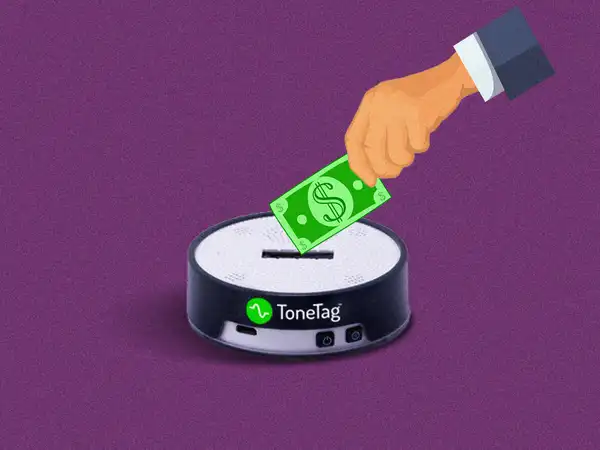
Bengaluru based ToneTag has secured ₹35.16 crore in fresh funding from Qualcomm Ventures, strengthening its position in sound based contactless payments. The investment signals growing interest in alternative payment technologies that can operate beyond traditional NFC and QR infrastructure.
Bengaluru’s ToneTag secures ₹35.16 crore from Qualcomm Ventures at a time when digital payment innovation in India is moving beyond QR codes and NFC terminals. The funding round highlights investor confidence in sound wave based technology that enables secure contactless transactions using audio signals. As India’s digital payments ecosystem continues to expand, such differentiated infrastructure solutions are attracting strategic capital.
ToneTag’s proprietary technology uses encrypted sound waves to transmit payment data between devices. Unlike near field communication, which requires specialized hardware, sound based payments can function on existing speakers and microphones. This lowers the barrier for merchant adoption, especially in semi urban and rural markets where hardware upgrades may be costly.
How Sound Based Contactless Payments Work
ToneTag’s platform leverages acoustic communication protocols to enable transactions. When a customer initiates a payment, encrypted audio signals are transmitted between devices to authenticate and process the transaction. These signals are inaudible to humans but can be recognized by compatible systems.
The advantage lies in hardware independence. Many point of sale terminals and smartphones already contain speakers and microphones. By enabling communication through these components, merchants can adopt contactless functionality without investing in new NFC enabled devices.
Security remains central to adoption. The company integrates encryption layers and tokenization protocols to ensure transaction integrity. This aligns with India’s broader digital payments framework, which emphasizes data protection and secure authentication.
Strategic Backing From Qualcomm Ventures
The ₹35.16 crore investment from Qualcomm Ventures carries both financial and strategic significance. Qualcomm has deep expertise in chipsets, wireless communication, and embedded systems. Its backing suggests long term interest in enabling innovative payment interfaces that can integrate with evolving hardware ecosystems.
Strategic investors typically provide more than capital. Access to chipset level optimization, device level integration, and global technology networks can accelerate product deployment. For ToneTag, this may open opportunities to integrate sound based payment capabilities into a wider range of devices, including IoT systems and smart terminals.
The investment also reflects broader global trends. As contactless payments become standard in urban markets, companies are exploring alternatives that work in low connectivity environments or on legacy hardware.
Implications for India’s Digital Payments Ecosystem
India has witnessed exponential growth in digital transactions over the past decade. Unified Payments Interface has enabled real time bank to bank transfers through QR codes and mobile apps. However, gaps remain in certain use cases such as offline payments, feature phone compatibility, and specialized enterprise transactions.
Sound based contactless payments can complement existing systems. In areas with inconsistent internet connectivity, acoustic authentication may support offline transaction validation before synchronization. For small merchants in Tier 2 and Tier 3 cities, minimizing hardware costs can encourage digital adoption.
Public transport systems, retail chains, and quick service restaurants may also explore such technologies for faster checkout experiences. Reduced friction at point of sale enhances customer convenience and increases transaction throughput.
Opportunities Beyond Retail Payments
The scope of sound wave communication extends beyond retail. Enterprise authentication, access control systems, and IoT device pairing can benefit from acoustic protocols. For instance, industrial equipment or connected appliances may use secure sound signals for device authentication without relying on Bluetooth or Wi Fi.
Healthcare and financial services sectors can also deploy such systems for secure data exchange in controlled environments. The ability to transmit encrypted data through standard hardware components reduces infrastructure complexity.
As India pushes for greater financial inclusion, innovative payment interfaces play a role in reaching underbanked populations. Solutions that operate across basic devices can bridge adoption gaps in regions where advanced hardware penetration remains limited.
Competitive Landscape and Challenges
Despite its promise, sound based contactless payments operate in a competitive environment. NFC technology remains dominant in developed markets, and QR code based systems are deeply entrenched in India. Consumer awareness and merchant training will influence adoption speed.
Interoperability with existing banking networks and regulatory compliance are critical. Payment service providers must align with guidelines on security standards, data privacy, and fraud prevention. Scaling the ecosystem requires partnerships with banks, fintech platforms, and terminal manufacturers.
Market education will also matter. Users must understand how the technology works and trust its security. Demonstrating seamless performance in high volume transaction environments will be essential for wider rollout.
Takeaways
ToneTag raises ₹35.16 crore from Qualcomm Ventures to expand sound based payments
Acoustic communication enables contactless transactions without new hardware
Strategic backing may accelerate integration with device and chipset ecosystems
Adoption in Tier 2 and Tier 3 markets could enhance digital inclusion
FAQs
Q1. What is sound based contactless payment technology?
It uses encrypted audio signals transmitted between devices to authenticate and process transactions without relying solely on NFC or QR codes.
Q2. How does this benefit small merchants?
Merchants can enable contactless payments using existing hardware components like speakers and microphones, reducing infrastructure costs.
Q3. Why is Qualcomm Ventures investing in ToneTag?
The investment aligns with Qualcomm’s focus on wireless communication innovation and expanding device level capabilities.
Q4. Will this replace QR codes and NFC?
It is more likely to complement existing systems by serving use cases where traditional contactless technologies face limitations.












Leave a comment