

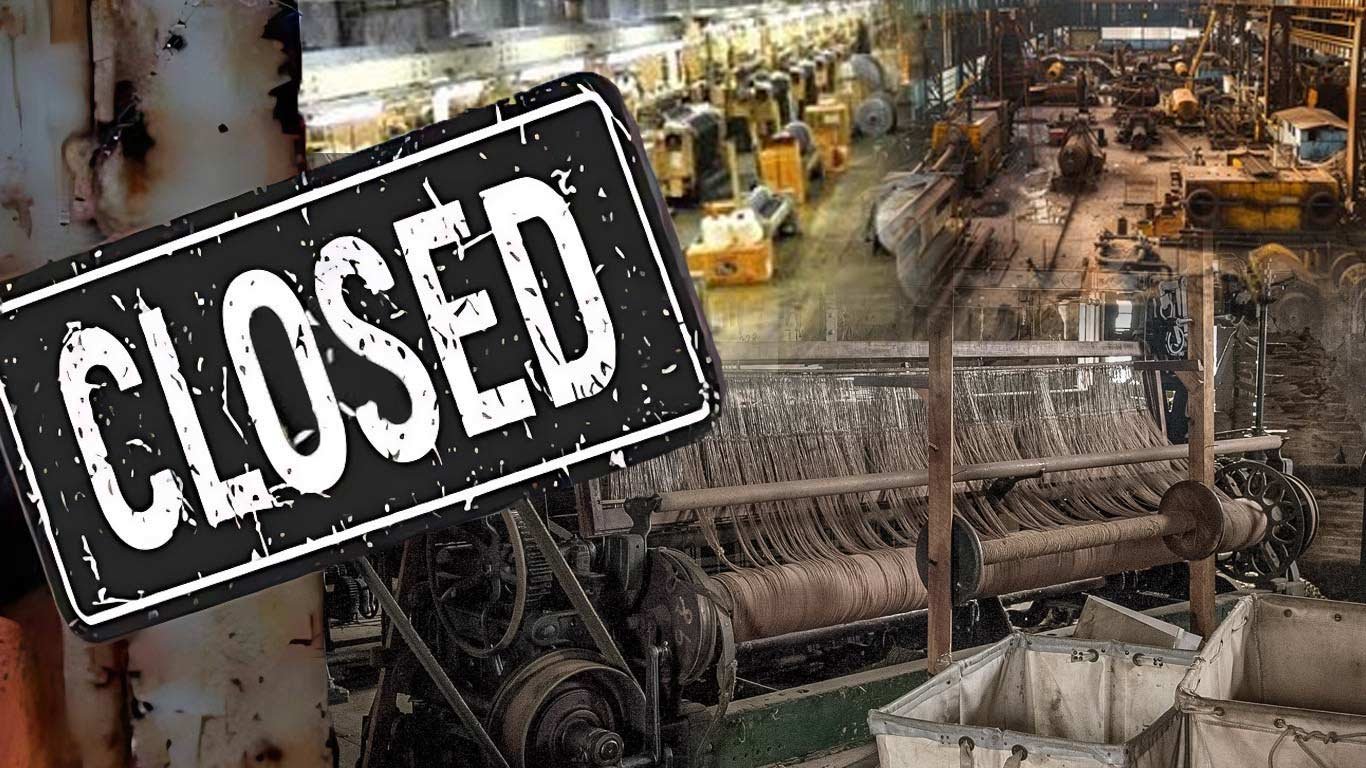
India’s export slowdown concerns are becoming more visible in 2026 as global demand weakens and trade uncertainties persist. For MSMEs in manufacturing clusters, this trend is directly affecting order volumes, cash flows, and capacity utilisation across key sectors.
Export slowdown signals emerging across key sectors
India’s export slowdown concerns are linked to softer global demand, particularly in major markets such as the US and Europe. Merchandise export growth has shown periods of moderation due to inflationary pressures, geopolitical tensions, and tighter monetary conditions in developed economies.
Secondary keyword: India export trends 2026
Sectors like textiles, engineering goods, and gems and jewellery have reported fluctuations in export orders. These sectors are heavily dependent on external demand, making them sensitive to global economic cycles.
For MSMEs operating within manufacturing clusters, even small declines in export orders can create significant disruptions, as many units rely on consistent volume to maintain profitability.
MSMEs face pressure on orders and pricing power
Manufacturing MSMEs are among the most affected by export slowdowns because they often operate as suppliers within larger value chains. Reduced export demand from larger firms directly translates into fewer orders for smaller units.
Secondary keyword: MSME export challenges India
Clusters such as Tiruppur for textiles, Moradabad for handicrafts, and Rajkot for engineering goods are experiencing uneven demand patterns. Exporters are reporting delayed orders, smaller shipment sizes, and increased price negotiations from global buyers.
This reduces pricing power for MSMEs. Buyers are pushing for discounts, extended credit periods, or flexible delivery timelines. For small manufacturers with tight margins, this creates financial strain.
Working capital cycles becoming more stretched
One of the immediate impacts of export slowdown is on working capital. When orders decline or payments are delayed, MSMEs face liquidity challenges.
Secondary keyword: MSME working capital issues export
Export-oriented businesses typically operate on longer payment cycles compared to domestic trade. Any delay in receivables increases dependence on external financing.
Banks and NBFCs continue to lend, but credit access depends on financial health and past performance. MSMEs with weaker balance sheets may find it difficult to secure additional funding during periods of slowdown.
This creates a cycle where reduced orders and delayed payments limit the ability to invest in production or expansion.
Manufacturing clusters feel localized economic impact
Export slowdowns do not just affect individual businesses. They impact entire manufacturing clusters that depend on export-linked activity.
Secondary keyword: manufacturing clusters India MSME impact
In cluster-based economies, reduced production leads to lower employment, reduced wages, and decreased local spending. Ancillary units, logistics providers, and service businesses also feel the impact.
For example, a slowdown in textile exports affects not only garment manufacturers but also dyeing units, packaging suppliers, and transport operators.
This ripple effect makes export performance critical for the economic stability of many Tier-2 and Tier-3 regions.
Government support and policy response remain crucial
The government has introduced various measures over time to support exporters, including schemes like RoDTEP and export credit support. These initiatives aim to offset some cost disadvantages faced by Indian exporters.
Secondary keyword: export incentives India MSME
However, in a global slowdown scenario, policy support can only partially mitigate the impact. Structural issues such as logistics costs, compliance requirements, and currency fluctuations continue to influence competitiveness.
Efforts to diversify export markets and reduce dependency on a few geographies are gaining importance. MSMEs are increasingly exploring markets in Asia, Africa, and the Middle East to balance risks.
Digital platforms and e-commerce exports are also emerging as alternative channels for smaller exporters.
Shift toward domestic markets and diversification strategies
In response to export uncertainty, many MSMEs are looking to strengthen their domestic presence. India’s internal demand, while not immune to economic pressures, offers relatively more stability compared to global markets.
Secondary keyword: MSME domestic market shift India
Businesses are diversifying product lines, targeting new customer segments, and exploring B2B as well as direct-to-consumer channels within India.
Some manufacturers are also investing in value addition rather than competing purely on cost. This includes product innovation, branding, and quality upgrades.
While this transition takes time, it can help reduce overdependence on exports and create more resilient business models.
Long term outlook depends on global recovery and competitiveness
The long term trajectory of India’s exports will depend on global economic recovery, trade policies, and India’s ability to remain competitive in key sectors.
For MSMEs, adaptability will be critical. Businesses that can manage costs, maintain quality, and diversify markets are better positioned to navigate slowdowns.
The current phase highlights a structural reality. Export-led growth comes with exposure to global volatility, and MSMEs need to build buffers to sustain through cycles.
Takeaways
- Export slowdown is reducing order volumes and pricing power for MSMEs
- Working capital pressures are increasing due to delayed payments and lower demand
- Manufacturing clusters face broader economic impact beyond individual firms
- Diversification into domestic markets and new geographies is becoming essential
FAQs
1. Why are India’s exports slowing down in 2026?
Global demand has weakened due to inflation, economic uncertainty, and tighter financial conditions in key markets.
2. How does export slowdown affect MSMEs?
It reduces orders, impacts cash flow, and increases dependence on external financing.
3. Which sectors are most affected?
Textiles, engineering goods, and handicrafts are among the sectors facing demand fluctuations.
4. What can MSMEs do to manage export slowdown?
They can diversify markets, strengthen domestic sales, and improve operational efficiency.











Leave a comment