

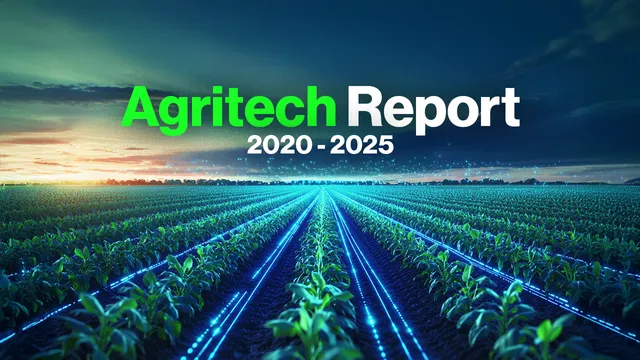
Agritech startups in India are raising fresh capital ahead of the Kharif season 2026, signaling renewed investor interest in agriculture-focused innovation. The timing aligns with seasonal demand cycles, as startups prepare to scale solutions for farmers during peak sowing activity.
Agritech Funding Ahead of Kharif Season 2026
Agritech startups raising fresh capital ahead of Kharif season reflects a cyclical funding pattern linked to agricultural timelines. Investors typically deploy capital before the sowing season to enable startups to expand distribution, strengthen supply chains, and onboard farmers.
The Kharif season, which begins with the monsoon, is critical for crops such as rice, maize, and cotton. This period drives demand for seeds, fertilizers, crop advisory, and financing solutions, making it a key revenue window for agritech companies.
In 2026, funding activity is showing signs of stability after a cautious phase in previous years. Investors are focusing on startups with proven models, measurable impact, and strong farmer networks.
Early-stage and growth-stage deals are both visible, with capital being used for expansion into new geographies and product diversification.
Key Segments Attracting Investment
Agritech investment trends indicate strong interest in specific segments. Input marketplaces that connect farmers with seeds, fertilizers, and equipment suppliers are receiving consistent funding.
Farm management and advisory platforms using data analytics, satellite imagery, and weather insights are also gaining traction. These solutions help farmers improve yield and reduce risks.
Agri-fintech is another major focus area. Startups offering credit, insurance, and payment solutions tailored for farmers are attracting capital due to the large untapped market.
Supply chain and logistics platforms that streamline farm-to-market linkages are also drawing investor attention. These startups address inefficiencies in storage, transportation, and price discovery.
The common factor across these segments is their ability to solve real operational challenges in agriculture.
Key Players to Watch in the Agritech Space
Several agritech startups are emerging as key players to watch in 2026. Companies operating in input marketplaces, precision farming, and agri-finance are leading the funding activity.
Startups that have built strong on-ground networks with farmers are particularly attractive to investors. Their ability to scale through local partnerships and field teams provides a competitive advantage.
Platforms integrating multiple services such as inputs, advisory, and market access are also gaining attention. These integrated models create higher engagement and customer retention.
In addition, startups focusing on specific crops or regions are being recognised for their deep domain expertise. This specialised approach often leads to better product-market fit.
While the ecosystem is still evolving, a clear set of leaders is beginning to emerge based on execution and scalability.
Why Timing Before Kharif Matters
The timing of funding rounds before the Kharif season is strategic. Startups need working capital to stock inventory, expand field operations, and run farmer acquisition campaigns.
Monsoon-dependent agriculture creates a narrow window for execution. Companies must be ready with their products and services before sowing begins.
Funding during this period allows startups to capture maximum demand and generate revenue during the season. It also helps in building relationships with farmers that can be leveraged in subsequent cycles.
For investors, deploying capital ahead of Kharif provides an opportunity to evaluate performance within a defined timeframe.
Challenges in Scaling Agritech Solutions
Despite increased funding, agritech startups face several challenges. Farmer trust remains a critical factor. Adoption of new technologies and platforms requires consistent engagement and demonstration of value.
Infrastructure limitations, including connectivity and logistics, can affect service delivery in remote areas. Startups need to invest in on-ground operations to overcome these barriers.
Weather variability and climate risks add another layer of uncertainty. Crop outcomes directly impact farmer income, which in turn affects demand for agritech services.
Unit economics can also be challenging. Serving dispersed rural customers involves higher operational costs, making scalability complex.
Startups that can balance growth with operational efficiency are more likely to succeed in the long term.
Outlook for Agritech Funding in 2026
The outlook for agritech funding in 2026 remains cautiously optimistic. Investors are interested in the sector’s long-term potential but are prioritising sustainable business models.
Integration of technology with traditional agriculture practices is expected to drive growth. Startups that can demonstrate clear impact on productivity and farmer income will continue to attract capital.
Government support through policies and digital infrastructure is also expected to play a role in accelerating adoption.
As the ecosystem matures, consolidation may occur, with stronger players expanding their market share.
Takeaways
- Agritech startups are raising capital strategically before the Kharif season
- Input marketplaces, agri-fintech, and advisory platforms lead funding
- Timing aligns with peak agricultural demand and revenue cycles
- Challenges include farmer adoption, infrastructure gaps, and climate risks
FAQs
1. Why do agritech startups raise funds before the Kharif season?
They need capital to prepare for peak demand during sowing, including inventory, operations, and farmer onboarding.
2. Which agritech segments are attracting the most funding?
Input marketplaces, farm advisory platforms, agri-fintech, and supply chain solutions are leading.
3. What challenges do agritech startups face?
Key challenges include farmer trust, infrastructure limitations, weather risks, and maintaining unit economics.
4. Is agritech a good investment sector in 2026?
Yes, it has strong long-term potential, but investors are focusing on startups with proven and sustainable models.











Leave a comment