

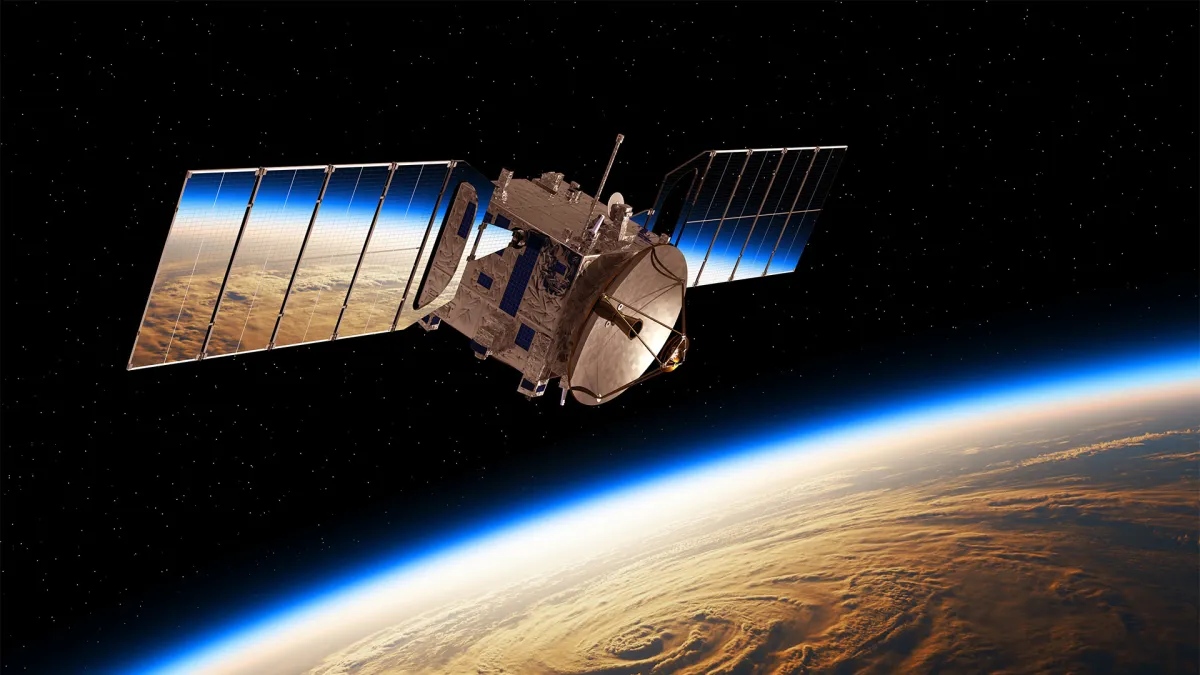
AI-powered Earth observation is emerging as one of the most promising technology segments in India and globally. By combining satellite imagery with artificial intelligence, businesses are finding new ways to improve decision-making across agriculture, infrastructure, logistics, insurance, and environmental management.
AI-powered Earth observation is no longer limited to government space programs or scientific research. Today, it is becoming a commercial technology platform capable of generating valuable insights for businesses and public institutions alike.
What Is AI-Powered Earth Observation?
AI-powered Earth observation refers to the use of artificial intelligence algorithms to analyze data collected from satellites, drones, and remote sensing systems. These technologies capture images and measurements of the Earth’s surface, which are then processed to generate actionable insights.
Traditionally, interpreting satellite data required significant expertise and time. Artificial intelligence has changed this process by enabling automated analysis of large datasets within minutes. Machine learning systems can detect patterns, identify changes, predict trends, and generate reports that businesses can use for operational decisions.
As satellite networks continue to expand and data becomes more accessible, AI-driven analysis is unlocking commercial applications across multiple industries.
This shift is creating new opportunities for startups, technology companies, investors, and enterprises looking to leverage geospatial intelligence.
AI and Satellite Technology Transforming Agriculture
Agriculture is one of the sectors benefiting most from AI-powered Earth observation. Farmers and agribusiness companies increasingly rely on satellite data to monitor crop health, soil conditions, water availability, and weather-related risks.
Artificial intelligence can analyze vegetation patterns and identify signs of crop stress before they become visible on the ground. This allows farmers to take corrective action earlier, potentially improving yields and reducing losses.
Satellite-based monitoring also supports precision agriculture by helping optimize irrigation, fertilizer usage, and pest management strategies.
Agricultural insurers can use Earth observation data to assess crop damage more accurately. Financial institutions may also leverage these insights while evaluating agricultural lending risks.
In a country like India, where agriculture remains a critical economic sector, these technologies have significant commercial and social value.
Infrastructure Monitoring Becomes More Efficient
Infrastructure development is another major area where Earth observation technology is creating business opportunities.
Governments, construction firms, and infrastructure operators increasingly use satellite imagery and AI analytics to monitor roads, railways, ports, power projects, and urban development initiatives.
Artificial intelligence can identify structural changes, detect construction progress, monitor land use patterns, and highlight potential risks before they escalate into larger problems.
Large-scale infrastructure projects often span vast geographical areas, making physical inspections costly and time-consuming. Satellite-based monitoring provides continuous visibility without requiring teams to be present on-site.
This capability is particularly valuable for project management, compliance monitoring, and asset maintenance. Companies that provide AI-driven infrastructure intelligence are finding growing demand from both public and private sector clients.
New Business Models Are Emerging Around Geospatial Data
The growth of Earth observation technology is creating entirely new business models. Rather than simply selling satellite imagery, companies are now offering data-as-a-service and intelligence-as-a-service solutions.
Businesses increasingly pay for insights rather than raw data. For example, a logistics company may subscribe to a platform that monitors transportation routes and identifies disruptions. A renewable energy developer may use satellite analytics to assess potential project locations.
Insurance providers are utilizing geospatial intelligence to evaluate risks associated with floods, droughts, wildfires, and other environmental events.
Meanwhile, urban planners are using AI-generated insights to support smart city initiatives and infrastructure planning.
These applications demonstrate how Earth observation is evolving into a commercial intelligence industry with recurring revenue opportunities.
Why Investors Are Paying Attention
Investor interest in AI-powered Earth observation has grown significantly in recent years. The combination of artificial intelligence, satellite technology, and data analytics creates opportunities in multiple high-growth sectors.
Unlike some emerging technologies that rely on speculative adoption, Earth observation addresses practical business challenges. Companies can often demonstrate measurable value through cost savings, operational efficiency, and risk reduction.
The availability of satellite data has also increased dramatically due to the growth of public and private space programs. At the same time, advances in cloud computing and artificial intelligence have reduced the cost of processing large datasets.
These trends make the sector more scalable and commercially viable than ever before.
As governments and businesses seek better data-driven decision-making tools, demand for geospatial intelligence services is expected to continue rising.
Challenges and Future Potential
Despite strong growth prospects, the industry faces several challenges. Data accuracy, regulatory compliance, privacy considerations, and integration with existing business systems remain important concerns.
Companies must also ensure that AI models generate reliable insights across diverse geographic and environmental conditions.
However, technological advancements continue to improve capabilities. Higher-resolution satellites, faster processing systems, and more sophisticated AI models are expanding the range of possible applications.
Future opportunities may include climate risk management, disaster response, carbon monitoring, renewable energy planning, and supply chain optimization.
As these use cases mature, AI-powered Earth observation is likely to become an increasingly important part of the global digital economy.
Key Takeaways
- AI-powered Earth observation combines satellite data and artificial intelligence to generate actionable business insights.
- Agriculture and infrastructure are among the sectors benefiting most from geospatial intelligence.
- New business models are emerging around data analytics and intelligence-as-a-service platforms.
- Growing investor interest reflects the technology’s commercial potential across multiple industries.
FAQs
What is AI-powered Earth observation?
It is the use of artificial intelligence to analyze satellite and remote sensing data for generating insights related to land, infrastructure, agriculture, and environmental conditions.
How does Earth observation help agriculture?
It enables monitoring of crop health, irrigation needs, soil conditions, and weather risks, helping farmers improve productivity and reduce losses.
Why is infrastructure management using satellite analytics?
Satellite-based monitoring provides continuous visibility across large projects, helping organizations track progress, detect risks, and improve maintenance planning.
Why are investors interested in this sector?
The technology offers scalable applications across multiple industries and helps businesses improve efficiency, manage risks, and make data-driven decisions.
(AI-powered Earth observation, satellite data analytics, geospatial intelligence, Earth observation technology, precision agriculture, infrastructure monitoring, AI satellite imagery, geospatial business opportunities, remote sensing solutions, climate intelligence)











Leave a comment