

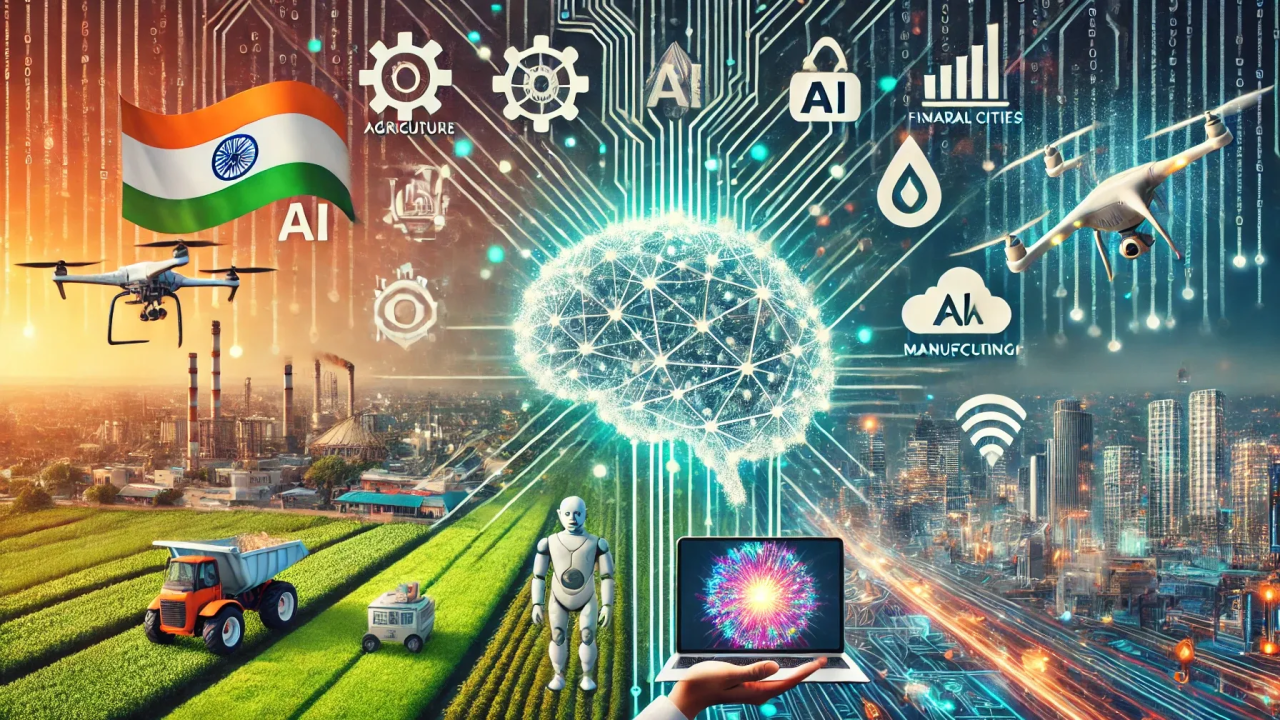
Artificial intelligence is no longer an experimental technology for Corporate India. Businesses across banking, manufacturing, retail, healthcare, IT services, logistics, and telecom are increasing AI investments to improve productivity, reduce costs, and build long-term competitive advantages. As companies move beyond pilot projects, AI is becoming a core business strategy rather than a standalone technology initiative.
AI Has Shifted From Experimentation to Enterprise Strategy
Corporate India is investing more in AI because businesses now see measurable value from real-world deployments. Earlier, AI projects were largely limited to proof-of-concept experiments. Today, organizations are integrating AI into customer service, software development, finance, marketing, operations, and supply chain management.
Recent industry studies indicate that Indian enterprises are among the global leaders in scaling AI across business functions. Many organizations have already deployed AI beyond the testing stage and are expanding investments as they witness productivity improvements and faster decision-making. At the same time, companies are strengthening governance frameworks and data infrastructure to support large-scale AI adoption.
This transition marks an important change. Instead of asking whether AI should be adopted, business leaders are now deciding where AI can deliver the highest return on investment.
Productivity and Cost Efficiency Are Driving AI Investments
One of the biggest reasons behind rising AI spending is operational efficiency.
Large Indian enterprises manage enormous volumes of customer interactions, financial transactions, procurement processes, and internal documentation every day. AI helps automate repetitive work, allowing employees to focus on higher-value tasks.
For example, banks use AI to detect fraud in real time, insurers automate claims processing, retailers improve inventory forecasting, and manufacturers optimize production schedules using predictive analytics.
Software companies are also using AI coding assistants to accelerate development cycles, reduce manual errors, and improve engineering productivity. Customer support teams increasingly rely on AI-powered assistants to resolve common queries faster while human agents handle more complex issues.
These improvements help businesses reduce operational costs while maintaining service quality.
Indian Companies Are Building AI Infrastructure
The latest phase of AI investment extends beyond software subscriptions. Many corporations are investing in AI infrastructure itself.
Indian technology companies have announced large investments in AI data centers, cloud infrastructure, and partnerships with AI startups. These investments aim to create domestic AI capabilities while supporting enterprise customers that require secure and scalable computing environments.
Recent announcements involving HCLTech, Sarvam AI, and other technology firms demonstrate how infrastructure has become a strategic priority alongside AI applications. Companies increasingly recognize that owning or accessing reliable AI infrastructure can become a competitive advantage as demand for enterprise AI continues to grow.
This trend also supports India’s ambition to strengthen its position as a global AI and digital services hub.
Industry Competition Is Accelerating AI Adoption
Competitive pressure has become another major driver.
Businesses understand that AI can improve customer experience through personalized recommendations, faster response times, intelligent search, and predictive support. Companies that successfully integrate AI may deliver better services while operating more efficiently than competitors.
This is especially visible in financial services, e-commerce, telecom, healthcare, and information technology, where customer expectations continue to rise.
Generative AI has further increased competitive pressure by making content creation, software development, knowledge management, and business analytics significantly faster. Organizations that delay adoption risk falling behind peers that are already using AI to improve decision-making and accelerate innovation.
For many boardrooms, AI is now viewed as a strategic investment rather than a technology expense.
Better Data and Cloud Adoption Have Made AI More Practical
Several years ago, many businesses lacked the digital infrastructure needed to deploy AI effectively.
Today, widespread cloud adoption, improved enterprise software, stronger cybersecurity practices, and greater availability of structured business data have made AI implementation more practical.
Organizations are combining AI with cloud computing, analytics platforms, Internet of Things devices, and automation technologies to create integrated digital operations.
Recent enterprise research also shows growing confidence in AI’s business value, encouraging organizations to increase budgets and move toward enterprise-wide deployment rather than isolated projects.
Challenges Still Remain
Despite growing enthusiasm, AI adoption is not without obstacles.
Many organizations continue to face shortages of AI-skilled professionals. Data privacy, cybersecurity, regulatory compliance, model accuracy, and responsible AI governance remain important concerns.
Another challenge is ensuring that AI projects generate measurable business outcomes instead of becoming expensive technology experiments.
Industry reports indicate that workforce readiness remains one of the biggest barriers, with many organizations acknowledging that employee skills have not yet kept pace with rapid AI deployment. This makes training and reskilling essential components of every successful AI strategy.
Companies that balance innovation with governance are likely to achieve stronger long-term results.
The Road Ahead
Corporate India’s AI journey is entering a more mature phase. Businesses are no longer investing simply because AI is a global trend. They are investing because AI has demonstrated its ability to improve productivity, strengthen customer relationships, optimize operations, and support better business decisions.
Over the next few years, AI investment is expected to expand into areas such as finance, manufacturing, logistics, healthcare, agriculture, retail, and government services. Companies will increasingly focus on building AI-ready workforces, strengthening data infrastructure, and deploying responsible AI systems that create measurable business value.
Rather than replacing human expertise, AI is becoming a powerful tool that enhances decision-making and enables organizations to operate faster, smarter, and more efficiently in an increasingly competitive economy.
Key Takeaways
- Corporate India is moving from AI experimentation to enterprise-wide deployment.
- Productivity gains, automation, and cost optimization are the biggest investment drivers.
- Companies are investing in both AI software and supporting infrastructure such as data centers and cloud platforms.
- Workforce training, governance, and data quality will determine long-term AI success.
Frequently Asked Questions
Q1. Why are Indian companies increasing AI investments?
Businesses are investing in AI to improve productivity, automate routine tasks, enhance customer experience, and strengthen long-term competitiveness.
Q2. Which industries in India are adopting AI the fastest?
Banking, financial services, IT, healthcare, retail, manufacturing, telecom, logistics, and e-commerce are among the leading adopters.
Q3. Is AI replacing jobs in Corporate India?
AI is changing job roles by automating repetitive work, but companies are also investing in employee upskilling and creating new technology-focused roles.
Q4. What is the biggest challenge in enterprise AI adoption?
The major challenges include workforce readiness, data quality, cybersecurity, responsible AI governance, and demonstrating measurable business returns.
(Internal Keyword Suggestions: Corporate India AI, AI investment in India, enterprise AI adoption, Indian businesses and AI, AI infrastructure India, generative AI in business, AI productivity, digital transformation India, enterprise automation, AI strategy)












Leave a comment