


India’s startup funding market is entering the second half of 2026 with renewed optimism. Higher venture capital deployment, stronger investor confidence in AI and deeptech, and improving growth-stage investments suggest the ecosystem is recovering, although investors continue to remain selective amid global economic uncertainties.
The India startup funding market is showing encouraging signs of recovery as the country enters H2 2026. After a challenging period marked by cautious investments and fewer large funding rounds, venture capital activity has picked up across several sectors. Recent data suggests that startup funding during the first half of 2026 outpaced the same period last year, indicating improving investor sentiment. However, experts also note that the recovery is not yet broad-based, with capital continuing to flow primarily toward companies demonstrating sustainable business models and clear revenue potential.
H1 2026 Laid the Foundation for Recovery
The first six months of 2026 delivered several positive signals for India’s startup ecosystem. Venture capital funding increased compared to H1 2025, supported by multiple growth-stage investments and a resurgence in larger funding rounds. Industry reports estimate that Indian startups raised nearly $6.9 billion during H1 2026, reflecting healthy year-on-year growth.
Investor confidence has also improved as inflation moderated in several major economies, interest rate expectations stabilized, and India’s domestic economic outlook remained relatively strong. These macroeconomic improvements encouraged investors to gradually return to the startup ecosystem after two cautious years.
Although funding volumes have improved, investors continue to evaluate companies more carefully than during the funding boom of 2021 and early 2022. Startups are now expected to demonstrate stronger governance, efficient capital allocation, and a realistic path to profitability before attracting significant investments.
AI, Deeptech and Enterprise Software Lead Startup Funding
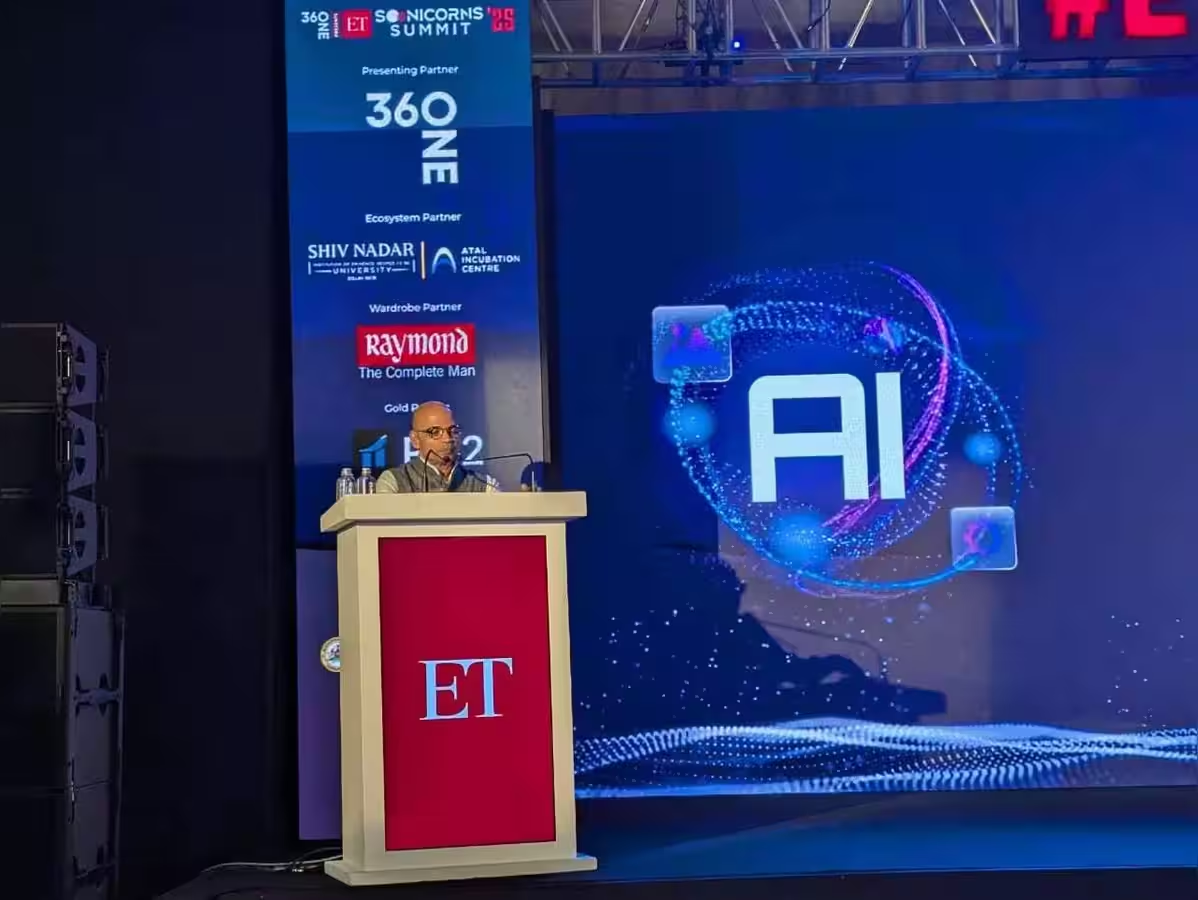
Artificial intelligence continues to dominate investment discussions across India’s startup ecosystem. AI infrastructure, enterprise software, automation, cybersecurity, semiconductor technology, and deeptech companies are attracting considerable attention from domestic as well as global venture capital firms.
Investors increasingly view AI as a long-term structural opportunity rather than a short-term trend. Alongside AI, sectors such as fintech, healthtech, climate technology, defence technology, and spacetech are also witnessing steady investor interest.
India’s private space ecosystem illustrates this trend. According to recent industry data, spacetech startups have attracted significant funding in 2026, reflecting growing confidence in emerging technology sectors beyond traditional consumer internet businesses.
Venture Capital Firms Are Becoming More Selective
Despite the recovery, venture capital firms remain disciplined in their investment approach. Unlike previous funding cycles where growth often outweighed profitability, today’s investors place greater emphasis on unit economics, recurring revenue, customer retention, and operational efficiency.
Many VC firms have successfully closed new India-focused funds during 2026, creating additional capital for deployment over the coming years. AI-focused investment vehicles have become particularly prominent, reflecting changing market priorities.
Rather than funding companies solely based on rapid expansion, investors now prefer founders who can demonstrate sustainable growth with disciplined spending. This shift is creating a healthier investment environment for startups that focus on building resilient businesses instead of chasing aggressive valuations.
Startup Funding Remains Uneven Across Sectors
While overall sentiment has improved, startup funding remains inconsistent on a weekly basis. Some weeks witness large investment announcements, while others experience slower deal activity due to the absence of mega funding rounds.
Recent weekly funding reports show that capital deployment can fluctuate significantly depending on the timing of major transactions. Analysts caution against interpreting individual weekly declines as evidence of weakening investor confidence because broader half-year trends continue to point toward recovery.
Recent developments, including Zepto’s decision to pursue additional pre-IPO funding before listing, highlight how mature startups are carefully strengthening their balance sheets amid evolving market conditions. Such moves reflect strategic capital planning rather than aggressive expansion alone.
Tier-2 Cities Are Becoming Important Growth Centres
Another notable trend is the gradual expansion of startup activity beyond Bengaluru, Mumbai, and Delhi NCR. Government initiatives, improved digital infrastructure, and wider access to skilled talent are encouraging entrepreneurship across Tier-2 and Tier-3 cities.
Although metro cities continue to attract the largest share of venture funding, investors are increasingly exploring opportunities in regional innovation hubs. Startups from sectors such as agritech, logistics, manufacturing technology, healthcare, education technology, and financial inclusion are emerging from smaller cities and gaining investor attention.
This broader geographical spread could strengthen India’s startup ecosystem over the coming years by creating a more diversified pipeline of innovative businesses.
Outlook for H2 2026
The second half of 2026 is expected to remain positive for India’s startup ecosystem, provided macroeconomic conditions remain stable. Continued venture capital fundraising, strong corporate earnings, increasing AI adoption, and supportive government policies could sustain investment momentum.
However, founders should expect funding decisions to remain rigorous. Investors are likely to continue rewarding companies with sound financial discipline, scalable products, and sustainable business models rather than prioritizing rapid growth alone.
Overall, the current funding environment suggests that India has entered a healthier investment cycle where quality, innovation, and execution matter more than headline valuations.
Key Takeaways
- India’s startup funding has improved significantly compared to H1 2025, indicating stronger investor confidence.
- AI, deeptech, fintech, spacetech, and enterprise software remain the most attractive sectors for venture capital.
- Investors continue to prioritise profitability, governance, and sustainable business models over aggressive expansion.
- Tier-2 and Tier-3 startup ecosystems are gradually attracting greater attention from venture capital firms.
FAQ
Q1. Is India’s startup funding market recovering in 2026?
Yes. Funding during the first half of 2026 increased compared to the previous year, supported by stronger venture capital activity and renewed investor confidence.
Q2. Which sectors are attracting the highest investments?
Artificial intelligence, deeptech, fintech, enterprise software, spacetech, healthtech, and climate technology are among the leading sectors attracting investment.
Q3. Are investors funding early-stage startups again?
Early-stage funding has improved, but investors remain selective and continue to prioritise startups with strong business fundamentals and clear growth potential.
Q4. What is the biggest challenge for founders in H2 2026?
The primary challenge is meeting higher investor expectations around profitability, governance, efficient capital use, and sustainable growth.










Leave a comment