

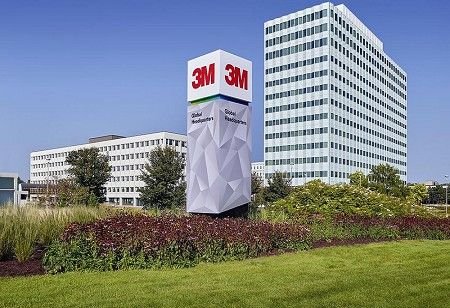
3M is exploring a deeper India presence through localisation, research and development, advanced manufacturing and local supply chains. The focus emerged during Finance Minister Nirmala Sitharaman’s meeting with 3M CEO William Brown, highlighting India’s growing role in global manufacturing and technology networks.
3M India Expansion Gets Fresh Policy Attention
The latest discussion around 3M’s India presence comes as the government seeks to position the country not only as a large consumer market but also as a base for manufacturing, technology development and innovation.
Finance Minister Nirmala Sitharaman met 3M Chairman and CEO William Brown on August 31 on the sidelines of the G20 Finance Ministers and Central Bank Governors meeting in Asheville, North Carolina. The discussion included opportunities to deepen 3M’s engagement in India across research and development, advanced manufacturing and local supply chains.
According to the Finance Ministry’s account of the meeting, Sitharaman said there was considerable scope to deepen localisation, R&D and technology development by using India’s talent and manufacturing capabilities. The objective would be to serve India’s domestic market as well as wider global and Asia-Pacific supply chains.
The discussion does not amount to an announced new 3M investment commitment. However, it highlights the direction in which India wants multinational companies to expand their operations.
Why Local Manufacturing Is Becoming Important
For multinational companies, local manufacturing can reduce dependence on long international supply chains and bring production closer to customers.
India’s large domestic market makes that proposition particularly relevant. But the government’s current pitch goes beyond manufacturing products for Indian consumers. It is increasingly encouraging companies to manufacture in India for export markets as well.
Sitharaman made a similar case during her recent meetings with global investors in the United States, urging companies to establish manufacturing bases alongside technology and innovation centres in India. She highlighted India’s talent pool, manufacturing capabilities, infrastructure and expanding domestic market as factors supporting long-term investment.
For companies such as 3M, which operate across multiple industrial and consumer categories, a deeper local supply chain could potentially support production, engineering, product development and distribution from the same regional base.
That can also create opportunities for Indian suppliers involved in components, materials, engineering services and industrial support.
R&D Could Be the Bigger Opportunity
The emphasis on R&D is particularly important because it signals a move beyond traditional manufacturing.
India has a large pool of engineers, scientists, technology professionals and researchers. Multinational companies can use that talent not only for back-office operations but also for product engineering, testing, process development and technology adaptation.
During the meeting, 3M’s Brown acknowledged the availability of India’s deep talent pool and said there were opportunities for technology development as well as local markets.
For India, attracting such R&D activity can have a broader economic impact than simply adding manufacturing capacity. Research centres can support higher-skilled employment and generate demand for specialised suppliers and technical services.
They can also help multinational companies develop products suited to Indian and other emerging markets.
India Wants Companies to Build for Global Markets
The 3M discussion fits into a broader shift in India’s investment strategy.
The government has increasingly promoted the idea of manufacturing in India not only for domestic consumption but also for international markets. Sitharaman recently told global investors that India’s opportunity extends beyond assembly towards component manufacturing, engineering and advanced technologies.
This distinction matters.
Assembly operations can create jobs and increase local production, but deeper manufacturing can involve a wider network of suppliers and technical capabilities. Engineering and R&D can take that ecosystem further by creating intellectual property, specialised skills and locally developed technologies.
The government is therefore seeking investments that integrate India into global value chains rather than treating the country only as an end market.
Supply Chain Localisation Could Help Indian Suppliers
A deeper 3M manufacturing footprint could also have implications for domestic suppliers if the company increases local sourcing.
Large multinational manufacturers typically require networks of suppliers for materials, components, packaging, logistics, engineering services and other industrial inputs. When more of those requirements are sourced locally, smaller Indian businesses can potentially become part of global supply chains.
The opportunity is especially relevant for companies that can meet international standards on quality, consistency, delivery timelines and cost.
However, localisation does not automatically mean that every component will be sourced domestically. Companies make sourcing decisions based on cost, technology, quality, capacity, intellectual property and supply-chain reliability.
The government’s focus is therefore aimed at developing the broader ecosystem required to make deeper localisation commercially viable.
Advanced Manufacturing Is the Next Investment Theme
The reference to advanced manufacturing is significant because India’s manufacturing ambitions are moving towards more technology-intensive sectors.
Recent government initiatives have focused on semiconductors, electronics components, advanced packaging, engineering and other high-value manufacturing activities. The 2026 Union Budget increased the allocation for the Electronics Components Manufacturing Scheme to ₹40,000 crore and launched India Semiconductor Mission 2.0, with a broader focus on equipment, materials, design and supply-chain capabilities.
The semiconductor sector provides a useful example of the direction India is taking. The country is trying to build an ecosystem that includes not only chip fabrication but also design, packaging, materials and specialised suppliers.
The same principle can apply to other advanced manufacturing sectors. The objective is to develop capabilities across the value chain instead of concentrating only on final assembly.
Tier-2 Cities Could Benefit From Industrial Expansion
A deeper manufacturing and R&D ecosystem does not necessarily have to remain concentrated in India’s biggest metropolitan centres.
As companies expand production and supply networks, opportunities can emerge in industrial clusters and emerging cities with suitable infrastructure, engineering talent and logistics connections.
Tier-2 and Tier-3 cities can potentially benefit through supplier development, warehousing, industrial services, technical employment and ancillary businesses.
The effect depends heavily on where individual companies decide to establish facilities. There is no indication from the latest 3M meeting that a particular new city or manufacturing plant has been selected.
Still, the broader localisation trend creates opportunities for states and industrial clusters that can provide reliable infrastructure, skilled workers, efficient logistics and a supportive business environment.
What 3M’s Interest Means for India
3M is a diversified technology and manufacturing company with businesses spanning multiple industrial and consumer applications. Its interest in expanding localisation, R&D and technology development therefore has significance beyond a single manufacturing facility.
A deeper India operation could potentially connect local talent and suppliers with the company’s wider global network.
For India, the benefit would depend on how much of the value chain is eventually developed domestically. More local sourcing, engineering and research would create a deeper economic footprint than simply increasing imports or final-stage assembly.
The government’s stated objective is to encourage exactly this kind of integration, where companies use India’s domestic capabilities to serve both Indian and international markets.
No New Investment Figure Has Been Announced
It is important to separate the policy discussion from a confirmed investment announcement.
The Finance Ministry’s statement following the Sitharaman-Brown meeting discussed opportunities to deepen 3M’s presence in India, particularly in localisation, R&D, advanced manufacturing and technology development. It did not announce a specific new investment amount, factory or project timeline.
That distinction matters because discussions between governments and companies can lead to future investment decisions, but they do not necessarily represent committed capital.
The next indicators to watch will therefore be any formal announcements from 3M or its Indian operations regarding new manufacturing capacity, R&D facilities, supplier partnerships or technology projects.
Why This Matters for India’s Manufacturing Strategy
The 3M conversation comes at a time when global companies are reassessing supply chains and looking for manufacturing and technology locations that can serve multiple markets.
India’s proposition combines a large domestic market with a growing industrial base and a substantial technical talent pool. The government is trying to convert those advantages into deeper participation in global supply chains.
For companies, localisation can improve access to customers and suppliers. For India, the potential gains include manufacturing capacity, skilled jobs, technology development and stronger domestic supplier networks.
The real test will be whether discussions translate into actual facilities, local sourcing, R&D activity and long-term capital investment.
The 3M meeting therefore represents an important signal, but the next stage will depend on concrete business decisions.
Takeaways
- Finance Minister Nirmala Sitharaman discussed deeper 3M engagement in India across localisation, R&D, advanced manufacturing and local supply chains.
- The government wants multinational companies to use India as a base for serving both domestic and global markets.
- R&D and technology development could create higher-skilled employment and strengthen India’s industrial capabilities.
- No specific new 3M investment amount, factory or project was announced in the August 31 meeting.
Frequently Asked Questions
What did Nirmala Sitharaman discuss with 3M CEO William Brown?
Sitharaman discussed opportunities to deepen 3M’s presence in India through localisation, research and development, advanced manufacturing, technology development and local supply chains.
Has 3M announced a new investment in India?
No specific new investment amount, manufacturing plant or project was announced as part of the August 31 meeting. The discussion focused on opportunities to deepen 3M’s existing engagement with India.
Why is India promoting local manufacturing by multinational companies?
India wants to strengthen domestic manufacturing, develop local suppliers, create skilled employment and increase its role in global supply chains. The government is also encouraging companies to manufacture products in India for international markets.
How can R&D investment benefit India’s economy?
R&D investment can create specialised jobs, support technology development, strengthen engineering capabilities and help build products for both Indian and international markets. It can also generate demand for specialised suppliers and technical services.












Leave a comment