

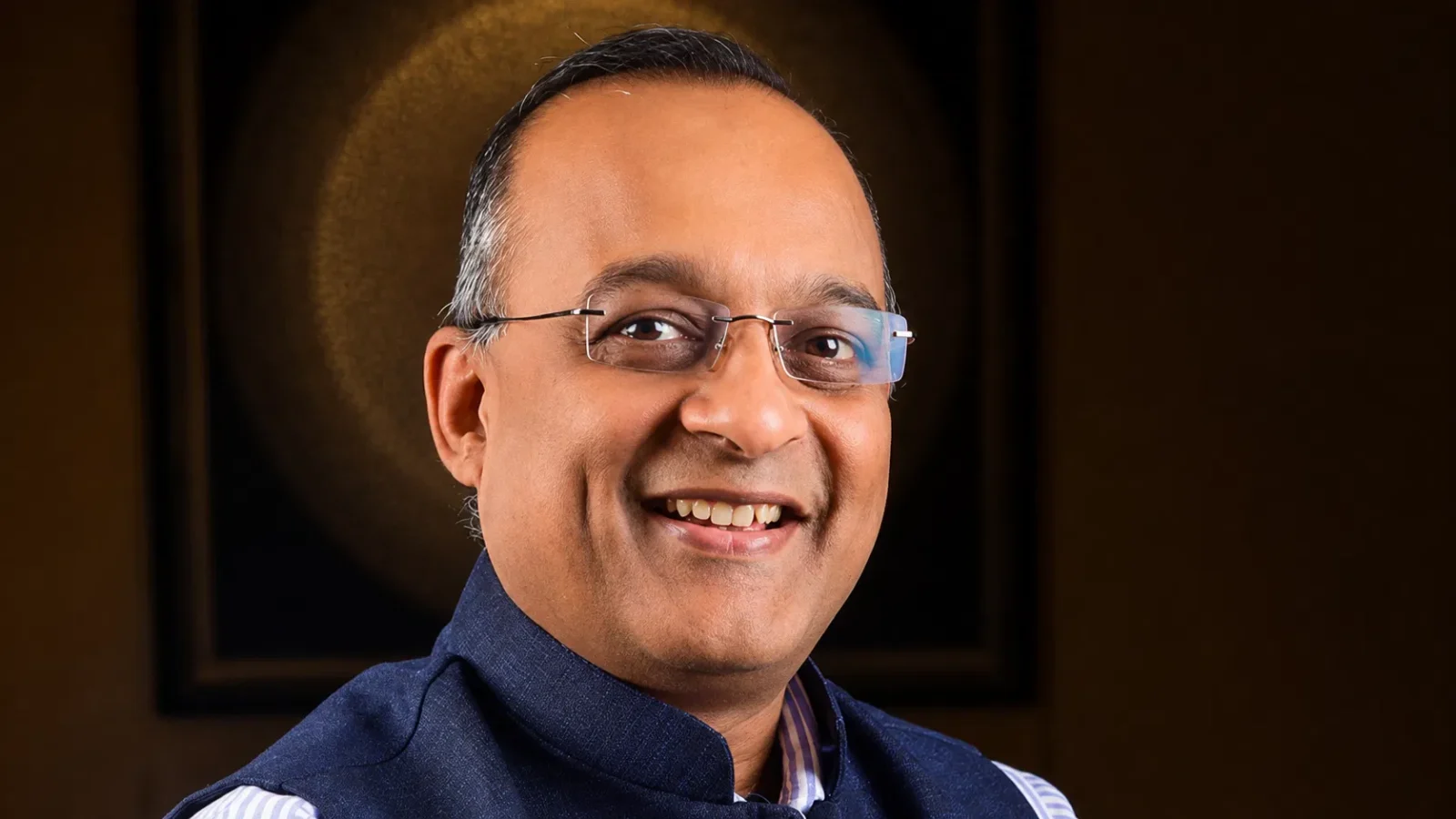
HDFC Bank CEO Sashidhar Jagdishan will retire on October 26, 2026, after deciding not to seek another term. The leadership transition comes at an important stage for India’s largest private sector lender, with customers, employees and investors watching how the bank manages the change.
HDFC Bank CEO Jagdishan to retire in October
Sashidhar Jagdishan has decided not to seek reappointment as managing director and chief executive officer of HDFC Bank. His current term ends on October 26, 2026, and the bank’s board has said it will fast-track the process of selecting his successor.
Jagdishan became HDFC Bank’s MD and CEO in October 2020, succeeding long-time chief Aditya Puri. He was reappointed for another three-year term in 2023, with the Reserve Bank of India approving that appointment.
His decision is significant because Jagdishan has spent nearly three decades with the HDFC group. During his tenure as CEO, he oversaw the merger of HDFC Ltd with HDFC Bank, one of the largest corporate mergers in India.
The immediate question is not only who will replace him, but what kind of leadership HDFC Bank needs at this stage.
Why the HDFC Bank succession matters
CEO succession is particularly important in banking because the chief executive influences lending strategy, risk management, technology investments, employee priorities and relationships with regulators and investors.
For HDFC Bank, the timing makes the transition more closely watched. The lender is still dealing with the longer-term effects of integrating HDFC Ltd after the 2023 merger while also trying to improve growth, its lending mix and returns. Business Standard reported that analysts are looking for stronger growth and improved returns from the bank’s next leadership team.
The bank remains financially significant and continues to generate substantial profits. It reported standalone net profit of ₹19,060 crore in the first quarter of financial year 2026-27, a 5% year-on-year increase.
That means the succession is not about replacing a bank in distress. It is about determining how one of India’s biggest private lenders moves into its next phase.
What the CEO change means for customers
For ordinary HDFC Bank customers, a CEO change is unlikely to immediately alter everyday banking services.
Existing savings accounts, fixed deposits, loans, credit cards, digital banking facilities and branch operations will continue under the bank’s existing systems and policies. A change at the top does not automatically mean changes to customer-facing products.
However, leadership can influence the bank’s priorities over time.
A new CEO could review lending practices, customer service processes, digital banking investments and the balance between growth and risk. This could eventually affect how quickly products are launched, how branches operate and how the bank approaches different customer segments.
For customers in Tier-2 and Tier-3 cities, the focus on branch expansion and digital banking will be particularly relevant. HDFC Bank serves customers across urban and smaller centres, so the next management team will have to balance technology-led banking with access to physical branches and relationship-based services.
The more immediate customer takeaway is therefore continuity, rather than disruption.
What employees will be watching
Employees are likely to pay close attention to the succession because leadership changes can influence organisational priorities, senior management structures and performance expectations.
Jagdishan’s long association with the institution has given him familiarity with its internal systems and culture. A successor from within the bank could provide greater continuity, while an external appointment could bring a different approach to strategy and organisational change.
The choice could also influence how the bank approaches technology, retail lending, corporate banking and employee productivity.
Business Standard reported that the bank is racing against time because the CEO appointment process requires regulatory approval and can take time. The report also noted that banks have previously had to revisit candidate choices when regulatory approval was not secured.
That makes the transition process important for employees as well as shareholders.
Investors are focused on growth and governance
The biggest immediate market question is whether the leadership transition can restore investor confidence.
HDFC Bank shares have faced significant pressure in 2026. Reuters reported that the stock had fallen about 28.5% during the year by August 31 and had reached a 30-month low as investors assessed the leadership change and wider concerns around the lender.
The bank has also faced increased governance scrutiny.
In March, former part-time chairman Atanu Chakraborty resigned, citing concerns about certain practices at the bank. A subsequent legal review commissioned by HDFC Bank found no basis for the allegations. In July, the board imposed a ₹1 lakh penalty and issued warning letters to Jagdishan and two other senior executives after an internal review relating to arrangements with the Maharashtra State Road Development Corporation. The bank characterised the conduct as business overreach rather than mala fide action or personal enrichment.
These developments mean investors will likely judge the new CEO not only on financial growth but also on governance, risk controls and transparency.
Who could succeed Jagdishan?
The succession process is still underway, so no successor should be presented as confirmed.
Reuters reported that HDFC Bank is considering Deputy Managing Director Kaizad Bharucha as an internal option alongside an external candidate. The bank must follow the regulatory process, with the Reserve Bank of India playing an important role in approving the eventual appointment.
An internal candidate could offer continuity because of familiarity with HDFC Bank’s operations and culture. An external candidate, meanwhile, could bring a fresh perspective at a time when investors are seeking stronger growth and a clearer post-merger strategy.
The final choice will therefore be closely watched by the banking industry.
Why an orderly transition matters
Moody’s has highlighted the importance of an orderly CEO succession for maintaining confidence in HDFC Bank. The ratings agency noted that the bank’s strong brand and management depth can help reduce transition risk, while also pointing to recent concerns around deposit practices and bond mis-selling.
For a bank of HDFC Bank’s size, continuity matters because millions of customers and businesses depend on its lending, payments and financial services.
A clear succession plan can also reduce uncertainty for employees and investors. The longer the market remains unclear about the next leadership team, the more attention can shift toward speculation rather than the bank’s underlying financial performance.
The next CEO will inherit a large institution with strong market reach, but also a clear list of challenges. These include improving growth, managing the post-merger business, maintaining asset quality, strengthening governance and rebuilding investor confidence.
Key Takeaways
- Sashidhar Jagdishan will retire as HDFC Bank MD and CEO on October 26, 2026, after deciding not to seek reappointment.
- HDFC Bank’s board is fast-tracking the search for his successor, with internal and external candidates being considered.
- Customers are unlikely to see immediate changes to everyday banking services, but the new leadership could influence future products, lending and digital strategy.
- Investors will closely watch the next CEO’s approach to growth, governance, post-merger integration and shareholder returns.
FAQ
When will Sashidhar Jagdishan leave HDFC Bank?
Sashidhar Jagdishan will retire from HDFC Bank at the close of business on October 26, 2026, after deciding not to seek reappointment as MD and CEO.
Who will become the next HDFC Bank CEO?
HDFC Bank has not officially announced a successor. The board is fast-tracking the selection process, and Deputy Managing Director Kaizad Bharucha is among the internal candidates being considered, alongside external options.
Will the CEO change affect HDFC Bank customers?
There is no indication of an immediate disruption to regular banking services. Existing accounts, loans, cards, deposits and digital banking services are expected to continue under the bank’s existing operations.
Why are investors concerned about the succession?
Investors are assessing whether the next leadership team can improve growth and returns while addressing governance concerns and challenges that emerged following the HDFC Ltd merger. HDFC Bank’s share price has also faced substantial pressure in 2026.
(HDFC Bank CEO succession, HDFC Bank CEO Sashidhar Jagdishan, HDFC Bank new CEO, HDFC Bank leadership change, HDFC Bank latest news, HDFC Bank succession 2026, HDFC Bank investors, HDFC Bank customers)









Leave a comment