

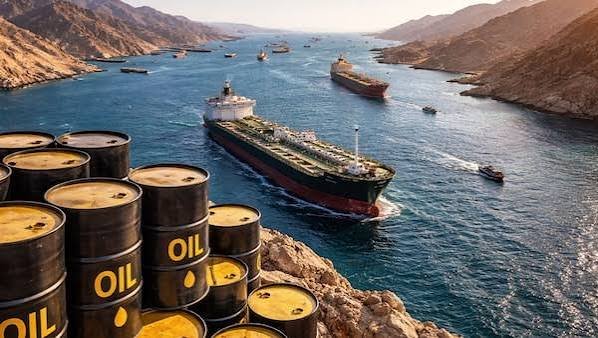
Crude oil prices have moved well above the $100-a-barrel mark, raising concerns for Indian consumers, businesses and policymakers. With Brent crude around $107 on September 15, the prolonged rise in global oil prices could put pressure on fuel costs, inflation, the rupee and corporate margins.
Why crude oil prices are rising
The latest oil price surge is being driven primarily by growing concerns over supply disruptions in West Asia. Reports on September 15 said attacks on Saudi energy infrastructure had affected the East-West pipeline, adding to worries about the availability and movement of crude. Brent crude rose above $107 a barrel, while traders continued to watch developments around Gulf shipping routes and the Strait of Hormuz.
The Strait of Hormuz is particularly important because a significant share of global oil shipments passes through the waterway. Any prolonged disruption can therefore affect not only countries directly involved in the conflict but also major oil importers such as India.
For India, the concern is not simply that crude has crossed a psychological price level. The bigger issue is how long prices remain elevated.
A brief spike can be absorbed by companies and markets. A sustained period of expensive crude can feed into the wider economy.
What $100-plus oil means for Indian consumers
Higher international crude prices do not automatically translate into an immediate, proportionate increase in petrol and diesel prices in India.
Retail fuel prices depend on several factors, including the international price of crude, refining costs, the rupee-dollar exchange rate, central and state taxes, transportation costs and oil marketing company margins. Fuel prices can therefore remain unchanged even when global crude prices rise sharply.
However, sustained high crude prices can increase pressure on the domestic fuel pricing system.
For households, petrol and diesel are important not only because of direct spending on vehicles. Fuel is also a major input into transportation. If logistics costs rise, businesses may eventually pass part of the increase on to customers.
That can affect the cost of vegetables, groceries, manufactured goods and other products transported across states.
This is particularly relevant for consumers in Tier-2 and Tier-3 cities, where road transport remains critical for the movement of goods between regional markets.
Higher oil can add to India’s import bill
India is highly dependent on imported crude oil, which makes the country particularly sensitive to international oil prices.
When crude becomes more expensive, Indian refiners need to spend more dollars to purchase oil. This can increase the country’s overall import bill even when the volume of crude imported does not change significantly.
Recent data cited in market analysis showed India’s crude oil import bill rising sharply during the April-July 2026 period as the country paid more for broadly similar import volumes.
A higher import bill can also affect India’s external balance and increase demand for US dollars.
That brings the rupee into focus.
Why the rupee is also under pressure
Crude oil is traded internationally in US dollars. When Indian companies have to pay more for imported oil, demand for dollars can increase.
The rupee has already been under pressure as oil prices moved higher. Reuters reported that the Indian currency had fallen by more than 1% during the previous week, with elevated oil prices among the factors weighing on the currency. The rupee closed around ₹95.55 per dollar last week.
A weaker rupee can make imported crude even more expensive in domestic currency terms.
This creates a difficult cycle. Higher crude raises India’s dollar requirement, while a weaker rupee increases the rupee cost of buying that crude.
It can also make other imported goods and raw materials more expensive.
Impact on inflation and household budgets
One of the biggest economic concerns from expensive crude is inflation.
The impact does not come only from petrol and diesel. Higher transportation and energy costs can eventually spread across supply chains.
Manufacturers may face higher logistics expenses. Airlines can face higher fuel costs. Companies using petrochemical-based raw materials can also see their input costs rise.
Businesses then have two broad choices: absorb the additional cost and accept lower margins, or increase prices and pass some of the burden to customers.
The second option can add to inflation.
India’s consumer inflation was already being closely watched in September, while higher oil prices are adding another risk for policymakers. Reuters reported that Indian consumer inflation stood at 4.82% in August, with oil prices and monetary policy expectations becoming important factors for markets.
Which Indian businesses could feel the pressure?
The impact of $100-plus crude will not be the same across industries.
Airlines are among the most obvious sectors exposed to higher fuel costs because aviation turbine fuel is a major operating expense. If ticket prices cannot rise enough to compensate, airline margins can come under pressure.
Paint manufacturers can also be affected because several inputs used by the industry are linked to petrochemical prices.
Tyre manufacturers face exposure to crude-linked raw materials, while logistics-heavy businesses can see transportation expenses increase.
Oil marketing companies face another challenge. If domestic fuel prices are not adjusted quickly enough to reflect higher international costs, their marketing margins can come under pressure. Recent reports estimated significant per-litre losses for Indian fuel retailers as Brent moved above $100.
Upstream oil producers, however, can benefit from higher crude prices because their realised prices can increase.
This explains why the stock market response to an oil shock is often uneven.
Why small businesses may also be affected
The crude oil impact extends well beyond large listed companies.
Small manufacturers, transport operators, distributors and retailers can be affected through higher freight and operating expenses.
A small business that moves goods between cities may have limited ability to absorb higher diesel costs. Similarly, manufacturers in smaller industrial clusters may face higher costs for transporting raw materials and finished products.
For businesses operating on thin margins, even a relatively modest increase in logistics costs can become significant if it persists for several months.
The impact can eventually reach consumers through higher prices.
The duration of the oil shock matters most
The biggest question for India is not whether Brent crude briefly crosses $100. It is whether prices remain around or above that level for an extended period.
If geopolitical tensions ease and supply disruptions are resolved, crude prices could retreat. In that situation, the impact on Indian inflation and corporate earnings may remain relatively limited.
If crude stays above $100 for weeks or months, the consequences become more serious.
India could face a larger import bill, continued pressure on the rupee and higher input costs for businesses. Consumers could also face higher transportation and product prices if companies pass on increased costs.
Markets are therefore watching the average price of crude over time rather than one day’s trading level.
What consumers and businesses should watch
For consumers, petrol and diesel prices are the most visible indicator, but they are not the only one.
Households should also watch transportation-related price increases, particularly for goods that travel long distances by road.
Businesses should track freight expenses, imported raw material costs and the rupee-dollar exchange rate. Companies with strong pricing power may be better positioned to pass higher costs on to customers, while businesses operating on thin margins could face greater pressure.
For investors, the focus is likely to remain on airlines, paints, tyres, logistics, oil marketing companies and other crude-sensitive sectors.
Key Takeaways
- Brent crude has moved above $100 and was around $107 per barrel on September 15, 2026, amid renewed concerns over supply disruptions in West Asia.
- India is vulnerable to higher crude prices because of its heavy dependence on imported oil.
- Expensive crude can increase India’s import bill and put additional pressure on the rupee, particularly when global oil prices rise sharply.
- The biggest economic risk comes if crude remains above $100 for an extended period, potentially affecting inflation, household expenses and corporate profit margins.
FAQ
Will petrol and diesel prices immediately rise when crude crosses $100?
Not necessarily. Domestic fuel prices depend on international crude prices, the rupee-dollar exchange rate, taxes, refining costs and oil marketing company margins. A sustained increase in crude prices creates greater pressure than a short-term spike.
Why does expensive crude affect India’s economy so much?
India imports a large share of its crude oil requirement. When global oil prices rise, the country needs to spend more on imports. This can increase the import bill, put pressure on the rupee and raise costs across the economy.
Which businesses are most vulnerable to higher crude prices?
Airlines, logistics companies, tyre manufacturers, paint companies and other businesses with significant fuel or petrochemical-linked costs can face margin pressure. Oil marketing companies can also be affected if higher crude costs are not passed through to consumers.
Could crude oil above $100 increase inflation in India?
Yes, particularly if high prices persist. The effect can come through fuel, transportation, imported inputs and petrochemical-linked raw materials. The eventual impact depends on the duration of the oil price rise and how much of the additional cost businesses pass on to consumers.
(Internal keywords: crude oil price today, Brent crude price, crude oil crosses $100, India crude oil impact, petrol diesel prices India, oil prices and inflation, crude oil and rupee, India oil import bill, impact of crude oil on businesses, West Asia oil crisis)










Leave a comment