

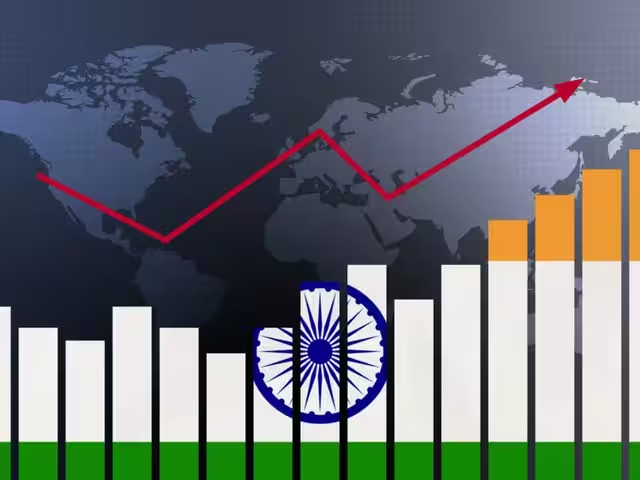
India’s economic growth in 2026 could mark an important turning point, according to Chief Economic Adviser V Anantha Nageswaran. Comparing the current economic environment with 1991, he has highlighted structural challenges, global supply disruptions and the need to strengthen domestic manufacturing, energy security and export competitiveness.
CEA Says 2026 Could Be an Economic Turning Point
India’s economic outlook has entered an important phase, with Chief Economic Adviser (CEA) V Anantha Nageswaran describing 2026 as a potential inflection point comparable to 1991. Speaking at the ISID-IDRA national conference in New Delhi on October 29, he said India was facing a combination of external economic pressures and domestic structural challenges that required a rethink of its development strategy.
His comparison with 1991 has attracted attention because that year marked one of the most significant turning points in India’s economic history. However, Nageswaran clarified that the current situation should not be understood as an identical repeat of the balance of payments crisis that forced India to introduce major economic reforms in 1991.
Instead, he used the comparison to explain the importance of the present moment. India must prepare for a global environment in which access to essential resources, manufacturing capabilities and technological infrastructure increasingly influences economic strength.
The CEA argued that the country needs to build resilience while continuing to participate actively in international trade and competition. India News – Business Standard+2
Why the 1991 Economic Crisis Was a Defining Moment for India
To understand the CEA’s comparison, it is important to look at what happened in 1991.
Before economic liberalisation, India operated under a highly regulated economic system. Businesses faced extensive licensing requirements, imports were restricted, and several industries had limited access to international competition. The government played a significant role in deciding how businesses could operate and expand.
By 1991, the country was experiencing a severe balance of payments crisis. Foreign exchange reserves had fallen to critically low levels, leaving India with limited capacity to pay for essential imports. Rising external obligations and economic pressures made the existing policy framework increasingly difficult to sustain.
The government responded with major economic reforms under Prime Minister P V Narasimha Rao and Finance Minister Dr Manmohan Singh.
These reforms introduced changes across several areas:
- Industrial licensing requirements were reduced, allowing businesses greater freedom to operate.
- Foreign investment rules were gradually liberalised.
- Import restrictions and trade barriers were reduced.
- The financial and banking sectors underwent policy changes.
- Greater emphasis was placed on private sector participation and international competition.
The reforms changed the direction of the Indian economy. They helped create opportunities for domestic businesses, international investors and industries looking to expand beyond the domestic market.
The Press Information Bureau describes 1991 as a watershed year in India’s economic history, marking a gradual shift away from a heavily controlled economic system towards a greater role for market forces. Press Information Bureau+1
How India’s Economic Challenges in 2026 Are Different
The economic environment in 2026 is significantly different from the conditions India faced in 1991.
According to Nageswaran, the current challenges are not limited to external financial pressures. The country is also dealing with structural constraints across manufacturing, energy, agriculture and technology.
Over the past several years, global supply chains have experienced repeated disruptions. The COVID-19 pandemic affected manufacturing and international logistics, while geopolitical conflicts, semiconductor shortages and trade restrictions created additional uncertainty for businesses.
More recently, restrictions affecting critical raw materials and industrial equipment have highlighted the risks associated with depending heavily on a limited number of international suppliers.
The CEA pointed to developments involving China’s export licensing regime for tunnel boring machines and other infrastructure-related products as examples of how access to important industrial goods can become a strategic concern.
For India, such developments raise questions about whether domestic industries can secure essential equipment, technology and raw materials during periods of international tension.
This is why Nageswaran believes the country must reconsider how it approaches economic resilience. The objective should not simply be to increase domestic production but also to ensure that Indian industries can compete internationally.Business Standard+1
Manufacturing and Energy Security Become Major Priorities
Manufacturing is one of the areas where India faces an important opportunity as well as a challenge.
The government has introduced several initiatives to strengthen domestic manufacturing, attract investment and reduce dependence on imported products. However, building a competitive manufacturing ecosystem requires more than setting up factories.
Indian companies need access to advanced machinery, reliable electricity, skilled workers, affordable financing and stable supply chains. Without these conditions, domestic manufacturers may struggle to compete with established international players.
Energy security is another important concern. India remains dependent on international markets for several essential energy requirements, particularly crude oil and natural gas. Global price movements and supply disruptions can affect transportation costs, industrial production, electricity generation and household expenses.
For small businesses, these pressures can be particularly difficult to manage. A rise in fuel prices can increase delivery expenses, while higher electricity and raw material costs can reduce operating margins.
Nageswaran’s emphasis on resilience suggests that India needs to strengthen its ability to manage such disruptions without compromising long-term economic growth.
This does not necessarily mean avoiding imports. Rather, the focus should be on reducing excessive dependence on vulnerable supply sources while developing competitive domestic alternatives.
Import Substitution and Export Competitiveness Must Work Together
One of the important points raised by the CEA was the need to balance import substitution with export competitiveness.
Import substitution refers to increasing domestic production of goods that a country would otherwise purchase from international markets. It can help develop local industries, create employment and reduce dependence on overseas suppliers.
However, protecting domestic industries without improving their efficiency can create other problems. If businesses depend permanently on government support and face limited competition, they may have little incentive to improve product quality or reduce production costs.
Nageswaran argued that India should connect industrial support with measurable performance. Companies receiving government assistance should demonstrate their ability to compete with imported products at comparable prices or establish themselves as competitive exporters.
This approach could encourage businesses to invest in better technology, improve manufacturing processes and develop products that meet international standards.
For example, an Indian electronics manufacturer should not only aim to supply products to the domestic market. It should also work towards becoming a reliable supplier for international buyers.
The same principle applies to machinery, chemicals, engineering products and processed agricultural goods.
The CEA’s argument is that domestic production, strategic resilience and export competitiveness should not be treated as separate economic objectives. India needs to pursue all three together.Business Standard+1
Why Agriculture and Technology Matter to India’s Growth Strategy
Agriculture continues to play an important role in India’s economic structure, particularly because of its connection with rural employment, consumption and food security.
However, the sector faces challenges involving productivity, weather uncertainty, storage facilities, supply chains and access to modern technology.
For farmers, these issues directly affect income. Limited cold storage and transportation infrastructure can result in losses, particularly for those producing perishable goods.
The CEA identified agro-processing as one area where India could develop strategic advantages.
Agro-processing involves converting agricultural produce into products with greater commercial value. This includes packaged food, dairy products, processed fruits, vegetables and other food-related goods.
Expanding this industry could create opportunities beyond major cities. Small towns and rural areas could benefit through food-processing units, warehousing, packaging facilities and transportation services.
Technology is equally important to India’s long-term economic strategy.
Semiconductors, industrial machinery, digital infrastructure and advanced manufacturing technologies are becoming increasingly important for economic competitiveness. Dependence on limited international suppliers can expose businesses to supply disruptions.
Developing domestic technological capabilities will therefore require investment in research, skilled professionals, manufacturing infrastructure and collaboration between companies and educational institutions.
For startups and smaller businesses, these developments could create opportunities in specialised manufacturing, software development, industrial automation and supply-chain technology.
What India’s Economic Growth Numbers Say in 2026
The CEA’s comparison with 1991 comes at a time when India has demonstrated considerable economic resilience despite international uncertainty.
According to the Ministry of Finance’s Economic Survey 2025-26, India’s real GDP growth for FY2026 was estimated at 7.4%, while growth for FY2027 was projected in the range of 6.8% to 7.2%.
The government also highlighted the contribution of consumption and investment to economic activity. Manufacturing, services and exports remain important components of the country’s growth strategy.
Separately, Business Standard reported that India recorded 7.8% real GDP growth in the first quarter of FY2026-27, according to the figures cited during the CEA’s October 29 remarks.
These figures provide an important distinction between the present economic environment and 1991. India’s current position is not defined by the same balance of payments crisis that forced emergency reforms more than three decades ago.
However, strong GDP growth does not automatically eliminate structural weaknesses.
Economic growth must also translate into productive employment, higher household incomes, better infrastructure and sustainable opportunities for businesses.
For policymakers, the challenge is to maintain growth while addressing vulnerabilities that could affect the economy during future international disruptions.Press Information Bureau+2
What the CEA’s Warning Means for MSMEs and Businesses
The discussion around economic resilience is particularly relevant for India’s micro, small and medium enterprises (MSMEs).
These businesses contribute to manufacturing, employment, exports and regional economic activity. Many operate in smaller cities and industrial clusters where access to modern infrastructure and affordable financing can influence their ability to expand.
For example, a small engineering unit in Maharashtra may depend on imported machinery components. If international supplies become expensive or difficult to access, production costs can rise and delivery schedules can be affected.
Similarly, food-processing businesses may face challenges related to packaging materials, transportation expenses and access to cold-chain infrastructure.
A stronger domestic manufacturing ecosystem could help these businesses access more reliable suppliers. However, local manufacturers must also maintain quality and pricing standards to remain competitive.
The changing economic environment could create opportunities in several areas:
- Domestic manufacturing: Businesses producing industrial components, machinery and specialised equipment could find new opportunities.
- Food processing: Better storage, packaging and processing facilities could support rural enterprises and agricultural businesses.
- Technology services: Companies working in automation, artificial intelligence and supply-chain management could support industrial modernisation.
- Export-oriented businesses: MSMEs with competitive products could explore international markets and diversify their customer base.
For Tier-2 and Tier-3 cities, the expansion of manufacturing and supporting industries could help create employment opportunities closer to home.
However, these benefits will depend on access to infrastructure, skilled workers, finance and effective implementation of government policies.
Can India Build Strategic Resilience Without Limiting Global Trade?
One of the biggest questions emerging from the CEA’s remarks is how India can strengthen domestic capabilities without becoming less connected to global markets.
Import substitution and self-reliance do not necessarily require restricting international trade. A country can develop domestic manufacturing while continuing to import products, technologies and resources that are not economically viable to produce locally.
In fact, access to international markets can help Indian businesses acquire technology, improve productivity and reach a larger customer base.
The challenge is to identify sectors where domestic capabilities are strategically important and where India has the potential to become globally competitive.
Critical minerals, semiconductors, energy infrastructure, agricultural processing and industrial machinery are among the areas receiving greater attention.
Nageswaran also emphasised the importance of making India strategically indispensable in selected sectors. This means developing capabilities and products that other countries need, thereby strengthening India’s position in international economic relationships.
For policymakers, this approach will require coordination between industrial policy, trade strategy, infrastructure development and investment.
The government will also need to ensure that incentives are linked to measurable improvements in productivity rather than becoming permanent protection for inefficient industries.
India’s Next Economic Transformation Will Depend on Policy Execution
The comparison between 1991 and 2026 highlights two different economic situations that could have similarly significant consequences for India’s development.
In 1991, a severe balance of payments crisis forced the country to reconsider its economic policies and open up several sectors to competition.
In 2026, the challenge is more closely connected to global supply-chain vulnerabilities, geopolitical competition and domestic structural constraints.
The CEA’s remarks suggest that India’s next phase of economic transformation will depend on how effectively it strengthens manufacturing, improves energy security, develops technology and expands export competitiveness.
For businesses, this could mean adapting to a more competitive environment where efficiency, innovation and reliable supply chains become increasingly important.
For smaller cities and regional industries, the opportunity lies in becoming part of India’s expanding manufacturing and services ecosystem.
Whether 2026 ultimately becomes as significant as 1991 will depend on the reforms and economic decisions taken in the coming years. The comparison is a warning about the importance of timely action, not a prediction that history will repeat itself.
Key Takeaways
- Chief Economic Adviser V Anantha Nageswaran described 2026 as a potential economic inflection point comparable to 1991.
- India’s current challenges include manufacturing limitations, energy dependence, agricultural productivity and technological vulnerabilities.
- The CEA wants India to balance import substitution, domestic production and international export competitiveness.
- MSMEs, manufacturers and businesses in smaller cities could benefit from stronger domestic supply chains and new industrial opportunities.
Frequently Asked Questions (FAQs)
1. Why does India’s Chief Economic Adviser compare 2026 with 1991?
CEA V Anantha Nageswaran believes both periods represent important economic turning points. While 1991 was marked by a balance of payments crisis, 2026 presents challenges involving global supply disruptions, manufacturing, energy, agriculture and technology.
2. Is India facing a balance of payments crisis like 1991?
No. Nageswaran specifically clarified that the comparison does not mean the two situations are identical. India’s current economic challenges are different from the foreign exchange crisis that triggered the 1991 reforms.
3. What does import substitution mean for Indian businesses?
Import substitution means increasing domestic production of goods that are otherwise purchased from international markets. It can create opportunities for Indian manufacturers, suppliers and MSMEs while reducing dependence on vulnerable overseas supply chains.
4. How could India’s economic strategy benefit Tier-2 and Tier-3 cities?
Greater investment in manufacturing, agro-processing, logistics and technology could create employment, support local businesses and attract investment to smaller cities. The actual benefits will depend on infrastructure, financing and skill development.






Leave a comment