

Bengaluru-based Cosine Robots has raised ₹22.36 crore in a funding round led by Avaana Capital. The investment will support its research, engineering and production capabilities as India looks to develop more domestic technologies for industrial automation and robotics.
This is a time-sensitive funding news story, announced on November 24, 2026. The central development is not the launch of a finished industrial robot, but the expansion of a company developing the components that make robots move.
Cosine Robots Funding: Who Invested and Why?
Cosine Robots has secured ₹22.36 crore in a funding round led by deep-tech investment firm Avaana Capital. WEH Ventures and angel investors also participated in the round.
Founded by Kiran Mathew Koshy and Delip Thomas, the Bengaluru-based startup develops integrated servo actuators and advanced motion systems for robotics applications.
The company plans to use the fresh capital to establish and scale a dedicated research and development (R&D) and production facility. The facility is expected to bring precision machining, assembly, calibration and endurance testing under one roof.
The funding will also support the development of its actuator portfolio and expansion of its multidisciplinary engineering team. These investments are intended to help the company move from product engineering towards manufacturing and commercial supply. Company News – Business Standard+2
What Does Cosine Robots Actually Manufacture?
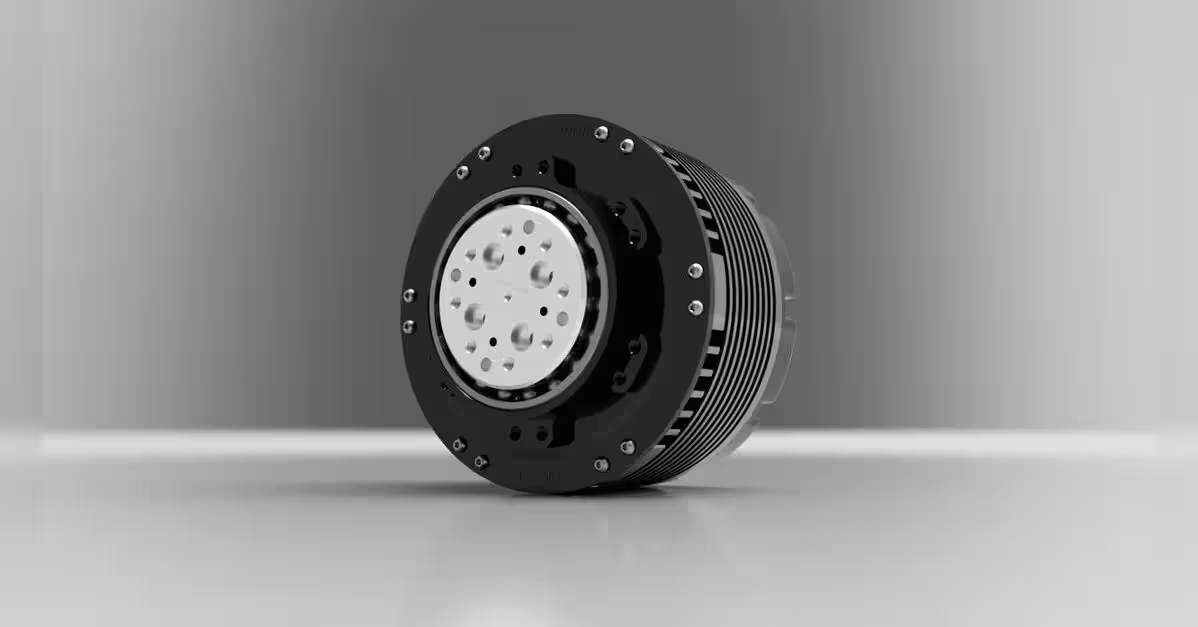
Cosine Robots focuses on a critical part of robotics technology: actuators.
An actuator is a component that converts energy into physical movement. In a robot, it helps control the movement, speed, strength and precision of individual joints. It performs a role similar to muscles and joints in the human body.
The performance of these components can influence how accurately a robotic arm handles an object, how smoothly a machine moves and how much load a robot can manage.
Cosine’s integrated servo actuators combine precision motors, gearboxes, sensors, electronics and proprietary control software into a single system. This integrated approach allows the company to work on several performance factors together, including precision, torque response, reliability and cost.
The startup is developing modular cycloidal and planetary actuators for different torque requirements. These systems are intended for industrial robotic arms, collaborative robots, quadrupeds and humanoid robots. Company News – Business Standard+2
How Its Technology Could Support Industrial Automation
A robot’s capabilities depend on more than its software or artificial intelligence. Its mechanical components determine whether it can perform physical tasks consistently and safely.
For example, a robotic arm used in an automobile factory must move with accuracy while handling repetitive operations. A collaborative robot working alongside people needs controlled movement and reliable responses. Humanoid robots require multiple joints capable of coordinated motion.
Cosine Robots says its control architecture combines dual-position sensing with a 25 kHz control loop. This allows the system to make 25,000 control updates every second, helping regulate movement and torque.
The company believes that developing the motion-control system alongside the mechanical components can improve the overall performance of robotic joints.
However, the commercial impact will depend on how the technology performs in real operating conditions, including long production cycles, varying loads and demanding industrial environments. Company News – Business Standard+1
Why Domestic Robotics Components Matter for India
India’s manufacturing sector is gradually increasing its use of automation across industries such as automobiles, electronics, warehousing, pharmaceuticals and engineering.
Robots can help manufacturers improve consistency, handle repetitive tasks and maintain production processes that require high levels of precision. They can also support operations where manual work is physically demanding or involves safety risks.
However, developing a domestic robotics industry requires more than assembling finished machines. Manufacturers also need access to motors, sensors, gearboxes, controllers, actuators and other specialised components.
When these parts are sourced from established overseas suppliers, Indian robotics companies can face challenges involving cost, availability, customisation and supply-chain dependence.
Companies such as Cosine Robots are targeting this underlying hardware layer. If domestic suppliers can deliver reliable components at competitive prices, Indian robot manufacturers may gain more options when designing and producing machines.
Local production could also help shorten development cycles and make it easier for manufacturers to work directly with component engineering teams. These are potential benefits, though they will depend on product quality, pricing and the ability to manufacture consistently at scale.
Can Robotics Startups Strengthen Indian Manufacturing?
The opportunity for Indian robotics startups extends beyond building robots for large factories. Their technologies could eventually support smaller manufacturers that need automation but cannot afford highly customised or imported systems.
Small and medium-sized enterprises (SMEs), for instance, may use robotic arms for material handling, machine tending, welding, packaging and quality inspection. Collaborative robots can also help businesses automate selected tasks without redesigning their entire production facilities.
For this market to expand, equipment needs to become affordable, easy to integrate and dependable. The availability of locally developed components could contribute to that process.
Cosine’s focus on actuators is relevant because these components influence the cost and performance of a robot. A domestic supplier with a broad product range could serve different types of robot manufacturers rather than depending on demand for a single finished machine.
Still, the presence of a local supplier does not automatically make automation affordable for smaller factories. Installation, maintenance, software integration, worker training and after-sales support remain important parts of the overall cost.
Funding Comes With a Manufacturing Challenge
For Cosine Robots, the next stage will involve translating engineering development into production capability.
Precision components require specialised manufacturing processes and strict quality control. Even small variations in machining, assembly or calibration can affect a robotic joint’s accuracy and durability.
Endurance testing will therefore be important. Actuators used in industrial environments must operate repeatedly under different loads and conditions. Manufacturers will need evidence that the products can maintain performance over extended periods.
The company will also need to establish relationships with robot manufacturers, demonstrate its technology through practical applications and build a reliable supply process.
The ₹22.36 crore investment provides capital for infrastructure and engineering expansion, but it does not by itself establish that the company has achieved large-scale commercial adoption. The next milestones will be production readiness, customer validation and repeat orders.
India’s Robotics Opportunity: What Needs to Improve?
India’s robotics ecosystem has opportunities across automotive production, electronics manufacturing, logistics, healthcare and industrial engineering. But building a competitive industry requires a connected supply chain.
Three areas will be particularly important.
First, domestic component makers need access to advanced manufacturing equipment, testing infrastructure and specialised engineering talent. Second, robotics startups need customers willing to test and adopt locally developed technologies. Third, manufacturers need financing and technical support to integrate automation into their operations.
There is also a need to develop standards for safety, reliability and interoperability. Components that work well in a laboratory may require further testing before they can be used in demanding factory environments.
The development of companies supplying motors, actuators, sensors and control systems could gradually strengthen India’s manufacturing capabilities. It may also create opportunities for engineering talent in hardware design, embedded systems, precision machining and industrial automation.
Can Cosine Robots Become a Supplier for Global Robotics Companies?
Cosine Robots has indicated that it aims to offer robot manufacturers in India and overseas an independent alternative to established actuator suppliers.
The global opportunity is significant because actuators are used in several categories of robotics, from conventional industrial arms to emerging humanoid platforms. A modular product portfolio could allow the company to serve customers with different movement and torque requirements.
However, entering international supply chains will require more than competitive pricing. Global manufacturers typically assess component suppliers on performance consistency, product life, safety, certification, technical support and delivery reliability.
Cosine will need to demonstrate that its products can meet these expectations while increasing production. Its planned facility is an important step towards that objective, but customer adoption and manufacturing scale will determine how far the business can expand.
For India’s broader robotics industry, the development is an example of investment moving towards specialised hardware rather than only finished robots and automation software.
What the Funding Means for India’s Robotics Industry
Cosine Robots’ ₹22.36 crore fundraise highlights investor interest in the engineering infrastructure behind robotics. The company is working on components that influence how machines move, handle loads and perform repetitive tasks.
Its progress will depend on its ability to develop reliable actuators, establish production capacity and secure commercial customers. If it can achieve these milestones, it could contribute to a stronger domestic supply chain for robotics manufacturers.
The wider opportunity for India is to build capabilities across the entire robotics value chain. This includes components, software, machine design, system integration and after-sales services.
The funding is an encouraging development for the sector, but the real test will be whether Indian robotics startups can turn engineering innovation into products that factories can adopt at scale.
Key Takeaways
- Cosine Robots has raised ₹22.36 crore in a funding round led by Avaana Capital, with participation from WEH Ventures and angel investors.
- The Bengaluru startup develops integrated servo actuators for industrial arms, collaborative robots, quadrupeds and humanoids.
- The funding will support an R&D and production facility, actuator development and engineering-team expansion.
- Its long-term impact will depend on manufacturing quality, commercial adoption and the ability to compete with established component suppliers.
Frequently Asked Questions
1. How much funding has Cosine Robots raised?
Cosine Robots has raised ₹22.36 crore in a funding round led by Avaana Capital. WEH Ventures and angel investors also participated.
2. What does Cosine Robots manufacture?
The company develops integrated servo actuators and motion systems. These components help control the movement, speed, torque and precision of robotic joints.
3. How will Cosine Robots use the fresh funding?
The startup plans to establish and scale an R&D and production facility, accelerate actuator development and expand its engineering team.
4. Why are robotic actuators important for Indian manufacturing?
Actuators influence a robot’s movement, strength and precision. Developing them domestically could give Indian robotics manufacturers more local sourcing options and support the growth of the country’s robotics supply chain.












Leave a comment