


Startup funding in Tier-2 cities is gaining visibility as founders build businesses around local demand, digital adoption and specialised talent. However, recent funding data shows that India’s venture capital market remains heavily concentrated in major metros, making access to investors a continuing challenge for smaller startup hubs.
Tier-2 Cities Are Building Stronger Startup Ecosystems
India’s startup ecosystem is no longer limited to Bengaluru, Mumbai and Delhi-NCR. Cities such as Jaipur, Indore, Coimbatore, Kochi, Chandigarh, Bhubaneswar and Lucknow are seeing more founders build companies locally.
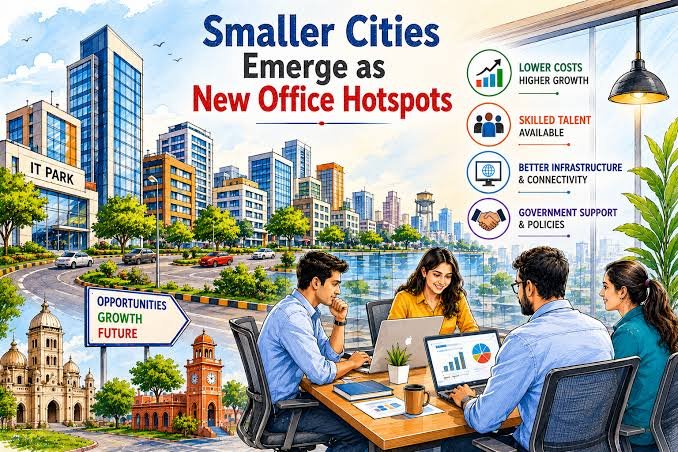
A YourStory report published in March 2026 noted that Tier-2 cities are emerging as startup hubs because of lower operating costs, local talent and markets that remain underserved by metro-first businesses. The report also cited government data showing that more than 51% of DPIIT-recognised startups now come from Tier-2 and Tier-3 cities.
The growth is particularly visible in businesses solving regional problems. Healthcare access, affordable commerce, logistics, financial services, agriculture and local consumer markets are areas where smaller-city founders can have a direct understanding of customer needs.
But a larger startup base does not automatically mean equal access to venture capital.
Startup Funding Still Remains Concentrated in Metros
Recent funding numbers show why the question of investor attention remains complicated.
India’s technology startups raised $10.3 billion during the first nine months of 2026, according to Tracxn data cited by Moneycontrol and The Economic Times. Yet Bengaluru alone accounted for $4.4 billion, or around 43% of the country’s tech funding during the period.
The funding concentration becomes even clearer when looking at the number of deals. India recorded 1,134 funding rounds in the first nine months of 2026, compared with 1,838 during the same period a year earlier. Total funding increased despite the sharp decline in deal count.
This suggests that investors are putting more capital into a smaller number of companies rather than spreading money widely across the startup ecosystem.
For founders in smaller cities, that creates a tougher fundraising environment. Building a promising business may be possible locally, but establishing relationships with venture capital firms can still require regular access to major investment centres.
Investors Are Looking Beyond Traditional Startup Hubs
There are signs, however, that the investor ecosystem outside major metros is becoming broader.
Economic Times reported that Tier-II cities raised $930.7 million across 148 funding rounds in 2024, based on Tracxn data. The funding was concentrated in cities such as Noida, Gurugram, Thane, Coimbatore and Jaipur, while sectors including consumer and retail attracted substantial investment.
The same report highlighted the growing role of local investors. Some investors based in smaller cities are beginning to allocate part of their personal wealth to startups and funds, creating a more localised capital network.
This matters because local investors can understand regional businesses differently from investors who operate primarily from Mumbai, Bengaluru or Delhi.
A healthcare technology company serving smaller hospitals, for example, may have a stronger case with an investor familiar with healthcare infrastructure in those markets. Similarly, an agritech company working with regional farmers may benefit from investors who understand the local agricultural economy.
Local Markets Are Becoming a Startup Advantage
One reason investors are paying more attention to smaller cities is the size of the opportunity.
Tier-2 and Tier-3 markets have large consumer populations, expanding internet access and growing adoption of digital payments. Startups operating in these markets can build products around customers whose needs may differ significantly from those of metropolitan consumers.
BazaarNow is one recent example. The quick-commerce startup raised ₹72 crore in June 2026 in a round led by Peak XV Partners, with participation from Whiteboard Capital and Antler. The company is building its business around purchasing patterns in Tier-II and Tier-III cities.
The example is significant because the investment is not simply about locating a startup outside Bengaluru. The business itself is designed around the consumption patterns of smaller-city households.
That distinction is important. Investors are increasingly interested in companies that can demonstrate a large market opportunity, rather than simply rewarding founders because they operate in a particular city.
Funding Access Remains a Major Challenge
Despite the progress, access to capital continues to be one of the biggest obstacles for non-metro founders.
A 2026 Inc42 analysis highlighted the continuing gap between startup activity in smaller cities and investor participation. Its analysis found that less than a quarter of investors had invested in startups located outside the country’s regular metro centres.
The problem is partly geographical. Venture capital firms tend to build dense networks in established startup ecosystems. Founders benefit from regular interactions with investors, accelerators, other entrepreneurs, experienced executives and potential employees.
A founder in a smaller city may have a strong product but fewer opportunities for those informal connections.
This can lead to a practical problem: founders sometimes need to travel to metro cities to meet investors or eventually establish part of their operations there.
The funding challenge is therefore not only about whether investors are interested. It is also about whether founders can access the networks through which investment decisions are made.
Smaller Cities Are Offering Cost and Talent Advantages
Operating from a Tier-2 city can provide advantages that are becoming more relevant as investors demand greater capital efficiency.
Lower office costs and potentially lower employee expenses can allow startups to operate with a smaller cash burn. At the same time, some founders are choosing smaller cities because they can access local talent without competing directly with the largest technology companies in Bengaluru or Mumbai.
Economic Times reported in January 2026 that technology executives and founders were increasingly considering smaller cities for deep-tech, artificial intelligence, gaming and legal-tech work. Mangaluru was highlighted as one example of a city attracting attention because of talent retention and specialised ecosystems.
These advantages do not eliminate the challenges. Specialised talent remains limited in some locations, and founders may still need to recruit senior executives from larger cities.
Still, the economics of building a company outside a metro are becoming easier to justify for certain business models.
Investors Are Becoming More Selective
The broader funding environment also matters.
Indian startups raised $6.9 billion during the first half of 2026, according to YourStory, but the market remained selective. Only six deals during the period crossed $100 million, while AI attracted about $1 billion in funding and fintech remained one of the largest funded sectors.
The Economic Times also reported that average seed and early-stage funding rounds were becoming larger as venture firms concentrated capital on startups with more mature products and clearer commercial paths. AI, deeptech, infrastructure and healthtech were among the areas attracting larger early-stage cheques.
This creates both an opportunity and a challenge for Tier-2 founders.
Investors may be willing to consider companies from smaller cities, but location alone is unlikely to be enough. Founders increasingly need to demonstrate customer traction, revenue potential, strong unit economics and a credible path to scale.
What This Means for Tier-2 Startup Founders
The changing funding landscape suggests that smaller startup hubs are gaining visibility, but the shift is gradual rather than complete.
Founders in cities such as Jaipur, Indore, Coimbatore, Kochi and Bhubaneswar can increasingly access digital investor networks, accelerator programmes and national startup platforms. Yet the concentration of capital in Bengaluru and other major centres remains significant.
For founders, one practical response is to build investor relationships before fundraising begins. Demonstrating customer traction through local markets can also strengthen a funding pitch.
Another advantage can come from solving problems that are particularly relevant to smaller cities. A startup that understands regional logistics, healthcare, financial inclusion, retail or agricultural supply chains may have a stronger differentiation than one competing directly in an overcrowded metropolitan market.
The key question is therefore not whether investors are suddenly moving away from metros.
Instead, the emerging trend is that investors are becoming more willing to look at businesses built outside traditional startup centres when those companies can demonstrate a scalable opportunity.
Will Smaller Startup Hubs Attract More Capital?
The evidence points to growing interest, but funding remains uneven.
The rise of local angel networks, startup communities, digital infrastructure and lower operating costs is making it easier to build companies outside India’s traditional startup hubs. Government recognition of startups from smaller cities is also expanding the formal ecosystem.
At the same time, the latest funding data shows that capital continues to favour established startup centres and companies with stronger scale potential. Bengaluru alone captured 43% of India’s technology startup funding during the first nine months of 2026.
For Tier-2 and Tier-3 cities, the next stage will depend on whether local ecosystems can produce more companies with repeatable business models, strong revenue and the ability to attract national or international customers.
If that happens, smaller cities may gradually become not just places where startups are founded, but established investment markets in their own right.
For now, the funding picture is mixed. Investor attention is expanding beyond the largest metros, but the majority of venture capital continues to flow through established hubs.
Key Takeaways
- Tier-2 and Tier-3 cities are becoming increasingly important to India’s startup ecosystem, supported by local talent, lower costs and underserved markets.
- Bengaluru continues to dominate startup funding, accounting for about 43% of India’s technology funding in the first nine months of 2026.
- Local angel investors and regional startup networks are creating additional sources of capital outside traditional venture capital hubs.
- Investors remain selective, making customer traction, revenue visibility and scalability increasingly important for founders regardless of location.
FAQs
Q1. Are investors funding more startups in Tier-2 cities?
Investor interest in Tier-2 cities is growing, but funding remains concentrated in major startup hubs. Smaller cities are seeing more local investors, startup communities and individual funding rounds, while large pools of venture capital remain concentrated in established centres.
Q2. Which Tier-2 cities are emerging as startup hubs?
Jaipur, Indore, Coimbatore, Kochi, Chandigarh, Bhubaneswar, Lucknow and Mangaluru are among the cities receiving increased attention for startup and technology activity. The strength of individual ecosystems varies by sector and availability of talent and capital.
Q3. Why are startups choosing Tier-2 cities?
Lower operating costs, access to local talent and proximity to underserved customers are some of the major reasons. Smaller cities can also provide founders with direct knowledge of regional consumer and business problems.
Q4. What do investors look for in Tier-2 startups?
Investors generally evaluate factors such as market size, customer traction, revenue, unit economics, scalability, competitive positioning and the founding team. Being located in a Tier-2 city can be an advantage in some cases, but it does not replace the need for a scalable business model.









Leave a comment