

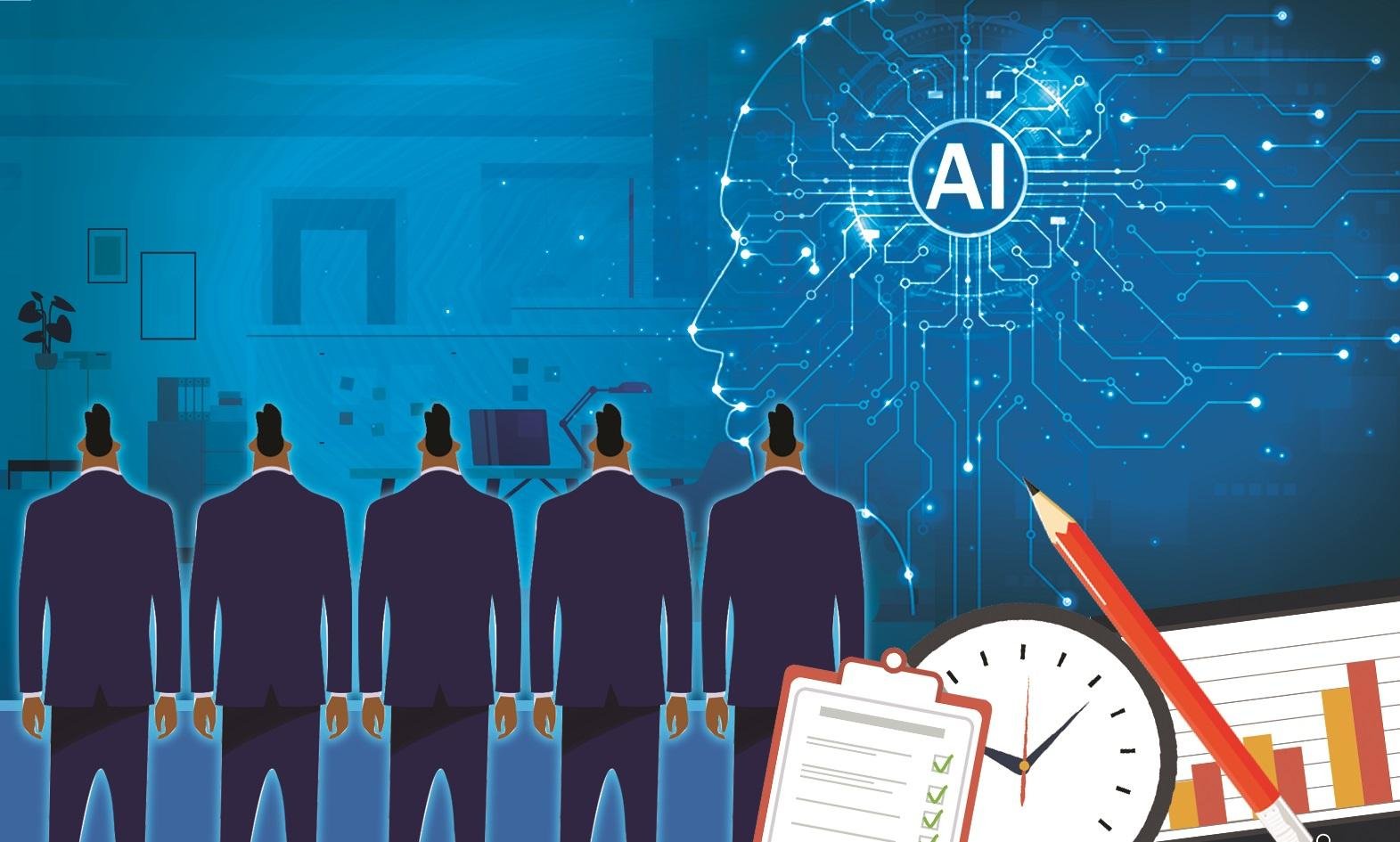
Indian companies are increasing their use of artificial intelligence as businesses seek productivity gains and faster decision-making. But the expansion is exposing two major constraints: shortages of specialised AI talent and limited access to clean, AI-ready enterprise data.
AI Adoption Grows Across Indian Businesses
Artificial intelligence adoption in Indian companies is moving beyond experimentation, with organisations increasingly looking at AI for business operations, customer service, marketing, finance, risk management and technology development.
A recent Dun & Bradstreet survey reported that 69% of organisations planned to increase AI investments, while 73% said they were already seeing measurable returns from AI initiatives. However, only 4% of firms surveyed were found to have AI-ready data, highlighting a major gap between investment and infrastructure readiness.
This creates an important challenge for India Inc. Buying AI tools is becoming easier, but deploying them effectively requires much more than software. Companies need reliable data, skilled employees, appropriate computing infrastructure and systems that can connect AI applications with existing business processes.
The issue is particularly important for companies trying to move from pilot projects to AI systems used across the organisation.
AI Talent Shortage Is Becoming a Business Constraint
India has a large technology workforce, but the demand for specialised AI skills is growing faster in several areas.
A Quess Corp analysis reported that India had around 920,000 AI professionals but faced an 82.9% shortage in generative AI skills. The shortage was particularly significant in areas such as AI deployment, governance, machine learning operations and AI security.
The changing nature of demand is important. Companies are no longer looking only for people who understand machine learning concepts. They increasingly need professionals who can integrate AI into production systems, monitor models, manage data pipelines and address security and governance requirements.
This is changing hiring priorities across technology and business functions.
Companies Need Deployment-Ready AI Skills
The shift from AI experimentation to implementation is creating a different kind of hiring challenge.
According to a Quess report cited by Business Standard, employers are increasingly looking for professionals who can deploy, manage, integrate and scale AI solutions across core business operations. The analysis was based on 3.5 lakh job postings and estimated India’s AI workforce at approximately 920,000 professionals.
For businesses, this means hiring an AI researcher alone may not solve the problem.
An organisation implementing an AI-powered customer service system, for example, may need data engineers to prepare information, software engineers to integrate the system, cybersecurity specialists to protect it and governance teams to monitor how the technology is used.
This creates demand for multidisciplinary teams rather than a single AI department.
AI-Ready Data Is the Other Major Challenge
Talent is only one part of the problem. Data quality is becoming equally important as Indian businesses expand AI adoption.
AI systems depend on data to generate predictions, automate workflows and provide useful outputs. If enterprise data is incomplete, outdated, duplicated or stored across disconnected systems, AI applications can produce unreliable results.
The Dun & Bradstreet findings are significant because only 4% of surveyed Indian organisations were considered to have AI-ready data, despite strong AI investment and reported returns.
For many businesses, the challenge is not a lack of data. It is the difficulty of organising and governing the data they already possess.
Customer records may exist in one system, transaction information in another and operational data in separate databases. Making these sources usable together can require substantial investment in data architecture.
Data Governance Becomes More Important
As companies use AI for increasingly sensitive business functions, data governance becomes a central concern.
Businesses need to understand where information comes from, who can access it, how long it is retained and how it can be used by AI systems. This becomes particularly important for sectors such as banking, insurance, healthcare and financial services, where businesses handle sensitive customer information.
A development announced on August 20 illustrates the infrastructure side of this challenge. Yotta Data Services and IntelliDB Enterprise announced a partnership to develop sovereign, AI-ready database infrastructure hosted entirely in India, with applications including retrieval-augmented generation, semantic search and agentic AI. The companies said the infrastructure is aimed at enterprises and government organisations that require data residency and regulatory compliance.
The development reflects a broader industry requirement: AI systems need data infrastructure that can support both performance and governance.
AI Is Also Changing India’s Talent Strategy
The growing demand for AI skills is pushing companies and institutions to rethink workforce development.
Aon reported in July that 43% of organisations in India had already deployed AI, while another 20% were piloting AI programmes. The study also found that Indian organisations were making progress in AI adoption and workforce data capabilities, although translating those investments into workforce outcomes remained a challenge.
The response is not limited to corporate hiring.
On August 20, the Gujarat government announced a partnership with Automation Anywhere aimed at expanding AI skills through training programmes, workshops, bootcamps and certification courses involving students, professionals, public servants and entrepreneurs.
Such initiatives indicate that AI readiness is increasingly being treated as a workforce development issue rather than simply an IT requirement.
GCCs Are Increasing Their AI and Technology Focus
India’s Global Capability Centres are another major part of this transition.
India has more than 2,100 GCCs, and their role is increasingly shifting from traditional execution work towards product development, technology ownership and strategic functions. Recent industry research indicates that AI is influencing the type of talent GCCs require as they take on more advanced responsibilities.
This could create opportunities beyond India’s traditional technology hubs.
As companies expand technology operations, cities with engineering talent, universities and lower operating costs could attract more technology and AI-related work. However, the availability of specialised talent will remain a deciding factor.
The expansion planned by Charles Schwab in Hyderabad is one current example. The financial services company plans to increase its India workforce to around 2,000 employees by the end of 2027, with its new global capability centre focusing on technology, engineering and operational support.
What This Means for Smaller Indian Businesses
Large enterprises can invest heavily in AI infrastructure and specialised teams. Smaller companies may need a different approach.
For businesses in Tier-2 and Tier-3 cities, adopting AI could initially focus on practical applications such as customer support, accounting assistance, inventory management, marketing, document processing and demand forecasting.
The challenge is ensuring that these tools are connected to reliable business data.
A small retailer, for instance, may have years of customer and sales information but lack a structured database. Simply introducing an AI tool will not automatically turn that information into useful insights.
Businesses may therefore need to improve basic data management before investing in more sophisticated AI systems.
AI Investment Will Require More Than Technology
The growing AI adoption story in India is ultimately becoming a question of organisational readiness.
Companies are investing because AI can potentially improve productivity, automate repetitive work and support faster decisions. But those benefits depend on whether employees can use the technology effectively and whether the underlying data is reliable.
The gap between AI adoption and AI readiness is therefore becoming increasingly important.
For Indian companies, the next phase is likely to involve more spending on data infrastructure, employee training, cybersecurity, governance and AI deployment capabilities alongside direct spending on AI tools.
The businesses that manage these areas together will be better positioned to move from AI experiments to systems that deliver measurable value.
Key Takeaways
- Indian companies are increasing AI investment, but adoption still faces talent and data constraints.
- Specialised skills in AI deployment, governance, MLOps and security are increasingly in demand.
- Only a small share of surveyed Indian firms currently have AI-ready data.
- Smaller businesses can benefit from AI, but improving data quality and workforce skills will be essential.
FAQ
Why are Indian companies increasing AI adoption?
Companies are using AI to improve productivity, automate workflows, support decision-making and enhance functions such as customer service, finance, marketing and technology operations.
What is India’s biggest AI talent challenge?
The shortage is increasingly concentrated in specialised areas such as AI deployment, governance, machine learning operations and AI security rather than general technology skills.
Why is AI-ready data important for businesses?
AI systems depend on reliable and well-structured information. Poor-quality or fragmented data can reduce the accuracy and usefulness of AI applications.
Can small businesses in Tier-2 cities benefit from AI?
Yes. Smaller businesses can use AI for customer support, marketing, inventory, accounting and other repetitive tasks. However, they first need reliable data and employees who understand how to use these tools responsibly.











Leave a comment