

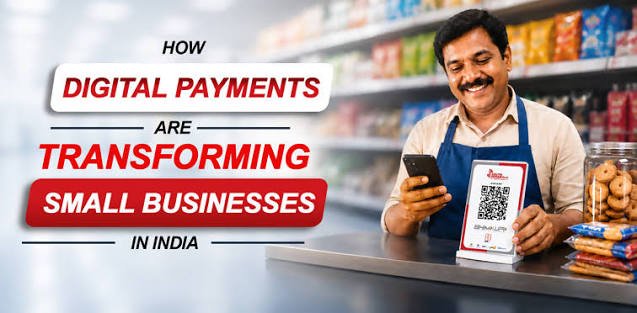
Digital payments are changing how businesses operate across India’s smaller cities. UPI has moved from being an urban convenience to an everyday payment option for consumers and merchants in Tier-2 and Tier-3 markets, opening new opportunities while also changing how local businesses manage sales, customers and cash flow.
UPI adoption accelerates beyond India’s metros
The expansion of digital payments in smaller cities is closely linked to the rapid growth of UPI. By June 2026, around 55.49 crore users had been onboarded on UPI, while the platform had processed 24,162 crore transactions with a total value of about ₹314 lakh crore, according to information provided to Parliament.
While UPI is used across the country, its growing presence in smaller markets is particularly important for local businesses. Consumers who previously relied heavily on cash can now make payments through QR codes, mobile applications and bank-linked payment systems.
For merchants, the change is equally significant. A QR code can allow a small shop, restaurant, service provider or roadside business to accept digital payments without investing in traditional card-processing infrastructure.
Smaller-city consumers are becoming digitally confident
Digital payments are also changing consumer behaviour. A January 2026 survey of more than 5,000 consumers across Tier-2 and Tier-3 cities found that UPI was the default payment method for 67% of respondents. The same research found that 90% used WhatsApp as their primary digital platform.
The findings point to a broader shift in how consumers discover products, communicate with businesses and complete purchases.
This matters because payment behaviour is becoming part of the wider digital customer journey. A consumer may discover a local seller through WhatsApp or social media, ask for product details digitally and complete the transaction through UPI.
For businesses in smaller cities, digital payments therefore represent more than a replacement for cash. They are becoming part of the infrastructure connecting customers, merchants and digital commerce.
Digital payments create new opportunities for local businesses
For small businesses, accepting digital payments can make transactions faster and easier to record. Instead of depending entirely on physical cash, merchants can receive payments directly into their bank accounts.
This can be particularly useful for businesses serving younger consumers, online customers or customers from outside their immediate locality.
The development also supports the expansion of e-commerce and direct-to-consumer businesses outside major metropolitan areas. Better internet access, digital payments and improving logistics are helping Tier-2 and Tier-3 cities become increasingly important markets for online commerce.
A local clothing seller, food business or handicraft manufacturer can potentially reach customers beyond the city while using digital payment infrastructure to collect money remotely.
This reduces one of the traditional barriers faced by small businesses: the need for customers and sellers to be physically present for every transaction.
Tier-2 and Tier-3 markets expand digital commerce
The growth of digital payments is closely connected with the wider development of India’s smaller cities.
The Union Budget 2026 placed greater emphasis on Tier-2 and Tier-3 cities, with a proposal to allocate ₹5,000 crore per City Economic Region over five years through a challenge-based, reform-linked financing mechanism. The government described these cities as important engines of growth, innovation and opportunity.
As regional economies expand, businesses need payment systems that can support both traditional commerce and newer digital models.
This creates opportunities for banks, fintech companies, payment service providers and merchants. It can also encourage more businesses to formalise their operations as digital transactions create electronic records of sales and payments.
However, digital payment adoption does not automatically mean every business is fully digital. Cash continues to play an important role, particularly in informal commerce and areas where digital infrastructure or digital literacy remains uneven.
UPI-linked credit expands the payments ecosystem
The next phase of digital payments is also moving beyond simple bank-account-to-bank-account transactions.
SBI Card’s FY26 data showed that around 77% of its UPI-active credit card customers and nearly 81% of UPI-credit spends originated from Tier-2 and Tier-3 cities. The company attributed the trend partly to the integration of RuPay credit cards with UPI.
This development could change how consumers in smaller cities use digital credit.
Instead of using credit cards mainly for larger purchases, customers can increasingly access credit-linked digital payment options for everyday spending where the payment network and merchant acceptance support them.
For businesses, this can potentially widen the range of payment methods available to customers. At the same time, increased access to digital credit makes responsible borrowing and consumer awareness increasingly important.
The economics of UPI remain an important issue
The rapid expansion of UPI has also raised questions about the long-term economics of the payment ecosystem.
UPI transactions generally do not involve a conventional merchant discount rate for most payments. In March 2026, a parliamentary committee recommended considering a graded merchant discount rate to create a sustainable revenue mechanism for the UPI ecosystem. The committee also discussed incentives and subsidies for digital payment adoption in smaller cities.
The issue is important for businesses because payment costs can influence which digital payment methods merchants choose to accept.
Any future changes to the economics of UPI would need to balance the interests of consumers, merchants, banks, fintech companies and payment operators while maintaining the affordability that helped digital payments spread rapidly.
Digital records could help small businesses formalise
Another important impact of digital payments is the creation of transaction records.
For small businesses, a consistent digital trail can make it easier to track sales and understand payment patterns. Over time, this information can potentially support better financial planning and improve access to formal financial services, although digital transactions alone do not guarantee access to credit.
This is particularly relevant for businesses in smaller cities that are moving from informal operations towards more structured financial management.
Digital payments can also reduce the need for merchants to handle and store large amounts of physical cash. That can simplify certain aspects of daily operations, although businesses still need appropriate safeguards for account access, fraud prevention and transaction verification.
Fraud and digital literacy remain key challenges
The expansion of digital payments also increases the importance of cybersecurity awareness.
Consumers and merchants need to understand that receiving money through UPI does not require entering a UPI PIN. They also need to be cautious about unknown links, fake customer-service numbers, screen-sharing requests and fraudulent payment claims.
For smaller-city businesses, awareness can be as important as access.
Banks, fintech companies and government agencies therefore have a continuing role in improving digital financial literacy. The objective is not simply to increase the number of digital transactions, but to ensure that consumers and merchants can use digital payment systems safely.
What the shift means for India’s smaller cities
The growth of digital payments is becoming part of a larger transformation in India’s regional economies.
Smaller cities are seeing greater digital commerce activity, wider financial product adoption and increasing participation in online consumer markets. Recent research has identified Tier-2 and Tier-3 cities as significant contributors to India’s digital economy, including spending on travel, entertainment and other discretionary categories.
For local businesses, the shift can mean faster payment collection, wider customer access and better transaction records. For consumers, it provides greater convenience and more ways to participate in digital commerce.
The next stage will depend on how effectively infrastructure, financial literacy, cybersecurity and payment economics evolve alongside adoption.
What began as a convenient alternative to cash is increasingly becoming a core part of how businesses in smaller Indian cities sell, collect payments and participate in the wider digital economy.
Key Takeaways
- UPI had around 55.49 crore users onboarded by June 2026, with 24,162 crore transactions recorded by that point.
- A 2026 survey found UPI was the default payment method for 67% of consumers surveyed across Tier-2 and Tier-3 cities.
- UPI-linked credit is gaining traction in smaller cities, with SBI Card reporting strong Tier-2 and Tier-3 participation in UPI-linked credit activity.
- Digital payments are creating new opportunities for regional businesses while increasing the need for cybersecurity and financial literacy.
FAQ
Why are digital payments growing in smaller Indian cities?
Greater smartphone and internet adoption, wider UPI acceptance, QR-based payments and changing consumer habits are helping digital payments expand beyond major metropolitan areas.
How do digital payments benefit small businesses?
They can make payment collection more convenient, reduce dependence on physical cash and create digital transaction records. They can also support businesses selling to customers outside their immediate geographic market.
Are Tier-2 and Tier-3 cities important for India’s digital economy?
Yes. Recent research shows consumers in these markets are increasingly participating in digital commerce and financial services. Improving internet connectivity, logistics and payment infrastructure is supporting this expansion.
What are the risks associated with digital payments?
Fraud, phishing, fake payment requests, account compromise and low digital awareness remain important risks. Consumers and merchants should verify payment requests and never share their UPI PIN or banking credentials.
(Internal keywords: digital payments India, UPI adoption Tier-2 cities, digital payments smaller cities, Tier-3 digital economy, UPI for small businesses, digital payments for merchants, India fintech growth, UPI transactions 2026, Bharat digital economy, small-town businesses India)











Leave a comment