

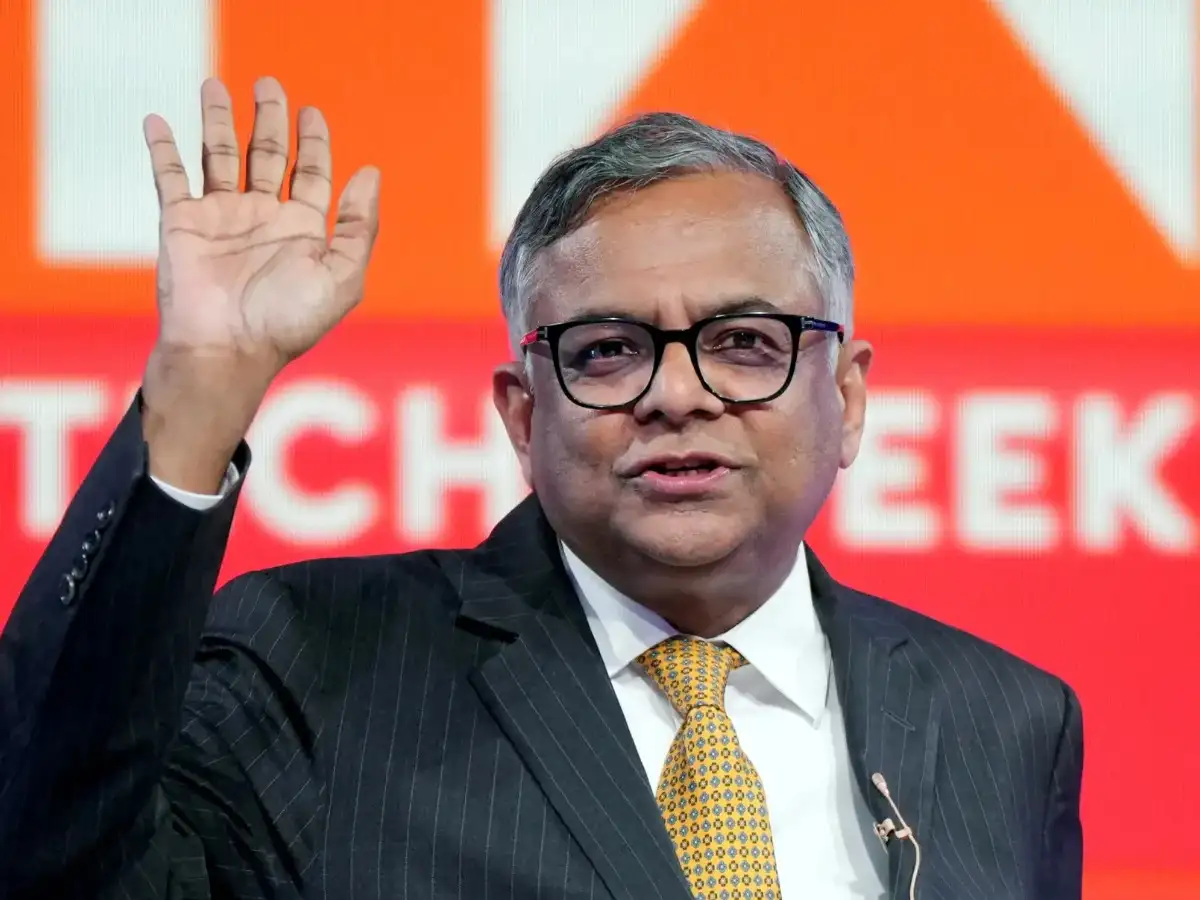
Tata Sons has extended N Chandrasekaran’s tenure as executive chairman by five years and begun steps toward a potential public listing. The decisions come after the Reserve Bank of India rejected Tata Sons’ request to exit its NBFC registration, putting the group’s ownership structure and listing plans under renewed scrutiny.
Chandrasekaran Gets Another Five-Year Term
Tata Sons has reappointed N Chandrasekaran as executive chairman for another five-year term, reversing his earlier decision not to seek a third term. The board approved the extension on September 17, 2026, following discussions around leadership continuity and the company’s regulatory position.
Chandrasekaran has led Tata Sons since 2017 and oversees the holding company that sits at the centre of the wider Tata Group. His continuation comes at a significant point for the conglomerate as Tata Sons faces regulatory pressure over a possible stock market listing.
The leadership decision also removes, at least temporarily, uncertainty over who will guide Tata Sons through the next phase. However, the question of how the company will respond to the listing requirement remains unresolved.
Tata Sons Listing Plans Move Forward
The Tata Sons board has also initiated steps toward a potential public listing. The development follows the Reserve Bank of India’s decision to reject the company’s application to surrender its registration as a core investment company.
Tata Sons is classified as an upper-layer non-banking financial company under the RBI framework. Companies in this category are subject to additional regulatory requirements, including listing provisions in applicable circumstances. The RBI filed a legal caveat earlier this week in anticipation of possible legal proceedings related to the matter.
The regulatory issue has therefore become a central factor in Tata Sons’ future structure. A public listing would mark a major change for a company that has historically operated as an unlisted holding entity at the centre of the Tata Group.
Tata Trusts Oppose the Listing Proposal
The potential Tata Sons IPO is not simply a regulatory or financial decision. It is also connected to the ownership structure of the group.
Tata Trusts collectively hold about 66% of Tata Sons and have expressed opposition to the listing plan. The Trusts said on September 17 that they had not agreed to a Tata Sons listing and wanted the board to examine all available alternatives.
The disagreement adds another layer to the company’s governance discussions. Tata Trusts Chairman Noel Tata has also opposed Chandrasekaran’s reappointment, according to reports.
Reuters reported that the dispute involves differences between Tata Sons and Tata Trusts over leadership, succession and the proposed listing. The Trusts’ position is particularly important because of their majority ownership in Tata Sons.
Why the RBI Decision Matters
The immediate background to the Tata Sons listing debate is the company’s regulatory classification.
Tata Sons had sought to surrender its NBFC registration, which would have been relevant to its attempt to remain outside the listing requirement applicable to upper-layer NBFCs. The RBI rejected that request, leaving Tata Sons subject to the regulatory framework.
This does not mean Tata Sons has already launched an IPO. The company has begun working toward compliance and examining the route forward, but several regulatory, legal, shareholder and structural questions remain.
That distinction is important for investors and readers. Current developments indicate movement toward a possible listing, rather than a completed decision on the final IPO structure, timing or valuation.
Shapoorji Pallonji Group Backs Potential Listing
The Tata Sons listing debate also involves the Shapoorji Pallonji Group, which owns an 18.4% stake in Tata Sons and is the company’s second-largest shareholder.
On September 18, the Shapoorji Pallonji Group expressed support for a potential public listing of Tata Sons. The group has been considering ways to monetise part of its holding as it manages its debt obligations.
Reuters reported that the group had proposed selling part of its Tata Sons stake, with the value of the proposed sale estimated at around $2.61 billion. The proposed transaction could take place in two stages over 18 months, according to information disclosed by Tata Trusts.
A Tata Sons listing could therefore provide one potential route for existing shareholders to realise value from their holdings.
What a Tata Sons IPO Could Change
A public listing would bring Tata Sons under greater scrutiny from public-market investors. The company’s financial disclosures, governance arrangements and relationship with its operating businesses would receive greater attention.
Tata Sons itself is not the same as the listed companies commonly associated with the Tata name. It is the principal holding company of the group and owns stakes in several major businesses.
The Tata Group has operations spanning information technology, automobiles, steel, consumer products, hospitality, aviation and financial services. Tata Sons’ ownership interests therefore connect it to a large and diversified corporate network.
For the Indian capital market, a Tata Sons IPO would also be notable because of the scale and importance of the group. However, the eventual size, valuation, structure and timing of any offering cannot yet be confirmed.
Tata Group Companies React to the Developments
The leadership and listing developments have already influenced trading in several Tata Group companies.
Major Tata stocks initially gained after Chandrasekaran’s reappointment was announced on September 17. On September 18, however, several Tata Group companies declined as investors assessed the continuing dispute between Tata Sons and Tata Trusts. Reuters reported that Tata Group companies collectively lost about $3.2 billion in market value during Friday trading.
The market reaction illustrates that investors are paying close attention to the governance situation, even though the listed companies are separate legal entities from Tata Sons.
The eventual outcome of the Tata Sons dispute could influence perceptions around group governance, capital allocation and strategic decision-making.
What Happens Next for Tata Sons
The immediate focus is likely to remain on regulatory compliance, shareholder discussions and the legal position surrounding the listing requirement.
The Tata Sons board has indicated that it will work toward complying with the RBI framework. At the same time, Tata Trusts has maintained that alternatives to listing should be examined.
The leadership decision gives Chandrasekaran another five years to guide Tata Sons, but it does not resolve the disagreement between the company’s major stakeholders.
For the broader Indian business sector, the situation is worth watching because Tata Sons represents a distinctive ownership model in Indian corporate history. A transition from a privately held holding company to a publicly listed entity could change how the group interacts with investors, shareholders and regulators.
For now, the key development is that Tata Sons has moved from debating its future listing position toward preparing for possible compliance, while its shareholders remain divided over the route forward.
Key Takeaways
- N Chandrasekaran has been reappointed as Tata Sons executive chairman for another five years.
- Tata Sons has begun steps toward a potential public listing following the RBI’s rejection of its request to exit NBFC registration.
- Tata Trusts, which collectively hold about 66% of Tata Sons, have said they have not agreed to the listing.
- The Shapoorji Pallonji Group, which owns about 18.4%, has backed a potential listing and is considering monetising part of its stake.
FAQs
Why is Tata Sons considering a public listing?
Tata Sons is facing regulatory requirements applicable to upper-layer NBFCs. The RBI rejected its request to surrender its NBFC registration, increasing pressure on the company to comply with the applicable listing framework.
Has Tata Sons officially launched an IPO?
No. Tata Sons has initiated steps toward a potential listing and is working on regulatory compliance, but an IPO date, final structure and valuation have not been announced.
Who owns Tata Sons?
Tata Trusts collectively hold about 66% of Tata Sons. The Shapoorji Pallonji Group holds about 18.4%, making it the second-largest shareholder.
Why is N Chandrasekaran continuing as chairman?
Chandrasekaran had earlier indicated that he would not seek another term. He subsequently agreed to continue after the Tata Sons board requested him to reconsider, and the board approved a fresh five-year term on September 17, 2026.
(Internal keyword suggestions: Tata Sons leadership, Tata Sons IPO, Tata Sons listing, N Chandrasekaran reappointment, Tata Sons public listing, Tata Trusts, Shapoorji Pallonji Tata stake, RBI Tata Sons listing, Tata Group news, Tata Sons IPO plans)









Leave a comment