

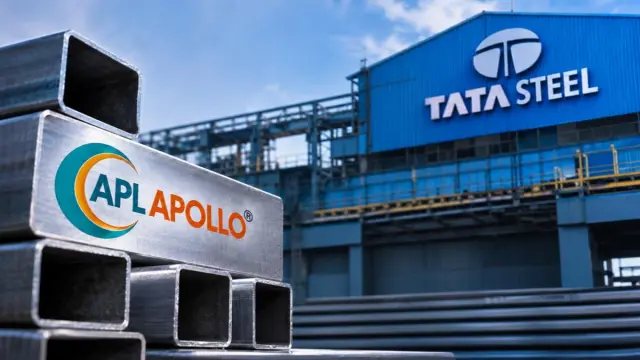
The Tata Steel and APL Apollo deal has drawn attention to India’s steel industry, with investors examining the financial, strategic and operational implications of the transaction. The key questions concern valuation, business synergies, market competition and the potential impact on shareholders.
Tata Steel-APL Apollo Deal: Understanding the Transaction
The proposed Tata Steel and APL Apollo transaction involves two major steel businesses and a restructuring of their downstream operations. It combines Tata Steel’s acquisition of a controlling stake in APL Apollo with the transfer of Tata Steel’s existing tubes and colour-coated steel businesses to the company.
Under the arrangement announced on November 22, 2026, Tata Steel agreed to transfer its steel tubes business to APL Apollo for consideration of up to ₹11,700 crore. The business includes manufacturing facilities at Jamshedpur, Hosur, Khopoli and Sahibabad.
Separately, Tata Steel agreed to sell its entire 100% holding in Tata Steel Colors Private Limited to APL Apollo for ₹16,300 crore.
Together, these asset transactions are valued at approximately ₹28,000 crore. The companies intend to consolidate their downstream steel operations under APL Apollo. Tata Steel+1
On the ownership side, Tata Steel agreed to acquire a 26.38% stake in APL Apollo from promoter group entity S Gupta Holding Private Limited for approximately ₹15,510 crore, at ₹2,100 per share. It also announced an open offer for an additional 26% stake at ₹2,301.40 per share.
Tata Steel completed a separate block purchase of approximately 9.91% of APL Apollo’s expanded voting share capital for around ₹5,825 crore on November 23. The broader acquisition, if fully completed, could give Tata Steel control of approximately 52.38% of APL Apollo. Tata Steel+2
Why the Deal Is Attracting Investor Attention
The transaction has a strategic rationale, but its financial structure has raised questions among market participants.
For Tata Steel, the acquisition offers an opportunity to increase its exposure to downstream steel products, including structural tubes and colour-coated products. These products serve sectors such as construction, infrastructure, housing, automobiles and industrial manufacturing.
For APL Apollo, acquiring Tata Steel’s existing facilities and businesses could expand its manufacturing footprint and strengthen its position in the Indian steel tubes market.
However, investors are examining whether the benefits justify the financial commitments involved.
The main concern is that APL Apollo will need to arrange substantial funding to acquire the two Tata Steel businesses, while Tata Steel will simultaneously become its controlling shareholder. This structure has led investors and proxy advisory firms to question how the transaction distributes financial risks and benefits between the two companies and their respective shareholders. Company Business News+1
APL Apollo’s ₹28,000 Crore Debt Requirement Raises Concerns
One of the biggest concerns surrounding the Tata Steel-APL Apollo deal is the proposed financing of the ₹28,000 crore asset acquisition.
APL Apollo is expected to initially use acquisition financing to fund the purchase. This could significantly increase its debt obligations and interest expenses.
For investors, higher borrowing creates questions about the company’s ability to maintain profitability while servicing its new financial commitments.
The concern is particularly relevant because the acquired businesses will need time to contribute earnings and generate sufficient cash flow. Until that happens, interest payments could put pressure on APL Apollo’s financial performance.
According to reporting by The Financial Express, management has outlined a plan to reduce acquisition-related debt by approximately ₹18,000 crore within 12 months, primarily through equity infusion and operating cash flows. It has also indicated an objective of making the company debt-free within three years.
However, the proposed equity infusion introduces another uncertainty. If APL Apollo issues new shares to raise capital, existing shareholders could experience equity dilution. The extent of dilution will depend on the issue price, number of shares issued and the company’s financial performance.
Investors therefore want greater clarity on the funding structure and how the company plans to balance debt reduction with shareholder value. The Financial Express+2
Valuation of Tata Steel’s Assets Becomes a Key Issue
Another major concern relates to the valuation of the businesses being transferred to APL Apollo.
The ₹28,000 crore transaction includes ₹11,700 crore for Tata Steel’s tubes business and ₹16,300 crore for Tata Steel Colors.
During an investor interaction, questions were raised about the valuation of the colour-coated steel business. APL Apollo Chairman Sanjay Gupta reportedly estimated that creating comparable manufacturing capacity from scratch could cost around ₹2,500 crore to ₹3,000 crore and take two to three years.
This led investors to question why APL Apollo was paying substantially more for the existing business.
APL Apollo’s management defended the valuation by pointing to factors beyond manufacturing capacity. These include established facilities, land, Tata Steel’s brand, distribution networks and existing customer relationships.
The distinction is important because acquiring an operational business is different from setting up a new manufacturing facility. An established business may offer immediate access to customers, distribution channels and operating infrastructure.
However, investors still need evidence that these advantages can generate sufficient returns to justify the acquisition price. The Financial Express reported that the purchase price represents approximately 23 to 24 times the estimated annualised EBITDA of the acquired businesses, adding to questions about the transaction’s financial attractiveness. The Financial Express+1
Minority Shareholders Question the Deal Structure
The interests of minority shareholders have become another important issue in the proposed transaction.
APL Apollo’s existing promoter group is selling a substantial stake to Tata Steel while the company itself is preparing to borrow money to acquire Tata Steel’s businesses.
Some investors and proxy advisory representatives have questioned whether this arrangement adequately protects shareholders who will continue holding APL Apollo shares after the promoter’s exit.
According to Mint’s November 25 report, proxy advisory firm InGovern criticised the transaction’s structure and indicated that it would recommend voting against the asset acquisition resolution.
A mutual fund manager quoted in the report also expressed concerns about APL Apollo taking on the debt burden instead of Tata Steel financing the acquisition after gaining control.
These objections highlight an important corporate governance question: whether the financial structure creates a fair balance between the interests of the selling promoters, the incoming controlling shareholder and the remaining public shareholders.
The transaction will require the relevant shareholder and regulatory approvals. Consequently, the response of minority shareholders could become an important factor in determining its progress. Company Business News+1
Tata Steel Share Price Reaction Reflects Market Uncertainty
The announcement triggered a sharp reaction in the stock market.
On November 23, Tata Steel shares declined approximately 8%, while APL Apollo Tubes shares fell more than 21%. The combined market capitalisation of the two companies reportedly declined by approximately ₹30,707 crore.
The selling pressure reflected concerns about acquisition costs, financing requirements and the possible impact on future earnings.
For Tata Steel shareholders, the acquisition raises questions about the price being paid for APL Apollo and the additional financial exposure that could arise from consolidating its debt.
For APL Apollo investors, the immediate concerns include increased borrowing, potential equity dilution and uncertainty over how quickly the acquired businesses can contribute to earnings.
APL Apollo shares also remained under pressure on November 25. Reuters reported that the stock fell 15% during Wednesday’s trading after the previous session’s sharp decline, while Tata Steel’s shares were also being assessed by investors.
It is important to distinguish between market reaction and the long-term financial performance of the transaction. A sharp share price decline indicates investor concerns, but it does not by itself establish whether the deal will ultimately succeed or fail. Markets News – Business Standard+2
What the Deal Could Mean for India’s Steel Industry
Despite investor concerns, the transaction could have wider implications for India’s steel industry.
The proposed consolidation aims to create a larger downstream steel platform combining manufacturing capacity, distribution networks and established product businesses.
According to Reuters, the combined tube business is expected to have an initial annual capacity of approximately 7.5 million tonnes, with plans to expand this to 15.5 million tonnes by 2035.
Downstream steel products are important for multiple industries, including construction, infrastructure, engineering, transportation and manufacturing.
India’s infrastructure expansion and urban development requirements create demand for steel products used in buildings, industrial facilities, warehouses and transportation networks.
A larger manufacturing platform could help improve production capabilities and expand the availability of specialised steel products.
There may also be opportunities for smaller businesses. Suppliers, logistics companies, equipment manufacturers and local contractors could benefit from increased industrial activity if the expanded operations generate additional demand.
However, the benefits will depend on successful integration, production efficiency, customer demand and the ability to manage the financial obligations created by the transaction. Reuters+1
Leadership Transition Adds Another Layer of Uncertainty
The leadership transition at APL Apollo is also attracting attention.
Sanjay Gupta, who has been closely associated with the company’s growth, is exiting as its promoter through the proposed stake sale to Tata Steel.
His departure raises questions about how the company will maintain its existing business strategy and entrepreneurial approach under a new controlling shareholder.
Investors have also sought clarity about his future involvement in the business and the leadership structure after the transaction.
According to The Financial Express, Gupta indicated during the investor interaction that he was not managing the business, while also expressing his intention to help the company achieve its long-term targets.
The proposed arrangement involving SG Tech Engineering, a promoter-associated company, has also attracted investor attention. The company is expected to establish contract manufacturing facilities with a capacity of five million tonnes for colour-coated products.
Investors will want clarity on how this arrangement will operate, how responsibilities will be divided and how the associated commercial terms will be structured.
A successful leadership transition will be important for maintaining business continuity and delivering the operational improvements expected from the transaction. The Financial Express+1
What Happens Next in the Tata Steel-APL Apollo Deal?
The transaction now faces several important milestones.
Both companies will need to complete the necessary regulatory and shareholder approval processes and fulfil the conditions attached to the agreements.
Tata Steel’s November 22 announcement stated that the transfer of its tubes business was proposed to be completed on or before March 31, 2028, subject to the required conditions and approvals. The two asset transfers are conditional on each other and are intended to close simultaneously.
Investors will also closely monitor APL Apollo’s borrowing arrangements, the proposed equity infusion, the treatment of goodwill and the company’s debt reduction plans.
For Tata Steel, the focus will be on whether the acquisition strengthens its downstream business without creating excessive financial pressure.
For APL Apollo, the immediate challenge will be to integrate the acquired operations while managing debt and protecting shareholder value.
The transaction represents a significant restructuring of two major steel businesses. While the strategic objective is to build a larger downstream steel platform, investor confidence will depend on transparent execution, financial discipline and measurable business performance.
The coming quarters will reveal whether the proposed combination can deliver the operational benefits expected by management while addressing concerns raised by shareholders.
Key Takeaways
- Tata Steel has agreed to acquire a 26.38% promoter stake in APL Apollo for approximately ₹15,510 crore and announced an open offer for another 26%.
- APL Apollo will acquire Tata Steel’s tubes and colour-coated businesses for a combined consideration of ₹28,000 crore.
- Investors have raised concerns about APL Apollo’s proposed debt burden, valuation, potential equity dilution and minority shareholder interests.
- The long-term outcome will depend on regulatory approvals, successful integration, debt reduction and the ability to generate sustainable earnings.
Frequently Asked Questions (FAQs)
1. What is the Tata Steel-APL Apollo deal?
The transaction involves Tata Steel acquiring a controlling stake in APL Apollo Tubes while transferring its steel tubes and colour-coated businesses to APL Apollo for approximately ₹28,000 crore.
2. Why are investors concerned about the APL Apollo deal?
Investors are concerned about the substantial borrowing required to finance the asset acquisition, the valuation of the businesses, possible equity dilution and the impact on minority shareholders.
3. How much is Tata Steel investing in APL Apollo?
Tata Steel has agreed to acquire a 26.38% promoter stake for approximately ₹15,510 crore. It has also announced an open offer for an additional 26% stake at ₹2,301.40 per share. If fully subscribed, the total investment could reach approximately ₹32,266 crore.
4. How could the deal affect India’s steel industry?
The transaction aims to create a larger downstream steel platform with expanded manufacturing capacity, stronger distribution capabilities and a broader product portfolio. Its actual impact will depend on integration, demand and financial performance.












Leave a comment