

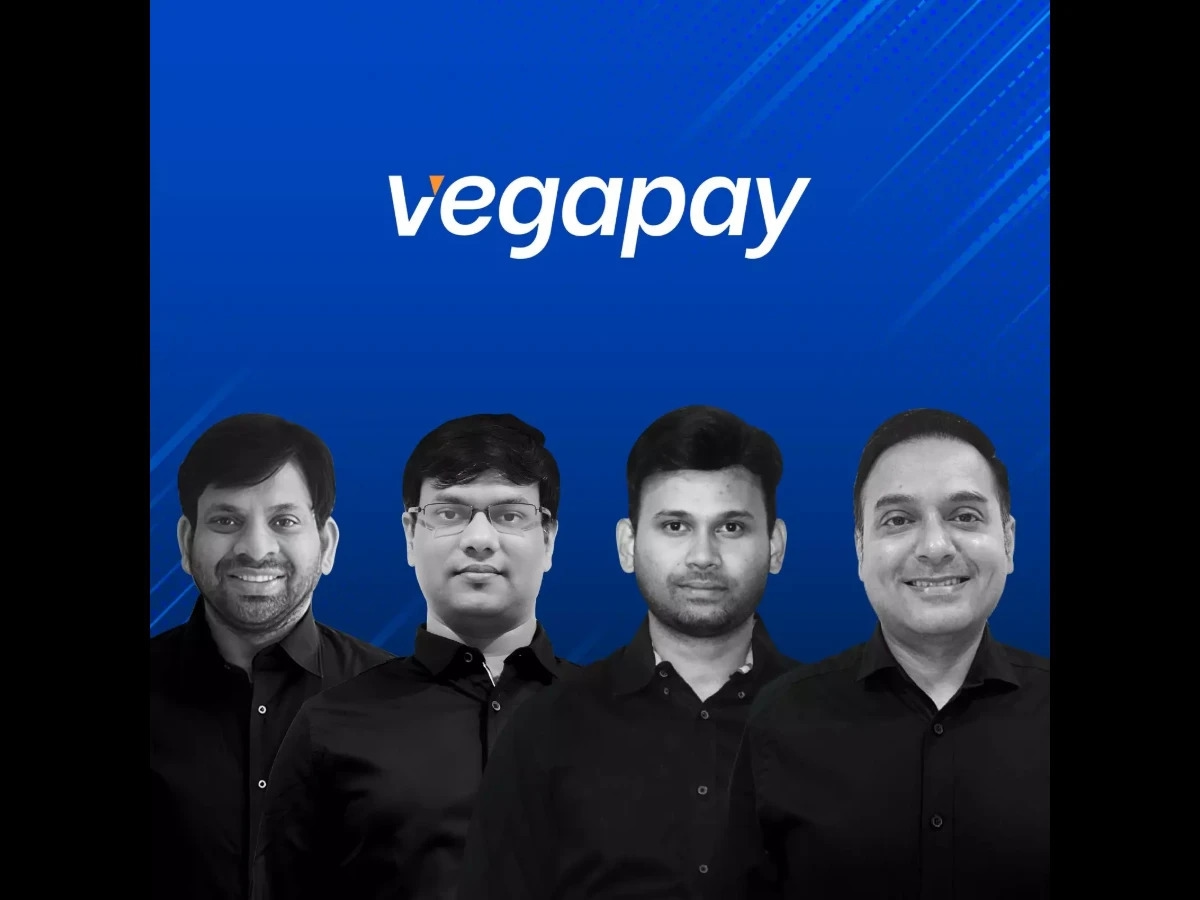
Mumbai-based fintech startup Vegapay has raised $10 million from Prosus and Vertex Ventures to expand its credit technology platform. The investment comes as Indian banks explore Credit Line on UPI products, creating new opportunities in digital lending, financial inclusion and payment-linked credit services.
Vegapay Raises $10 Million in Series A Funding
India’s fintech ecosystem is attracting fresh investor interest in technology that connects digital payments with formal credit. Mumbai-based Vegapay has raised $10 million (approximately ₹92.3 crore) in a Series A funding round co-led by Prosus and Vertex Ventures Southeast Asia and India.
Existing investors Elevation Capital and Eximius Ventures also participated in the round.
Founded in 2022, Vegapay develops financial technology infrastructure that helps banks and financial institutions launch and manage credit products, including Credit Line on UPI, credit cards and other lending programmes.
The latest funding round includes both primary and secondary transactions. More than 40 employees will reportedly get an opportunity to sell a portion of their vested employee stock options.
The company plans to use the fresh capital to expand its Credit Line on UPI platform, onboard additional banking partners, introduce secured credit products and strengthen its engineering and risk management teams.
The investment reflects growing interest in the technology infrastructure supporting India’s next phase of digital lending.
Where Will Vegapay Invest the Fresh Funding?
Vegapay intends to direct the new capital towards expanding its technology platform and increasing its presence across India’s financial services ecosystem.
One of its primary objectives is to onboard more banks onto its Credit Line on UPI infrastructure.
The company also plans to introduce secured credit lines backed by fixed deposits, gold and mutual funds. These products could allow eligible customers to access credit against financial assets instead of relying entirely on unsecured borrowing.
Apart from UPI-linked credit, Vegapay intends to expand its credit card, prepaid card and forex card programmes.
Another priority is strengthening its engineering and risk teams. As more financial institutions adopt digital lending products, technology providers need systems capable of handling transaction processing, credit limits, customer information and risk management.
The funding is therefore aimed at expanding the company’s business infrastructure rather than simply increasing consumer-facing marketing activities.
What Is Vegapay and How Does Its Technology Work?
Vegapay operates primarily as a business-to-business fintech infrastructure provider.
Instead of functioning like a conventional consumer lending application, it supplies technology that banks and financial institutions can use to launch and manage credit programmes.
Its platform supports credit management, card issuance infrastructure and lending-related operations.
For banks, developing an entire credit technology system independently can require substantial investment in software, integration, compliance and ongoing maintenance.
Technology providers such as Vegapay offer an alternative by allowing financial institutions to use existing infrastructure and customise products according to their requirements.
The platform also supports multiple credit programmes with independent limits, pricing structures and operational rules.
According to the company, its technology can be deployed through cloud infrastructure or on-premises systems, depending on the requirements of the financial institution.
This business model places Vegapay within India’s growing fintech infrastructure segment, where companies provide the technology behind banking and financial services rather than directly competing for every consumer transaction.
Credit Line on UPI: Understanding India’s Next Digital Lending Opportunity
The main business opportunity behind Vegapay’s funding is Credit Line on UPI, also known as CLOU.
The concept combines India’s widely used digital payments network with pre-sanctioned credit facilities issued by banks.
Under this arrangement, an eligible customer receives a credit line from a participating bank. After accepting the applicable terms, the customer can use the approved credit facility to make payments through UPI at supported merchant payment points.
For example, a customer with an approved credit line could use the facility to pay a retailer by scanning a UPI QR code, rather than transferring money directly from a savings account.
The payment is funded through the bank-approved credit facility, and the customer must repay the amount according to the agreed terms.
This creates another way to access formal credit without requiring a conventional credit card.
However, Credit Line on UPI is not the same as ordinary UPI payments. Customers need an eligible credit facility, bank approval and the required consent before using it.
The availability of this service also depends on the participating bank, supported payment applications and applicable transaction conditions.
RBI Regulations Provide the Foundation for Credit on UPI
The Reserve Bank of India has played an important role in enabling credit-linked UPI payments.
In September 2023, the RBI permitted scheduled commercial banks to offer pre-sanctioned credit lines as a funding account through UPI.
The facility allows customers to make UPI transactions using credit lines issued by banks, subject to prior customer consent.
Banks can determine the terms of these facilities through their board-approved policies. These may include credit limits, repayment periods and interest rates.
In February 2025, the RBI updated its instructions to extend the facility to Small Finance Banks as well.
This is particularly relevant because Small Finance Banks serve individuals, small businesses and customers who may have limited access to conventional banking services.
In June 2026, the RBI also issued further directions clarifying the prudential treatment of credit facilities linked to specific payment instruments, including UPI-linked credit lines.
The regulatory framework makes one distinction clear: the underlying credit facility remains subject to applicable banking and lending regulations, regardless of whether it is accessed through UPI.
For companies such as Vegapay, these developments create opportunities to supply technology to regulated lenders interested in expanding digital credit offerings.
Which Banks and Fintech Platforms Are Using Vegapay’s Technology?
Vegapay has already established relationships with several financial institutions and consumer-facing fintech platforms.
According to company information reported by Inc42, its platform is live with YES BANK, Unity Small Finance Bank, Suryoday Small Finance Bank and BOBCARD.
It also supports credit programmes associated with platforms such as Paytm, BharatPe, Kiwi UPI, Scapia and EbixCash World Money.
These relationships highlight the company’s position in the financial technology supply chain.
Banks and financial institutions remain responsible for issuing and managing the underlying credit facilities according to applicable regulations. Vegapay provides the technology infrastructure that supports these programmes.
For fintech platforms, partnerships with banks can help introduce additional payment and credit features without independently becoming lenders.
This arrangement is important in India’s digital finance ecosystem, where technology companies, payment applications, banks and NBFCs often work together to deliver financial products.
As more banks evaluate UPI-linked credit, infrastructure providers could find opportunities to expand their institutional customer base.
Secured Credit Lines Backed by Gold, Fixed Deposits and Mutual Funds
One of Vegapay’s planned product expansions involves secured credit lines backed by financial assets.
Secured lending allows eligible customers to access credit against assets pledged or otherwise accepted as security by the lender.
Fixed deposits, gold and mutual funds represent different categories of assets that may support such lending arrangements, subject to the lender’s product terms and applicable regulations.
For example, an individual holding a fixed deposit may prefer accessing a loan against that deposit instead of prematurely withdrawing the investment.
Similarly, eligible customers may be able to access credit against gold or mutual fund holdings through financial institutions offering such products.
The advantage is that borrowers may be able to access liquidity without immediately selling certain assets.
However, secured credit is not free money. Customers remain responsible for interest payments, repayment obligations and applicable charges.
The value of pledged assets can also affect borrowing limits and the lender’s risk exposure.
By developing technology for these products, Vegapay could expand its role beyond UPI-linked credit into a wider range of secured lending and financial services infrastructure.
Why Investors Are Interested in Credit Infrastructure Startups
The Vegapay funding round reflects a broader investment opportunity in the technology supporting India’s financial services industry.
India’s digital payments ecosystem has expanded rapidly through UPI, mobile banking and online financial services.
However, payment infrastructure and credit infrastructure serve different purposes.
Payment systems allow customers to transfer money and complete transactions. Credit infrastructure helps lenders evaluate borrowers, establish credit limits, manage repayments and monitor lending risks.
As financial institutions introduce more digital lending products, they require technology that can support these processes efficiently.
This creates opportunities for business-to-business fintech companies.
Investors may find such businesses attractive because their customers are financial institutions and other fintech platforms that require long-term technology partnerships.
However, the business model also has challenges. Infrastructure companies must maintain system reliability, comply with data security requirements and integrate with different banking systems.
Their growth depends on institutional adoption, technology performance and the ability to generate recurring business revenue.
Vegapay’s latest investment indicates that Prosus and Vertex Ventures are backing its expansion in this segment.
Can Credit Line on UPI Expand Formal Credit Access in Smaller Cities?
The growth of UPI-linked credit could have implications beyond India’s largest metropolitan markets.
Small retailers, local merchants and consumers in Tier-2 and Tier-3 cities increasingly use digital payments for everyday transactions.
However, access to formal credit remains uneven across different regions and customer categories.
Credit Line on UPI could provide eligible bank customers with another way to access approved credit through familiar payment applications.
For example, a small retailer in Nagpur or Indore who has been approved for a bank credit facility may be able to use it for supported merchant payments through UPI.
Similarly, eligible consumers could use credit-linked UPI payments for purchases without depending entirely on conventional credit cards.
Small Finance Banks could also play a role in extending such services to their existing customer base.
However, wider adoption will depend on bank participation, customer eligibility, credit assessment and the availability of suitable products.
UPI’s extensive acceptance network provides a distribution advantage, but it does not automatically solve the problem of creditworthiness or affordability.
Challenges Facing the Credit on UPI Business Model
Despite the opportunities, credit-linked UPI services face several challenges that could influence their adoption.
Credit risk: Easy payment access does not remove the possibility of defaults. Banks must assess borrowers and establish appropriate credit limits.
Interest and repayment costs: Customers need to understand the interest rates, fees and repayment schedules associated with their credit facilities.
Regulatory compliance: Credit products accessed through UPI remain subject to applicable RBI rules and banking regulations.
Fraud and cybersecurity: Financial institutions and technology providers must protect customer information and payment systems against fraud and unauthorised access.
Merchant and customer adoption: Banks need to build awareness and ensure that customers understand how credit-linked payments differ from regular UPI transactions.
Competition: Established banking technology providers and fintech infrastructure companies are also competing to serve financial institutions.
For Vegapay, converting its latest funding into wider bank partnerships and sustainable business growth will depend on addressing these operational requirements.
What Vegapay’s Funding Signals for India’s Fintech Industry
Vegapay’s $10 million Series A funding highlights the growing importance of infrastructure companies in India’s digital finance ecosystem.
The next phase of fintech growth may involve more than payment applications and consumer-facing lending platforms. Technology providers that help banks distribute, manage and monitor financial products could also become important participants.
Credit Line on UPI offers one potential growth area by combining an existing payment network with regulated bank credit.
If adoption increases, infrastructure providers could benefit from demand for credit management systems, card technology, lending integrations and risk management solutions.
For banks, these platforms may reduce the complexity of launching new financial products. For customers, they could provide additional ways to access formal credit.
However, the success of the model will depend on responsible lending and the ability of financial institutions to maintain sustainable repayment practices.
Vegapay’s latest funding provides capital to pursue these opportunities. Whether Credit Line on UPI becomes a major fintech growth category will ultimately depend on customer demand, bank participation and the economics of digital lending.
Key Takeaways
- Mumbai-based Vegapay has raised $10 million in a Series A round co-led by Prosus and Vertex Ventures, with participation from Elevation Capital and Eximius Ventures.
- The company plans to expand its Credit Line on UPI platform and introduce secured credit products backed by fixed deposits, gold and mutual funds.
- Vegapay provides technology infrastructure to banks and fintech platforms rather than acting as the direct lender for every credit product.
- RBI regulations have enabled pre-sanctioned bank credit lines through UPI, creating opportunities for financial institutions and fintech infrastructure providers.
Frequently Asked Questions (FAQs)
1. What is Vegapay and what does the company do?
Vegapay is a Mumbai-based fintech infrastructure startup founded in 2022. It provides technology that helps banks and financial institutions launch and manage Credit Line on UPI, credit card and other lending programmes.
2. How much funding has Vegapay raised in November 2026?
Vegapay raised $10 million, approximately ₹92.3 crore, in a Series A round co-led by Prosus and Vertex Ventures Southeast Asia and India. Elevation Capital and Eximius Ventures also participated.
3. What is Credit Line on UPI?
Credit Line on UPI allows eligible customers to use a pre-sanctioned credit facility issued by a participating bank to make payments through supported UPI applications. Customers must obtain bank approval, provide consent and repay the borrowed amount according to the applicable terms.
4. Can Credit Line on UPI replace traditional credit cards?
Credit Line on UPI provides another way to access bank-approved credit through UPI payments. However, it does not completely replace credit cards because the products can have different eligibility requirements, features, acceptance conditions and benefits.
(Internal keyword suggestions: Vegapay funding news, Vegapay raises $10 million, Prosus Vertex Ventures investment, Credit Line on UPI India, UPI credit facility, Indian fintech startup funding, digital lending infrastructure India, RBI UPI credit guidelines, fintech infrastructure startups, secured credit lines India, bank lending technology, UPI payments and credit, Indian digital payments ecosystem, fintech funding November 2026, Mumbai fintech startups.)











Leave a comment