

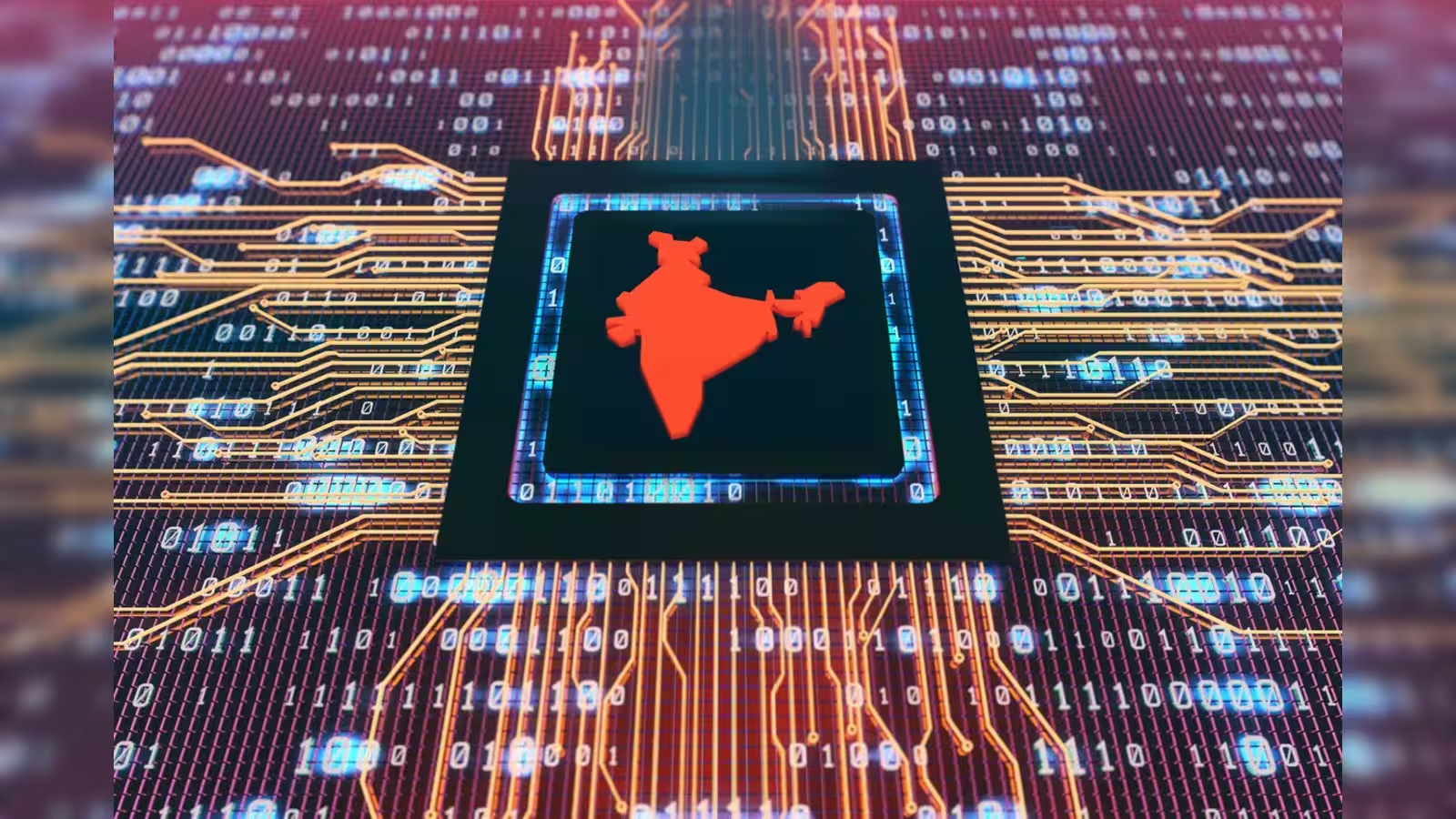
India’s semiconductor push has entered a new phase with the launch of Semicon 2.0, a government-backed initiative designed to build a complete chip manufacturing ecosystem. The programme is expected to generate thousands of direct and indirect jobs across manufacturing, engineering, research, logistics, and supply chains. While semiconductor production takes years to mature, industry experts believe the policy could significantly expand employment opportunities over the next decade.
India has long been one of the world’s largest consumers of electronic devices but has depended heavily on imported semiconductor chips. With rising geopolitical tensions, increasing demand for artificial intelligence, electric vehicles, data centres, and advanced electronics, the government is now investing aggressively to build domestic capabilities. The latest policy signals that job creation is becoming as important as technology self-reliance.
Semicon 2.0 Expands India’s Semiconductor Ecosystem
The Union Cabinet recently approved Semicon 2.0 with a total outlay of ₹1.27 lakh crore. Unlike the earlier phase, the new programme takes a broader approach by supporting semiconductor fabrication, chip design, packaging, specialised equipment, chemicals, gases, materials, research, and workforce development.
The programme also aims to strengthen every stage of the semiconductor value chain instead of focusing only on manufacturing plants. This wider ecosystem means employment opportunities will not be limited to engineers working inside chip fabrication facilities. Thousands of professionals will also be required in design centres, testing laboratories, supply chain companies, equipment manufacturing, research institutions, and supporting industries.
Another important change is the government’s decision to support eligible semiconductor startups through milestone-based funding and equity participation alongside venture capital firms. This is expected to encourage innovation while improving access to long-term financing for deep-tech companies.
Where New Jobs Are Likely to Be Created
Semiconductor manufacturing is one of the most employment-intensive technology industries because it requires expertise across multiple disciplines.
Chip fabrication plants need process engineers, electrical engineers, mechanical engineers, chemical engineers, automation specialists, equipment technicians, quality assurance professionals, safety experts, and maintenance teams. Every new fabrication facility also generates demand for construction workers, industrial suppliers, logistics providers, utilities, and security services.
The semiconductor design industry offers opportunities for VLSI engineers, embedded systems developers, chip architects, software developers, firmware engineers, artificial intelligence specialists, and verification engineers.
Packaging and testing facilities require production managers, manufacturing technicians, inspection engineers, and machine operators. Research laboratories and universities will also need scientists, faculty members, and semiconductor researchers as India expands its innovation ecosystem.
This diversity means employment will not be limited to a single profession or location.
Tier-2 Cities Could Become Major Beneficiaries
One of the most significant aspects of India’s semiconductor strategy is its potential impact beyond major metropolitan cities.
As semiconductor companies establish manufacturing facilities, supplier parks, design centres, and training institutes, nearby Tier-2 cities could witness increased economic activity. Electronics manufacturing clusters often create opportunities for local MSMEs supplying industrial machinery, precision components, packaging materials, chemicals, logistics services, and maintenance solutions.
Educational institutions in cities such as Mysuru, Coimbatore, Vadodara, Indore, Nagpur, Bhubaneswar, Jaipur, Surat, and Chandigarh may also strengthen semiconductor-focused engineering programmes to meet future industry demand.
This could reduce migration pressures by allowing skilled professionals to build careers closer to their hometowns while supporting regional economic development.
Demand for Skilled Talent Will Continue to Grow
Building semiconductor plants requires advanced technical knowledge. As a result, India will also need substantial investments in skill development.
Engineering graduates with expertise in electronics, electrical engineering, material science, computer engineering, physics, chemical engineering, and automation are expected to benefit the most. At the same time, diploma holders and technicians trained in industrial operations, clean-room management, equipment maintenance, and quality control will also find new opportunities.
Semicon 2.0 places significant emphasis on research and talent development, recognising that a competitive semiconductor industry depends on a highly skilled workforce alongside manufacturing infrastructure.
Industry collaboration with universities and technical institutes is expected to increase as companies seek specialised talent for chip design and manufacturing.
Challenges India Must Address
While the employment outlook is positive, building a globally competitive semiconductor industry is a long-term effort.
Chip fabrication plants require billions of dollars in investment and several years before commercial production begins. India must also strengthen supporting infrastructure such as reliable electricity, ultra-pure water supply, specialised industrial gases, advanced logistics, and supplier networks.
Talent availability remains another challenge. Although India has a strong engineering workforce, specialised semiconductor manufacturing skills are still limited. Continuous training, industry partnerships, and international collaboration will be essential to bridge this gap.
Global competition is equally intense, with countries such as the United States, Japan, South Korea, Taiwan, and members of the European Union investing heavily in semiconductor manufacturing.
A Long-Term Opportunity for India’s Economy
India’s semiconductor ambitions extend beyond reducing import dependence. The larger objective is to position the country as an important player in the global electronics supply chain while supporting high-value manufacturing and technology innovation.
If implemented successfully, Semicon 2.0 could encourage fresh domestic and foreign investment, strengthen startup activity, expand advanced manufacturing, and create employment across multiple industries linked to electronics.
Rather than creating jobs only inside chip factories, the initiative has the potential to generate opportunities throughout the broader industrial ecosystem, including research, education, logistics, software, equipment manufacturing, and component supply. For young engineers, entrepreneurs, and MSMEs, India’s semiconductor push represents one of the country’s most significant technology-led growth opportunities in recent years.
Key Takeaways
- Semicon 2.0 aims to build a complete semiconductor ecosystem with an outlay of ₹1.27 lakh crore.
- Employment opportunities are expected across manufacturing, chip design, research, logistics, equipment, and supporting industries.
- Tier-2 cities could benefit through supplier networks, industrial clusters, and new technical education opportunities.
- Skill development and long-term infrastructure investment will determine the success of India’s semiconductor employment strategy.
FAQs
Q1. What is Semicon 2.0?
Semicon 2.0 is the second phase of the India Semiconductor Mission that supports semiconductor manufacturing, design, research, supply chains, and workforce development.
Q2. Why can the semiconductor sector create thousands of jobs?
The industry requires professionals across engineering, manufacturing, research, quality control, logistics, software development, equipment maintenance, and industrial services.
Q3. Will opportunities be available outside metro cities?
Yes. Semiconductor projects can stimulate industrial growth in Tier-2 cities through supplier networks, manufacturing clusters, educational institutions, and MSME participation.
Q4. Which students are most likely to benefit?
Graduates in electronics, electrical engineering, computer engineering, material science, chemical engineering, physics, mechanical engineering, and automation are expected to see growing demand.












Leave a comment