

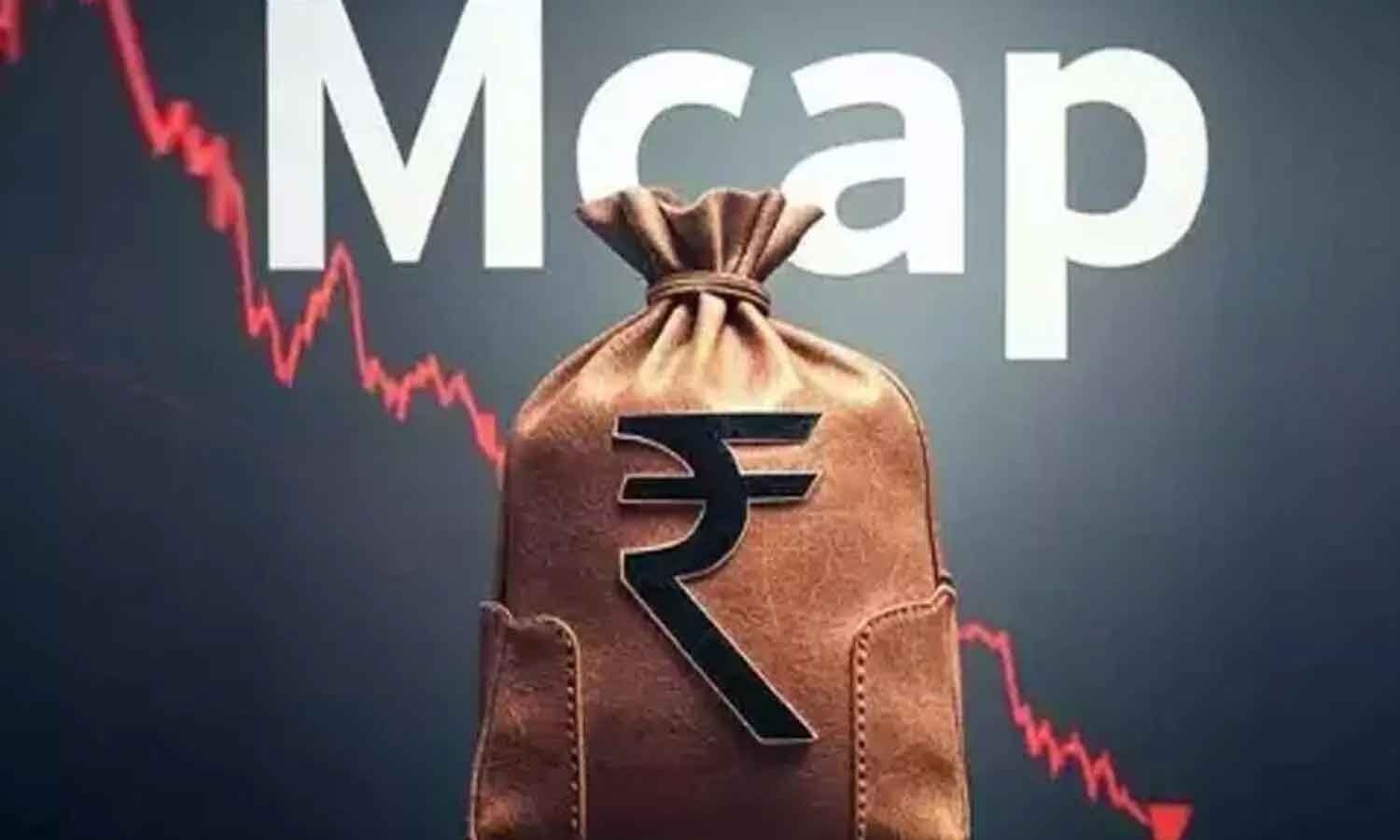
India’s ₹1 trillion market-cap club has expanded sharply in FY27, with 119 stocks crossing the ₹1 lakh crore valuation mark by August 31. The broader list reflects strong gains in pharmaceuticals, power, financial services and selected mid-cap companies.
India’s ₹1 trillion market-cap club expands
The number of Indian stocks with a market capitalisation above ₹1 trillion, or ₹1 lakh crore, rose to 119 as of August 31, 2026, according to data reported by Business Standard. That is a 27% increase from 94 stocks at the end of FY26 on March 30.
The increase has come during a strong start to FY27 for Indian equities. Between March 30 and August 31, the Sensex gained around 7%, while the Nifty 50 advanced about 8%. The rally was even stronger in the broader market, with the Nifty Midcap 100 rising 22% and the Nifty Smallcap 100 climbing 31% during the same period.
The expansion is significant because a ₹1 lakh crore market capitalisation is not simply a measure of company size. It also reflects how investors value a company’s future earnings, growth prospects and position within its industry.
However, market capitalisation changes with share prices. Crossing ₹1 lakh crore does not mean a company has suddenly generated ₹1 lakh crore in cash or profits.
Which Indian businesses crossed ₹1 lakh crore?
The latest expansion includes companies from a wider range of industries than the traditional large-cap universe.
Business Standard reported that Zydus Lifesciences, Laurus Labs and Cipla from pharmaceuticals, Bharat Heavy Electricals, Hitachi Energy India and GE Vernova T&D India from the power sector, and Aditya Birla Capital, HDFC Asset Management Company and Bajaj Holdings & Investments from financial services crossed the ₹1 trillion mark between April and August 2026.
Three newly listed companies also entered the list after their market values crossed the threshold. These were Vedanta Aluminium Metal, SBI Funds Management and Manipal Health Enterprises.
This shows that the ₹1 lakh crore category is no longer limited to India’s most established conglomerates and banks. Strong-performing mid-cap companies can enter the group when their earnings outlook and investor expectations improve significantly.
Laurus Labs becomes a notable new entrant
Among the newer additions, Laurus Labs stands out for the speed of its market-cap growth.
The pharmaceutical company saw its market capitalisation rise 92% from ₹53,546 crore on March 30 to ₹1.03 trillion by August 31, according to Business Standard.
The stock’s sharp rise has been linked to improving business performance and renewed investor interest in India’s contract development and manufacturing sector. Business Standard also reported that India’s CRDMO sector recorded 19% year-on-year growth in Q1 FY27, compared with 9% in the March 2026 quarter.
Laurus Labs is therefore an example of how sector-specific growth can quickly change a company’s position in the market-cap rankings.
Its entry also highlights the growing importance of Indian pharmaceutical and contract manufacturing businesses in the equity market.
Power and financial companies gain ground
The power sector has also produced several new members of the ₹1 lakh crore club.
Bharat Heavy Electricals, Hitachi Energy India and GE Vernova T&D India crossed the milestone between April and August, reflecting investor interest in businesses connected to electricity generation, transmission and the broader power infrastructure ecosystem.
Financial services have been another important contributor. Aditya Birla Capital, HDFC Asset Management Company and Bajaj Holdings & Investments joined the group during the same period.
The financial sector has traditionally occupied a large portion of India’s biggest listed companies because banks, insurers and asset managers operate businesses with substantial balance sheets and large customer bases.
The latest additions show that investors are also placing significant value on non-bank financial businesses such as asset management and diversified financial services.
Paytm, BHEL and other stocks see sharp gains
The expansion has not been limited to companies that have just crossed the threshold.
Several stocks already close to the ₹1 lakh crore mark saw substantial increases in market value during the first five months of FY27.
Business Standard reported that Oracle Financial Services Software, One 97 Communications, the parent of Paytm, Lodha Developers, Bosch, BHEL and Vodafone Idea recorded market-cap gains ranging between 70% and 83% during the period.
Adani Enterprises also saw its market capitalisation rise 74%, reaching ₹3.95 trillion from ₹2.27 trillion on March 30. Other Adani Group companies, including Adani Energy Solutions, Adani Green Energy and Adani Power, gained between 32% and 59%.
These numbers demonstrate how quickly market valuations can change when investor sentiment turns favourable toward a particular company or sector.
Why the ₹1 lakh crore milestone matters
Market capitalisation is calculated by multiplying a company’s share price by its total outstanding shares. Therefore, an increase in market cap can come from a rise in the stock price even when the company’s underlying business has not expanded by the same percentage.
That distinction is important for investors and readers.
A company crossing ₹1 lakh crore does not automatically mean it is fundamentally stronger than a company below that level. Market valuation reflects expectations as well as current financial performance.
The latest market-cap expansion nevertheless provides a useful picture of where investor attention has been concentrated.
Pharmaceuticals, power, financial services and selected technology-linked companies have benefited from strong expectations, while some traditional large companies have struggled.
Not every large company has benefited
The market rally has not been uniform.
Several public-sector companies recorded declines in market capitalisation between March 30 and August 31. ONGC, Coal India, NTPC and Power Grid Corporation saw their market values fall between 10% and 19% during the period.
Some major private-sector names also experienced declines. ITC, Reliance Industries, Wipro, Infosys, HDFC Life Insurance, HDFC Bank, Tata Steel and Tata Power were among companies whose market capitalisation fell during the period covered by the Business Standard analysis.
This matters because the expanding ₹1 trillion club should not be interpreted as a broad-based rise in every large Indian company.
The market has been selective, with investors favouring businesses where they see stronger revenue visibility, valuations or sector-specific growth opportunities.
What the trend says about Indian businesses
The expansion of the ₹1 trillion club also reflects the growing depth of India’s listed equity market.
In December 2025, about 110 companies had market capitalisations above ₹1 lakh crore, compared with 97 at the end of 2024. Earlier data showed the number was around 75 in 2023 and only 49 in 2021.
The latest figure of 119 as of August 31, 2026, indicates that more companies are reaching a scale that puts them among India’s largest listed businesses.
The sectoral spread is also widening. Earlier in 2026, Business Standard reported that the ₹1 trillion club had expanded to 42 sectors from 40 in 2025.
For businesses outside the traditional large-cap universe, this can be an important development. Companies in pharmaceuticals, power equipment, financial services, healthcare and other specialised industries are increasingly capable of achieving valuations once dominated by banks, IT companies and large conglomerates.
The market-cap list can change quickly
The ₹1 trillion threshold is not permanent.
Because market capitalisation depends on share prices, a company can enter the club during a strong rally and fall below it during a market correction. This has already happened in 2026.
Earlier this year, six companies exited the ₹1 trillion club, including Swiggy, Hindustan Petroleum Corporation, IDBI Bank, Ashok Leyland, Mazagon Dock Shipbuilders and Hero MotoCorp, according to Business Standard. At that stage, 10 companies had entered the club, taking the total to 114.
The figure subsequently rose further to 119 by August 31 as additional companies crossed the threshold.
This movement makes the ₹1 lakh crore level useful as a market indicator, but not as a permanent classification of business strength.
What to watch next in Indian markets
The next phase will depend on whether companies that recently crossed ₹1 lakh crore can sustain their valuations through earnings growth.
Laurus Labs, Zydus Lifesciences, power-sector companies and financial businesses will remain among the names to watch because their valuations have benefited from sector-specific developments.
At the same time, large companies that have lost market value could return to stronger positions if earnings improve or investor sentiment changes.
The broader trend is clear: India’s ₹1 trillion market-cap club is becoming larger and more diverse. The increase from 94 stocks at the end of FY26 to 119 by August 31 shows how strongly the broader equity market has performed in the opening months of FY27.
The more important question now is whether these valuations will be supported by sustained earnings and business growth. If they are, the expansion could represent a lasting shift in the size and diversity of India’s listed corporate sector. If earnings fail to keep pace, some of the recent entrants could quickly move back below the ₹1 lakh crore threshold.
Key Takeaways
- India had 119 stocks with market capitalisation above ₹1 lakh crore as of August 31, 2026, up 27% from 94 at the end of FY26.
- Laurus Labs, Zydus Lifesciences, BHEL, Hitachi Energy India and several financial companies were among the businesses crossing the milestone.
- The expansion has been driven particularly by strong gains in mid-cap and small-cap stocks, with the Nifty Midcap 100 and Smallcap 100 gaining 22% and 31%, respectively, between March 30 and August 31.
- Market capitalisation changes with share prices, so crossing ₹1 lakh crore does not by itself guarantee stronger fundamentals or future returns.
FAQs
What does a ₹1 trillion market capitalisation mean?
A ₹1 trillion market capitalisation means the total market value of a company’s outstanding shares is at least ₹1 lakh crore. It is calculated by multiplying the company’s share price by its outstanding shares.
How many Indian stocks crossed ₹1 lakh crore in 2026?
The number reached 119 as of August 31, 2026, compared with 94 at the end of FY26. Business Standard reported that the figure had risen 27% during the first five months of FY27.
Which sectors added the most companies?
Pharmaceuticals, power and financial services were among the key sectors contributing new members. Companies including Laurus Labs, Zydus Lifesciences, BHEL, Hitachi Energy India, Aditya Birla Capital and HDFC Asset Management Company crossed the ₹1 lakh crore threshold between April and August.
Can a company fall out of the ₹1 trillion club?
Yes. Market capitalisation changes with the company’s share price and outstanding shares. Several companies, including Swiggy, HPCL, IDBI Bank, Ashok Leyland, Mazagon Dock Shipbuilders and Hero MotoCorp, had fallen below the threshold earlier in 2026.











Leave a comment