

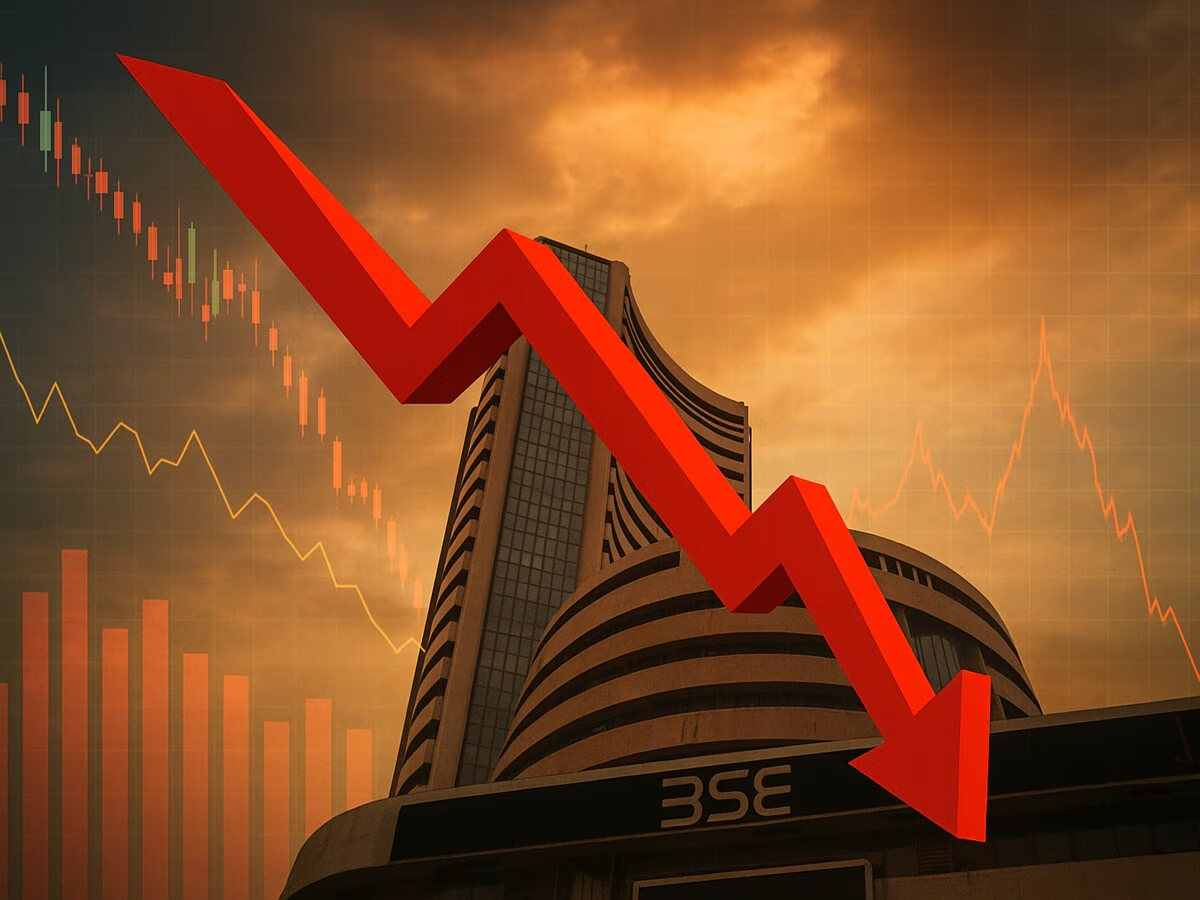
India’s stock market opened sharply in the red today as investor sentiment soured on global cues and domestic growth concerns. This early weakness in the benchmark indices signalling caution on regional business hubs and smaller-city economies can carry tangible spill-over effects for manufacturing, regional firms and capital flows outside major metros.
Early slide reflects global and domestic jitters
The main keyword “Indian stock market opened sharply in red” is evident from the drop in both the Nifty 50 and the BSE Sensex at the opening bell. The Nifty 50 declined by about 0.3 % while the Sensex was down roughly 0.25 % in early trade. The motives: fading hopes of a rate cut in the US, a global market slide and concerns over stretched valuations in domestic equities.
These headwinds feed directly into smaller-city and regional markets which rely on steady investment and demand trends to sustain growth.
Regional hubs feel the squeeze via investment channels
Secondary keyword: “regional business hubs”.
Smaller centres–such as tier-2 and tier-3 cities–depend on capital inflows, bank credit expansion, production orders and consumer demand. A market drop here signals caution for regional manufacturing units, mid-sized firms and local investor sentiment. For example, firms in semi-urban industrial regions may see delayed order-books or scaled-down expansion plans if broader investor confidence wanes. Local financial intermediaries may tighten lending or pricing, slowing down growth in these zones.
Manufacturing and supply-chains in smaller cities at risk
Secondary keyword: “manufacturing in smaller cities”.
When the equity markets turn red, manufacturers in smaller cities face two immediate risks: demand contraction and cost escalation. Demand contraction occurs because slowed market sentiment often overlaps with weaker consumer demand and corporate capex postponements. Cost escalation happens as firms delay procurement, leading to loss of bargaining power, and smaller hubs may get less favourable terms for imports, logistics or servicing.
For example, a medium-scale auto-component plant in a regional centre might see fewer new orders and faced with higher input costs due to a weaker rupee and increased global headwinds.
Capital flows and investor behaviour matter for non-metro economies
Secondary keyword: “capital flows to regional firms”.
The initial red open signals potential investor pull-back from smaller, more speculative companies—many of which are listed in regional markets or trade via smaller venues. Institutional investors may favour large-cap safety and cut exposure to regional or mid-cap firms. That investment shift can slow fundraising, delay IPOs, and reduce momentum for local founders.
In addition, consumer sentiment in smaller cities tends to react faster to equity-market mood: households with smaller savings may defer spending when they sense uncertainty, affecting retail-linked businesses in those geographies.
What regional businesses and smaller-city stakeholders should watch
- Monitor order-book health and receivables for regional manufacturers. If market weakness signals demand softening, firms should protect cash-flows.
- Review financing costs and credit availability. Smaller-city firms may face tighter funding if investor flows slow.
- Strengthen structural resilience: diversify customer base, secure supply-chains and hedge cost pressure.
- Tap into local demand and government support: Regional firms may cushion the impact by focusing on domestic rather than export markets, and by leveraging local incentives and cluster development support.
Takeaways
• The stock market’s red opening reflects global rate-cut anxiety and valuation concerns.
• Regional business hubs and smaller cities are likely to feel disproportionate impact via manufacturing, investment and consumer channels.
• Smaller-city firms need to watch cash-flow, cost pressures and market exposure proactively.
• Positive actions: local demand focus, strengthened supply-chains and tapping government support can help build resilience.
FAQs
Q: Why does a red opening in the stock market matter for smaller city economies?
A: Because it signals weaker investor sentiment, capital flow slowdown, possible credit tightening and lower demand—factors that directly affect businesses in regional and non-metro locations.
Q: What types of businesses in smaller cities are most exposed?
A: Manufacturing units, supply-chain companies, mid-cap local firms and consumer-facing businesses that depend on steady investment or national demand often suffer the earliest.
Q: Is the red open a sign of long-term trouble or short-term volatility?
A: It could be both. While a single session red open may reflect short-term sentiment swings, if the feedback loop (weaker orders, slower credit, muted growth) sets in, it may stretch into a longer adjustment phase for regional hubs.
Q: What can regional businesses do immediately when markets open sharply in red?
A: Prioritise cash-flow management, reassess growth plans, limit exposure to new speculative orders, and use slower growth windows to strengthen efficiency and relationships.










Leave a comment