

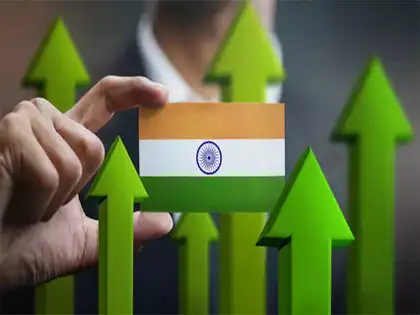
India’s economy positioning for steady growth post 2025 is becoming clearer through macro data, policy direction, and on ground business activity. For business owners, these signals matter because they shape demand, credit availability, hiring decisions, and expansion plans over the next few years.
India is moving into a phase where growth is expected to be stable rather than explosive. This shift places greater importance on fundamentals, execution, and sector specific opportunities rather than broad based economic tailwinds.
India economy growth outlook post 2025 explained
India’s economy positioning for steady growth post 2025 rests on a combination of domestic demand strength and policy continuity. Unlike previous cycles driven heavily by global liquidity, the current phase is anchored in consumption, infrastructure spending, and services expansion.
GDP growth has shown resilience despite global slowdowns, supported by government capital expenditure, private investment recovery, and improving household balance sheets. For business owners, this signals predictability. Stable growth allows better planning for capacity expansion, inventory management, and workforce scaling.
Another important aspect is inflation management. Price pressures have moderated compared to earlier peaks, giving policymakers room to balance growth with stability. While interest rates may not fall sharply, the reduced volatility supports long term business decision making rather than short term speculation.
Domestic consumption remains the primary growth engine
One of the strongest indicators of India’s economy positioning is the continued expansion of domestic consumption. Urban consumption has remained steady, while rural demand is gradually improving due to better income support measures and normalizing agricultural output.
For business owners, especially in consumer goods, retail, healthcare, and services, this trend is critical. Demand is increasingly coming from Tier 2 and Tier 3 cities, where aspirational spending is rising. Companies expanding distribution and localized offerings are better positioned to capture this growth.
Digital adoption has further amplified consumption. Online platforms, digital payments, and logistics networks have reduced market access barriers for small and mid sized businesses. This structural shift supports consistent demand rather than cyclical spikes.
Investment and infrastructure indicators businesses should track
Capital expenditure is a key pillar of India’s steady growth strategy post 2025. Public sector investment in roads, railways, ports, and energy infrastructure continues to crowd in private investment. This creates multiplier effects across industries such as cement, steel, logistics, and construction services.
Private investment sentiment has also improved, particularly in manufacturing, electronics, and renewable energy. Production linked incentives and policy clarity have encouraged capacity expansion. For business owners, this means increased opportunities as suppliers, contractors, and service providers within larger value chains.
Another indicator to watch is credit growth. Banking system health has improved, with lower non performing assets and better capital adequacy. This strengthens the ability of banks to lend to businesses, especially MSMEs, supporting working capital and expansion needs.
Employment, wages, and productivity trends
Employment trends offer another lens into how India’s economy is positioning itself. Job creation has been steady in services, construction, and manufacturing related segments. While formal employment growth is gradual, informal sector activity has stabilized, supporting income generation.
For business owners, rising employment translates into sustained consumption but also increasing competition for skilled labor. Wage growth remains moderate, helping businesses manage costs, but productivity improvements are becoming essential to maintain margins.
Skill development initiatives and corporate training investments are gaining importance. Businesses that invest in upskilling their workforce are likely to benefit from higher efficiency and lower attrition, aligning with a steady growth environment rather than rapid boom cycles.
External sector stability and global exposure
India’s economy positioning for steady growth post 2025 also reflects a more balanced external sector. Exports continue to grow, particularly in services, even as merchandise exports face global demand challenges. This diversification reduces vulnerability to external shocks.
Foreign exchange reserves remain comfortable, providing a buffer against global volatility. For business owners, this stability lowers currency risk and supports smoother import and export operations. It also reassures foreign partners and investors about India’s macro stability.
However, businesses with high exposure to global markets must remain cautious. Global interest rate changes, geopolitical risks, and commodity price swings can still impact costs and demand. Diversifying markets and building flexible supply chains is essential in this environment.
What steady growth means for business strategy
A steady growth phase rewards discipline over aggression. Business owners should focus on cash flow management, operational efficiency, and customer retention rather than rapid expansion without demand visibility. Pricing power becomes more important when growth is incremental rather than explosive.
Technology adoption is another differentiator. Automation, data analytics, and digital sales channels help businesses scale efficiently within a stable growth framework. These investments improve resilience during slowdowns and enhance competitiveness during upswings.
Finally, governance and compliance matter more in a maturing economy. Access to capital, partnerships, and long term customers increasingly depends on transparency and execution quality.
Takeaways
- India’s economy is shifting toward stable, predictable growth post 2025
- Domestic consumption and infrastructure spending are key growth drivers
- Improving credit availability supports MSMEs and private investment
- Business success will depend on efficiency, technology, and execution discipline
FAQs
Is India’s economic growth expected to slow after 2025?
Growth is expected to stabilize rather than slow sharply, with moderate but consistent expansion driven by domestic demand.
Which sectors benefit most from steady growth?
Consumer goods, services, infrastructure linked industries, and manufacturing with domestic focus benefit the most.
What should business owners focus on in this phase?
Cash flow management, operational efficiency, technology adoption, and long term customer relationships.
Does steady growth reduce business risk?
It reduces volatility but does not eliminate risk, making strategic planning and diversification essential.











Leave a comment