

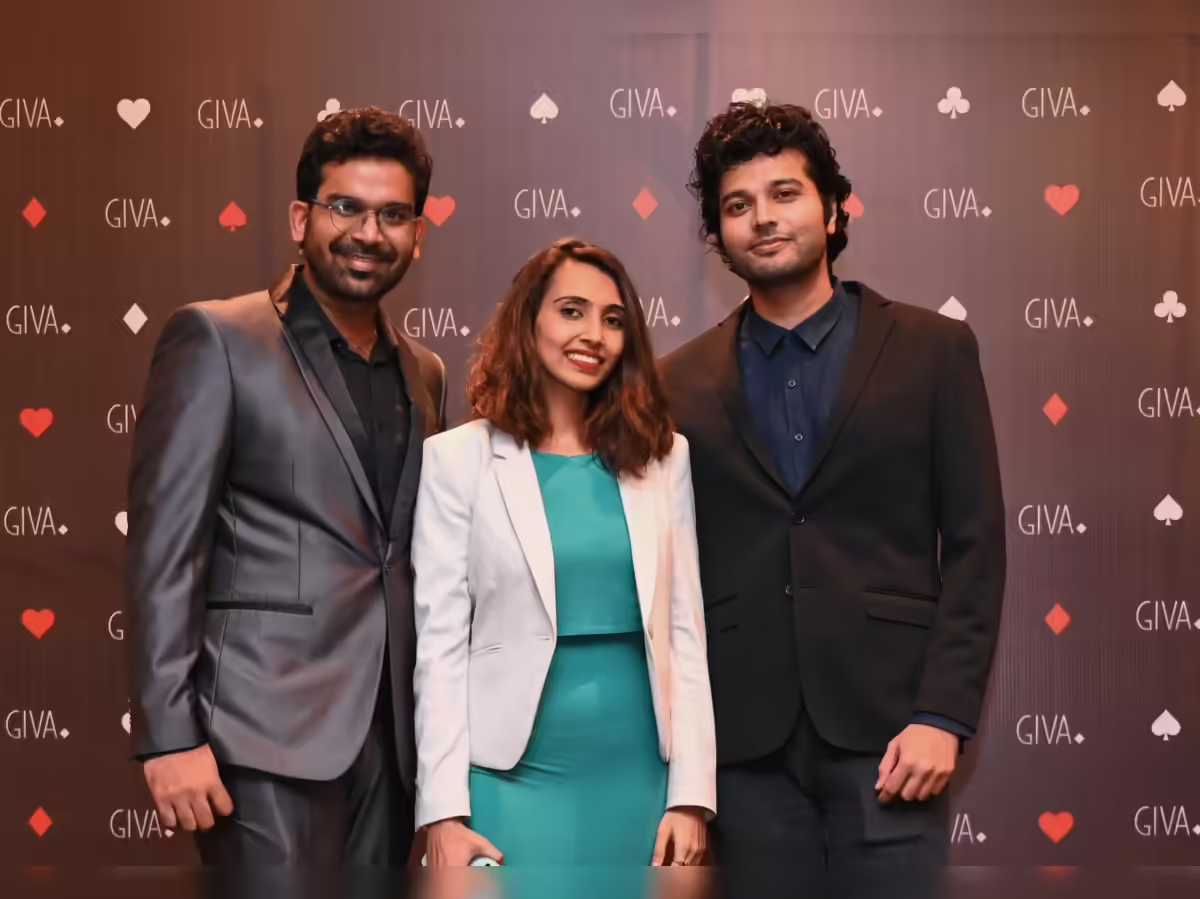
Giva nearing Rs 200 Cr funding at a Rs 4,400 Cr valuation marks a significant moment for India’s D2C jewellery sector. The development signals growing investor confidence in branded, digitally led jewellery businesses operating beyond traditional retail models.
Funding context and why this round matters
Giva nearing Rs 200 Cr funding places it among the most highly valued D2C jewellery brands in India today. The funding move is time sensitive news and reflects how investors are selectively backing consumer brands that show scale, repeat demand and operational discipline.
Unlike earlier funding cycles driven by aggressive growth narratives, this round highlights maturity. A Rs 4,400 Cr valuation indicates that investors are pricing in sustainable revenue, improving margins and long term brand equity rather than short term customer acquisition spikes.
For the broader D2C jewellery space, the round sets a fresh benchmark. It reinforces that jewellery is no longer viewed as a slow moving legacy category when built with digital first distribution, modern design and supply chain control.
Valuation signals for the D2C jewellery segment
A Rs 4,400 Cr valuation for Giva sends a clear signal about how the D2C jewellery valuation landscape is evolving. Investors are rewarding brands that balance online scale with offline expansion and controlled unit economics.
Secondary keywords like D2C jewellery valuation and branded jewellery startups fit squarely into this shift. Compared to earlier years when many D2C brands struggled to justify premium pricing, jewellery brands now benefit from higher average order values and strong repeat purchase cycles.
This valuation also reflects confidence in demand resilience. Jewellery purchases, especially silver and affordable gold segments, have shown consistent traction across Tier 1 and Tier 2 cities. For investors, this reduces dependency on discount driven growth.
What investors are betting on beyond revenue growth
Investors backing Giva at this stage are not just betting on topline growth. They are backing supply chain control, inventory discipline and brand recall.
D2C jewellery firms face unique challenges around inventory management, working capital and trust. Giva’s ability to standardise designs, manage sourcing and maintain consistent quality has likely played a key role in attracting capital at this valuation level.
Secondary keywords such as omnichannel jewellery strategy and jewellery brand trust are increasingly important. Brands that invest in offline touchpoints like experience stores and quick fulfilment hubs gain credibility, which directly impacts conversion and repeat rates.
Implications for competing D2C jewellery brands
Giva nearing Rs 200 Cr funding raises the bar for other D2C jewellery startups seeking capital. Investors will now benchmark peers against similar metrics like revenue visibility, store productivity and customer lifetime value.
Smaller jewellery startups may find it harder to raise large rounds without clear differentiation. Design originality alone is no longer enough. Scalable operations, strong gross margins and low return rates are becoming non negotiable.
This also signals consolidation potential. Larger funded brands could explore acquisitions of niche or regional players to expand assortments and geographic reach without building everything from scratch.
Impact on offline expansion and Tier 2 markets
One of the strongest signals from this funding development is the importance of offline expansion in D2C jewellery. Physical presence builds trust in a category where touch and feel still matter.
Tier 2 and Tier 3 cities are becoming critical growth engines. Jewellery brands entering these markets benefit from lower real estate costs and strong aspirational demand. Secondary keywords like Tier 2 D2C expansion and omnichannel jewellery growth align with this trend.
Investors see offline stores not as cost centres but as demand generators that improve online conversion and brand credibility across channels.
What this means for future D2C funding trends
Giva’s funding trajectory suggests that consumer brand funding in India is becoming more selective but deeper for category leaders. Instead of spreading smaller checks across many brands, investors are concentrating capital in businesses with clear leadership positions.
For the D2C jewellery sector, this means fewer but larger funding rounds, with stronger emphasis on profitability timelines. Brands that cannot show a path to sustainable margins may struggle to attract late stage capital.
This also reinforces the idea that jewellery could emerge as one of the most defensible D2C categories in India due to high trust barriers and repeat consumption.
Takeaways
- Giva nearing Rs 200 Cr funding reflects rising investor confidence in D2C jewellery
- A Rs 4,400 Cr valuation sets a new benchmark for branded jewellery startups
- Investors are prioritising supply chain control, trust and omnichannel presence
- The funding signals consolidation and higher expectations for competing brands
FAQs
Why is Giva’s valuation significant for D2C jewellery brands?
It indicates that investors see long term scalability and margin potential in branded jewellery beyond traditional retail.
Does this mean funding will become easier for jewellery startups?
Funding may become more selective. Only brands with strong fundamentals and scale readiness are likely to benefit.
How important is offline presence for D2C jewellery brands?
Offline stores play a major role in trust building and improving overall customer conversion rates.
Will this impact jewellery brands focused only on online sales?
Pure online brands may face pressure to add physical touchpoints to remain competitive.











Leave a comment