

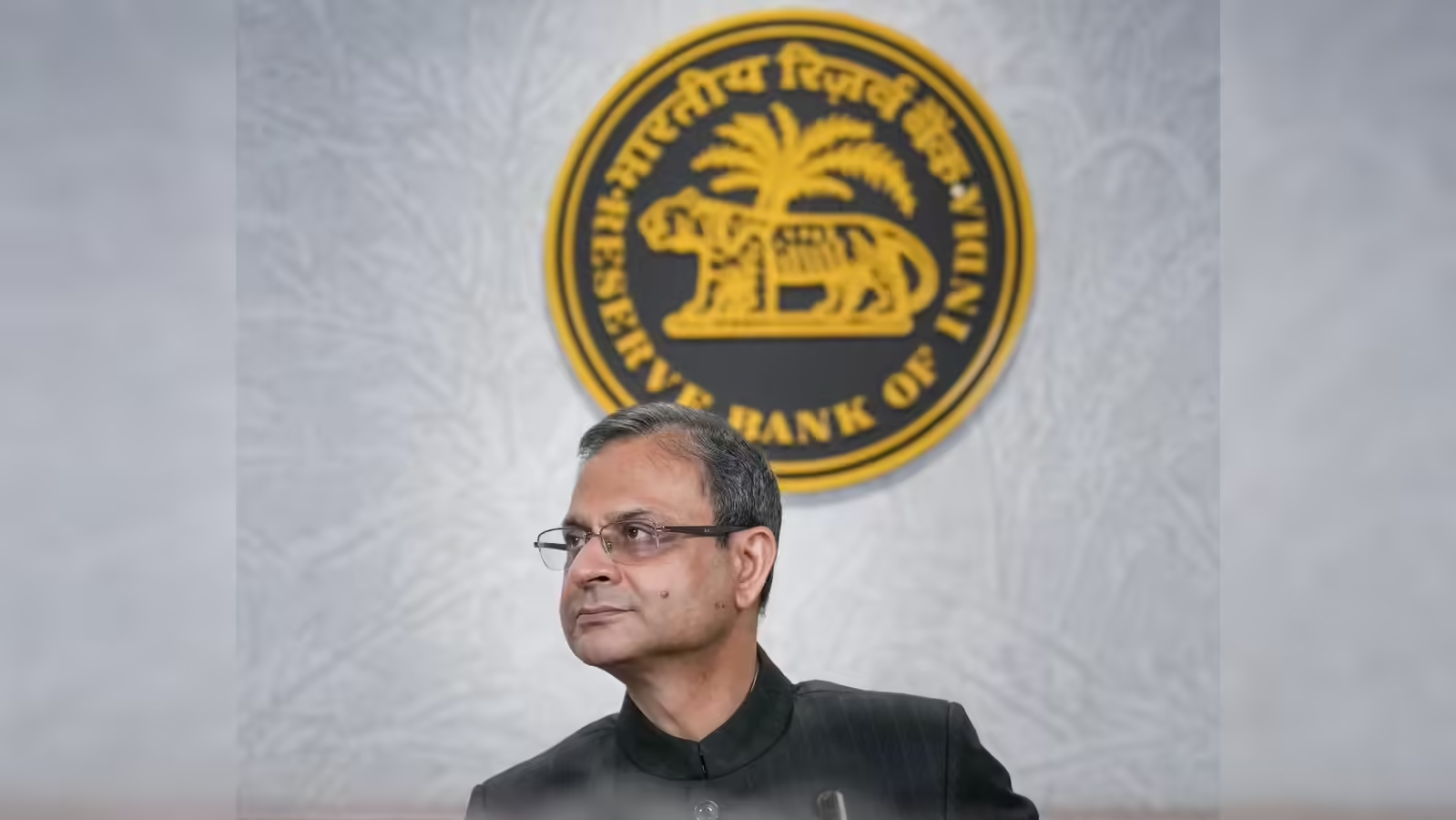
India’s central bank liquidity stance in 2026 is shaping credit access across the economy. The RBI liquidity stance is particularly relevant for MSMEs and NBFCs, influencing borrowing costs, loan availability, and overall financial stability in both urban and semi-urban markets.
RBI’s Liquidity Approach in 2026 and Why It Matters
The Reserve Bank of India has maintained a calibrated liquidity approach through FY26, balancing inflation control with growth support. Instead of aggressive tightening, the RBI has relied on tools like variable rate repo auctions, standing deposit facility, and open market operations to manage liquidity conditions.
For small businesses, liquidity conditions directly affect the cost and availability of working capital loans. When liquidity is moderately tight, banks become selective in lending, often prioritizing lower-risk borrowers. This creates a spillover effect where MSMEs increasingly depend on NBFCs for faster credit access.
The current stance indicates that the RBI is cautious about excess liquidity while ensuring that credit flow does not stall. This middle-path approach is designed to prevent inflation spikes while supporting economic momentum.
Impact on MSME Credit Access and Borrowing Costs
MSMEs in Tier-2 and Tier-3 cities are the most sensitive to liquidity shifts. With banks tightening underwriting standards slightly, many small businesses are facing higher interest rates or longer approval cycles.
At the same time, credit demand has remained strong due to expansion in sectors like retail trade, logistics, and services. This mismatch between demand and cautious supply is pushing MSMEs toward alternative lenders.
Another key trend is the rise in secured lending, such as gold loans and property-backed loans, as businesses look to offset higher borrowing costs. This reflects a shift from unsecured to asset-backed financing in tighter liquidity conditions.
NBFC Lending Trends in a Controlled Liquidity Environment
NBFCs are playing a critical role in bridging the credit gap. However, their ability to lend is also tied to liquidity conditions because they rely heavily on bank borrowings and market instruments.
With the RBI maintaining a watchful stance, funding costs for NBFCs have increased slightly. This has led to a marginal rise in lending rates for end borrowers. Despite this, NBFCs continue to expand aggressively in semi-urban and rural markets due to faster disbursal and flexible underwriting.
Co-lending models between banks and NBFCs have gained traction in 2026. These partnerships allow banks to manage risk while leveraging NBFC distribution networks, especially in underserved regions.
Digital lending platforms are also benefiting, as they reduce operational costs and improve credit assessment using alternative data, making lending viable even in tighter liquidity conditions.
Tier-2 and Tier-3 Markets Driving Credit Growth
A major shift in 2026 is the growing contribution of non-metro markets to credit demand. Small businesses in cities like Nagpur, Indore, and Coimbatore are expanding, driven by consumption growth and digital adoption.
RBI’s liquidity stance indirectly shapes this growth by influencing how aggressively lenders can deploy capital in these regions. NBFCs and fintech lenders are increasingly targeting these markets with tailored products such as invoice financing, supply chain credit, and small-ticket business loans.
This trend is significant because it shows that liquidity is not just a macroeconomic lever but also a driver of regional economic activity.
Risks and What to Watch Going Forward
While the current liquidity stance supports stability, there are risks. Prolonged tightness can slow down credit growth, especially for riskier segments like micro-enterprises.
On the other hand, excessive easing could lead to asset quality concerns if lending standards weaken. The RBI’s challenge is to maintain this balance while monitoring inflation, global interest rates, and domestic growth indicators.
For MSMEs and NBFCs, the key variables to watch include repo rate movements, liquidity infusion measures, and regulatory changes around digital lending and co-lending frameworks.
Takeaways
- RBI’s balanced liquidity stance is keeping credit flowing while controlling inflation risks
- MSMEs are facing slightly higher borrowing costs and turning more toward NBFCs
- NBFCs remain key credit enablers despite rising funding costs
- Tier-2 and Tier-3 markets are emerging as the biggest drivers of loan demand
FAQs
How does RBI liquidity stance affect small businesses?
It influences loan availability and interest rates. Tighter liquidity can make borrowing costlier and approvals slower for MSMEs.
Why are NBFCs important in 2026?
NBFCs provide faster and more flexible credit, especially in underserved markets where traditional banks are more cautious.
Are interest rates expected to rise further?
Rate movement depends on inflation and global trends, but the RBI is currently maintaining a balanced approach rather than aggressive hikes.
What is the role of co-lending models?
Co-lending allows banks and NBFCs to share risk and expand credit reach, particularly in Tier-2 and Tier-3 regions.












Leave a comment