

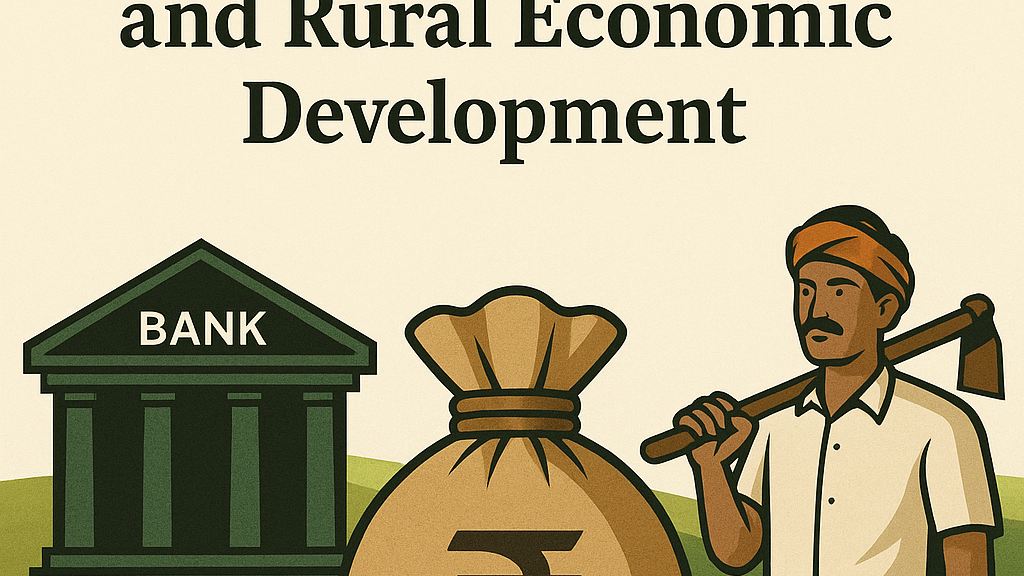
Public sector banks are stepping up rural lending ahead of FY27 targets, focusing on agriculture, MSMEs, and financial inclusion. The push reflects policy alignment with growth priorities and aims to deepen credit access across Tier-2 and Tier-3 regions where demand is rising steadily.
Rural Credit Expansion Gains Momentum Across PSU Banks
Public sector banks rural credit expansion has picked up pace in early 2026, driven by both regulatory direction and business opportunity. With the government and the Reserve Bank of India emphasizing inclusive growth, PSU banks are increasing their presence in semi-urban and rural markets.
Data trends over the past year show steady growth in priority sector lending, particularly in agriculture and allied activities. Banks such as SBI, Bank of Baroda, and Punjab National Bank have expanded rural branch networks and strengthened business correspondent models to improve last-mile access.
The FY27 targets under priority sector norms are pushing banks to front-load their credit deployment. This means higher disbursements in FY26 itself, especially in districts where credit penetration remains low compared to national averages.
MSME Credit Growth in Tier-2 and Tier-3 Markets
MSME credit growth India is increasingly linked to rural and semi-urban ecosystems. Small enterprises in manufacturing, trading, and services are seeking formal credit as digital payments and GST compliance improve financial visibility.
Public sector banks are responding by offering tailored products such as working capital loans, Mudra loans, and collateral-free credit schemes. These offerings are designed to address the needs of small borrowers who may not have traditional credit histories.
The shift is visible in cities like Nagpur, Surat, and Lucknow, where MSME clusters are expanding beyond metro dependency. Banks are leveraging data from GST filings and bank transactions to assess creditworthiness, reducing reliance on physical collateral.
Agriculture and Allied Sectors Remain Core Focus
Agriculture credit continues to be the backbone of rural lending. PSU banks are increasing exposure not only to crop loans but also to allied sectors such as dairy, fisheries, and food processing.
This diversification is important because income patterns in rural India are changing. Farmers are increasingly engaging in multiple income streams, and banks are aligning their credit products accordingly.
Government-backed interest subvention schemes and credit guarantee programs are also supporting this expansion. These schemes reduce the effective cost of borrowing for farmers while mitigating risk for lenders.
At the same time, banks are focusing on improving credit monitoring to manage asset quality, especially in regions prone to climate-related disruptions.
Role of Digital Infrastructure in Rural Lending Expansion
Digital infrastructure is playing a critical role in enabling rural credit expansion. The integration of Aadhaar, UPI, and account aggregators has simplified customer onboarding and loan processing.
Public sector banks are using digital platforms to reach customers who were previously outside the formal banking system. Mobile-based applications and assisted digital models are helping bridge the gap between technology and accessibility.
This approach is particularly effective in Tier-3 markets where physical branch expansion alone may not be cost-efficient. By combining digital tools with local agents, banks are scaling credit delivery without significantly increasing operational costs.
Fintech partnerships are also emerging as a key enabler. These collaborations allow PSU banks to tap into alternative data sources and improve credit assessment for thin-file borrowers.
Risks, Challenges, and What Lies Ahead
While the push for rural credit expansion is strong, it comes with challenges. Asset quality remains a concern, especially if credit growth outpaces income growth in rural areas.
There is also the risk of over-leveraging among small borrowers if multiple lenders target the same customer segments. PSU banks are therefore focusing on responsible lending practices and better data sharing mechanisms.
Another challenge is the rising cost of funds in a moderately tight liquidity environment. This can impact lending margins, particularly in priority sectors where interest rates are regulated or subsidized.
Looking ahead to FY27, the success of this expansion strategy will depend on how well banks balance growth with risk management. The focus is likely to remain on sustainable credit expansion rather than aggressive volume growth.
Takeaways
- Public sector banks are accelerating rural credit to meet FY27 priority sector targets early
- MSME lending in Tier-2 and Tier-3 cities is emerging as a major growth driver
- Digital infrastructure is enabling faster and wider credit access in rural areas
- Asset quality and responsible lending remain key risks to monitor
FAQs
Why are PSU banks focusing on rural credit now?
They are aligning with FY27 priority sector targets and government policies aimed at boosting financial inclusion and rural economic growth.
How are MSMEs benefiting from this expansion?
MSMEs are gaining easier access to formal credit through tailored loan products and improved digital credit assessment methods.
What role does technology play in rural lending?
Technology enables faster onboarding, better credit evaluation, and cost-efficient delivery of financial services in remote areas.
Are there risks in rapid rural credit growth?
Yes, risks include potential asset quality issues and borrower over-leverage if lending is not managed carefully.











Leave a comment