


MSME credit demand in India is rising steadily as formal lending expands beyond metro cities into Tier-2 and Tier-3 markets. Improved digital infrastructure, policy support, and fintech integration are enabling small businesses to access structured finance more easily than before.
India’s MSME credit demand is witnessing a structural uptick as banks and NBFCs deepen their reach outside metropolitan regions. This shift reflects broader financial inclusion efforts and growing economic activity in smaller cities and semi-urban clusters.
Formal Lending Penetration Increases Across Emerging Markets
Over the past few years, formal lending to MSMEs has expanded significantly beyond traditional urban centers. Historically, small businesses in Tier-2 and Tier-3 cities relied heavily on informal credit sources due to limited access to banking channels.
That dynamic is now changing. Banks, NBFCs, and fintech platforms are actively targeting underserved MSME segments with customised products. Digital onboarding and simplified documentation have reduced barriers to entry, enabling faster loan approvals.
Government-backed initiatives such as priority sector lending norms and credit guarantee schemes have also encouraged lenders to expand into these markets. As a result, more MSMEs are entering the formal credit ecosystem.
Digital Lending Ecosystem Drives MSME Credit Growth
The rise of digital lending platforms has played a crucial role in accelerating MSME credit demand. Fintech companies are leveraging data from GST filings, bank transactions, and digital payments to assess creditworthiness.
This shift toward data-driven underwriting has reduced reliance on traditional collateral. Many small businesses that previously lacked formal financial records can now access working capital loans based on cash flow analysis.
Integration with platforms like UPI and digital accounting tools has further strengthened the ecosystem. MSMEs that adopt digital payments generate transaction histories, which improve their credit profiles over time.
This creates a virtuous cycle where increased digital adoption leads to better access to credit and vice versa.
Working Capital Needs Fuel Demand Across Sectors
A significant portion of MSME credit demand is driven by working capital requirements. Small businesses need timely financing to manage inventory, pay suppliers, and handle operational expenses.
Sectors such as retail, manufacturing, logistics, and services are showing strong demand for short-term credit. Seasonal businesses, in particular, rely on quick access to funds to manage demand fluctuations.
In addition to working capital, there is growing interest in term loans for business expansion. MSMEs are increasingly investing in technology upgrades, capacity expansion, and market diversification.
This indicates a shift from survival-driven borrowing to growth-oriented financing, especially in regions experiencing economic momentum.
Tier-2 and Tier-3 Cities Become Key Growth Engines
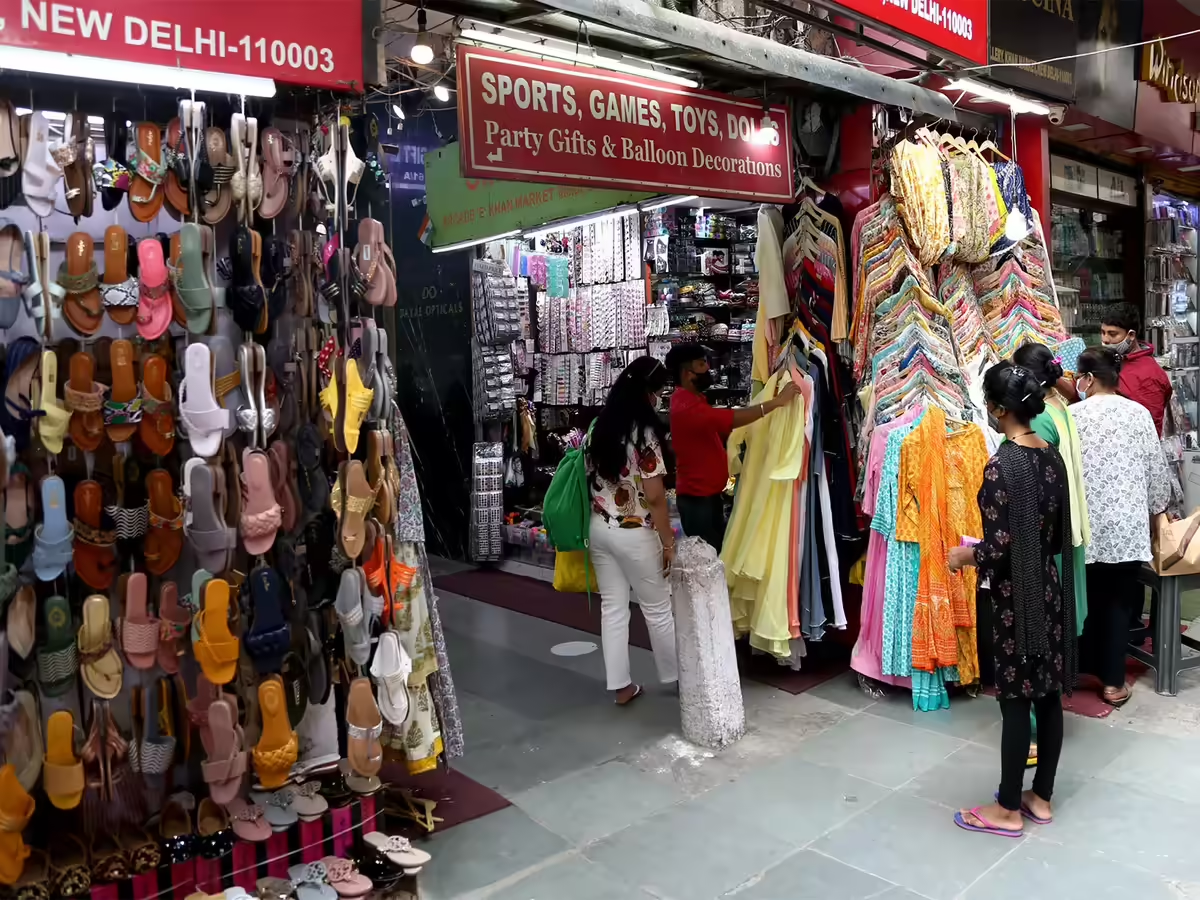
The expansion of MSME lending beyond metros is one of the most important developments in India’s credit landscape. Cities such as Surat, Lucknow, Coimbatore, and Nagpur are emerging as key hubs for small business activity.
These regions benefit from lower operating costs, improving infrastructure, and rising local demand. As economic activity spreads geographically, the need for formal credit naturally increases.
Lenders are responding by building regional strategies that include local partnerships, vernacular interfaces, and customised products. This approach helps in better customer acquisition and risk assessment.
The growth in these markets is also contributing to a more balanced and diversified credit portfolio for lenders.
Risk Management and Credit Quality Remain Critical
While MSME credit demand is rising, lenders are also focusing on maintaining credit quality. Small businesses are more vulnerable to economic shocks, making risk assessment a critical component of lending strategies.
Banks and NBFCs are investing in advanced analytics to monitor borrower behaviour and detect early signs of stress. Co-lending partnerships between traditional institutions and fintech firms are helping balance reach with risk control.
Regulatory oversight is also ensuring that lending practices remain prudent. This is particularly important as the sector scales rapidly and attracts more first-time borrowers.
Sustainable growth in MSME lending will depend on balancing expansion with responsible credit practices.
Economic Implications of Rising MSME Credit Demand
The increase in MSME credit demand has broader implications for India’s economy. MSMEs contribute significantly to employment and GDP, making their growth essential for overall economic development.
Improved access to formal credit enables businesses to expand operations, increase productivity, and create jobs. It also reduces dependence on high-cost informal borrowing, improving financial stability at the grassroots level.
As lending deepens beyond metros, economic growth becomes more distributed. This supports regional development and reduces concentration risks in major urban centers.
The trend also aligns with India’s long-term goal of strengthening its formal economy through financial inclusion and digitalisation.
Takeaways
• MSME credit demand is rising due to deeper formal lending penetration beyond metros
• Digital lending and fintech integration are enabling faster and wider credit access
• Tier-2 and Tier-3 cities are emerging as key drivers of MSME growth
• Sustainable expansion depends on strong risk management and credit discipline
FAQs
1. Why is MSME credit demand increasing in India?
Demand is rising due to improved access to formal lending, digital adoption, and growing business activity in non-metro regions.
2. How are fintech companies helping MSMEs get loans?
Fintech firms use alternative data such as GST and transaction records to assess creditworthiness and offer faster loan approvals.
3. What types of loans do MSMEs typically seek?
MSMEs primarily seek working capital loans, but demand for term loans for expansion is also increasing.
4. Are there risks in expanding MSME lending?
Yes, MSMEs are sensitive to economic fluctuations, so lenders must maintain strong risk assessment and monitoring systems.










Leave a comment