

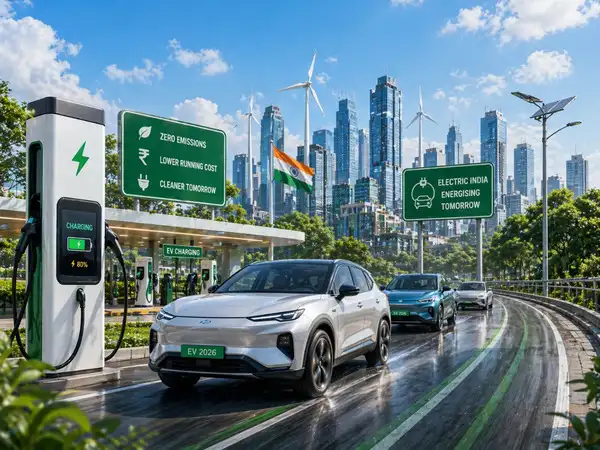
India’s EV adoption story is increasingly being defined by Tier-2 and Tier-3 cities. These markets are influencing how automakers like Tata Motors and Mahindra & Mahindra design, price, and distribute electric vehicles for mass adoption.
Main Article
India’s EV adoption story has entered a new phase where smaller cities are no longer late adopters but active drivers of growth. While early electric vehicle demand came from metro cities, Tier-2 and Tier-3 markets are now shaping how automakers approach affordability, infrastructure, and usability.
This is an evolving but largely evergreen shift supported by policy, economics, and changing consumer behavior. What is happening in smaller cities is offering practical lessons that large automakers cannot ignore if they want to scale electric mobility in India.
Affordability as the Core Driver of EV Growth
One of the clearest signals from smaller cities is the importance of pricing. EV adoption in Tier-2 markets is strongly tied to upfront cost and long-term savings. Consumers are more focused on total cost of ownership rather than brand positioning.
Automakers like Tata Motors and Mahindra & Mahindra are responding by introducing models that balance price with functionality. Entry-level electric cars and electric two-wheelers are seeing higher traction compared to premium EV offerings.
Lower running costs, reduced maintenance, and rising fuel prices are making EVs attractive in these markets. However, price sensitivity remains high, which means even small cost reductions can significantly influence demand.
This is pushing manufacturers to rethink cost structures, local sourcing, and battery strategies.
Charging Infrastructure Challenges and Local Solutions
Charging infrastructure remains a constraint, but smaller cities are adapting differently compared to metros. Instead of relying heavily on public charging networks, many users prefer home charging or community-based solutions.
In Tier-2 towns, independent charging setups, local garages, and small-scale operators are stepping in to fill gaps. This decentralized approach is shaping how EV ecosystems develop outside major cities.
Automakers are learning that a one-size-fits-all infrastructure strategy does not work. They are increasingly partnering with local players and exploring flexible charging models to improve accessibility.
Government initiatives are also expanding charging networks, but the pace varies across regions, making local adaptability essential.
Usage Patterns Differ from Metro Cities
Driving patterns in smaller cities are significantly different from those in urban metros. Daily travel distances are often shorter and more predictable, which suits EV range capabilities.
This makes electric vehicles more practical for regular use in these regions. Two-wheelers and small cars dominate usage, especially for commuting and small business operations.
For automakers, this means designing vehicles that prioritize efficiency, durability, and low operating costs rather than high-end features. Practicality is valued more than premium design or advanced technology.
These insights are influencing product development strategies across the EV segment.
Role of Government Incentives and Policies
Government support has played a key role in accelerating EV adoption across India. Subsidies under national and state-level policies have made electric vehicles more affordable.
In smaller cities, these incentives have a stronger impact because consumers are more price-sensitive. Reduced registration fees, tax benefits, and direct subsidies lower the entry barrier significantly.
State governments are also encouraging local manufacturing and infrastructure development, which supports the broader EV ecosystem.
Automakers are aligning their strategies with these policies, ensuring that their offerings remain competitive in price-driven markets.
Dealer Networks and After-Sales Support
Another important lesson from Tier-2 markets is the importance of trust and service accessibility. Buyers in smaller cities rely heavily on dealer relationships and after-sales support before making purchase decisions.
Automakers are expanding dealership networks and investing in service infrastructure to address these concerns. Availability of spare parts, service centers, and trained technicians plays a critical role in building confidence.
Without strong after-sales support, EV adoption can slow down, regardless of product quality. This has led companies to strengthen local presence rather than relying only on centralized service models.
Future Outlook for EV Growth Beyond Metros
The future of India’s EV adoption story will depend heavily on how effectively automakers respond to insights from smaller cities. These markets represent a large share of India’s population and hold significant untapped potential.
As battery costs decline and infrastructure improves, EV adoption in Tier-2 and Tier-3 cities is expected to accelerate further. Automakers that focus on affordability, practicality, and service support are likely to gain an advantage.
What smaller cities are teaching is simple but critical. Scalability in India’s EV market will come from understanding real-world usage and economic constraints, not just technological advancement.
Takeaways
- Smaller cities are driving the next phase of EV adoption in India
- Affordability and total cost of ownership are key decision factors
- Local charging solutions are emerging alongside formal infrastructure
- Automakers must adapt products and services to non-metro needs
FAQs
Q1: Why are smaller cities important for EV adoption in India?
They represent a large consumer base with growing demand for affordable mobility solutions.
Q2: What challenges do EV buyers face in Tier-2 cities?
Limited charging infrastructure and concerns about after-sales support are key challenges.
Q3: Which types of EVs are popular in smaller cities?
Electric two-wheelers and entry-level electric cars are the most preferred options.
Q4: How are automakers adapting to these markets?
They are focusing on affordable pricing, expanding service networks, and developing practical vehicle designs.









Leave a comment