

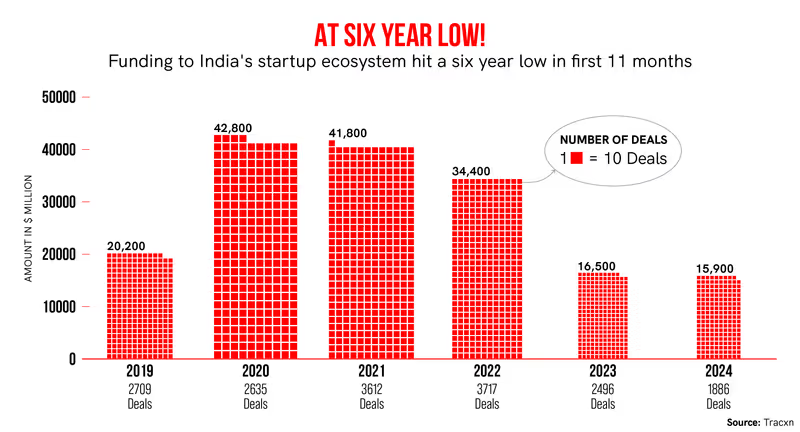
Seed funding in India has recorded multi year growth, reflecting a decade long transformation in the startup ecosystem. Early stage investments are expanding steadily, driven by increased investor participation, government support, and a rising number of first time founders across sectors.
Seed Funding in India Reflects Long Term Ecosystem Maturity
Seed funding in India has evolved significantly over the past ten years, moving from a niche activity to a structured and competitive segment of venture capital. In the early 2010s, access to seed capital was limited, with only a handful of angel networks and venture firms actively investing.
Today, the landscape looks very different. A growing number of institutional investors, micro VCs, and angel platforms are actively backing startups at the idea and prototype stage. This expansion has contributed to consistent growth in seed funding volumes.
The increase in seed investments also signals confidence in India’s entrepreneurial talent. Investors are willing to take early risks in exchange for long term returns, especially in sectors with strong innovation potential.
Venture Capital Expansion Drives Early Stage Investments
Venture capital growth India has played a key role in boosting seed funding activity. Many VC firms have launched dedicated seed funds or early stage programs to capture high potential startups before they scale.
This shift allows investors to enter at lower valuations and support startups through multiple growth stages. It also increases competition among investors, benefiting founders who now have more funding options.
Global investors are also participating in India’s seed ecosystem, attracted by the country’s large market and digital adoption. Their presence has brought in not just capital but also global expertise and networks.
As a result, seed funding has become more structured, with standardized deal terms and clearer expectations from both founders and investors.
Rise of Angel Investors and Micro VC Funds
Angel investors India startups ecosystem has expanded rapidly in the past decade. Successful entrepreneurs and professionals are increasingly investing in early stage startups, contributing to the growth of seed funding.
Platforms like Indian Angel Network have played a significant role in connecting startups with investors. These networks provide not only capital but also mentorship and industry insights.
Micro VC funds are another important development. These funds focus exclusively on early stage investments, filling the gap between angel funding and larger venture capital rounds.
This combination of angel investors and micro VCs has created a more robust funding pipeline for startups at the seed stage.
Government Initiatives Strengthen Seed Funding Ecosystem
Startup India seed funding support has been instrumental in encouraging early stage entrepreneurship. Government programs offer financial assistance, tax benefits, and incubation support to startups.
Initiatives under Startup India aim to reduce barriers for new businesses and promote innovation across sectors. These programs are particularly beneficial for founders in Tier 2 and Tier 3 cities.
Public sector support has also helped attract private investment by reducing perceived risks. When combined with private capital, these initiatives create a strong foundation for early stage growth.
The government’s focus on digital infrastructure and ease of doing business further complements seed funding expansion.
Sectoral Trends in Seed Funding Growth
Seed funding trends India show strong activity in sectors such as fintech, healthtech, SaaS, and deeptech. These sectors are attracting early stage investments due to their scalability and relevance to current market needs.
Fintech startups continue to receive attention due to India’s expanding digital payments ecosystem. Healthtech has gained traction following increased focus on healthcare accessibility and technology integration.
SaaS startups are benefiting from global demand for software solutions, while deeptech companies are attracting investors interested in long term innovation.
This sectoral diversity indicates that seed funding is not limited to a few industries but is spread across multiple areas of opportunity.
Challenges in Sustaining Seed Funding Momentum
Despite strong growth, seed funding in India faces certain challenges. Increased competition among startups can lead to funding fragmentation, where capital is spread across too many ventures without sufficient follow up support.
There is also a risk of overvaluation at the seed stage, which can create difficulties in raising subsequent rounds. Investors are becoming more cautious to avoid such scenarios.
Additionally, while seed funding is growing, access to later stage capital remains uneven. Startups that secure early funding may still struggle to scale if follow on investments are not available.
Addressing these challenges will be important to sustain long term growth in the ecosystem.
What the Next Decade Holds for Seed Funding in India
The future of seed funding in India appears promising but more disciplined. Investors are likely to continue supporting early stage innovation, but with greater focus on business fundamentals and scalability.
The ecosystem is expected to become more decentralized, with increased participation from Tier 2 and Tier 3 cities. Digital platforms and remote investing models will further expand access to capital.
As more successful startups emerge from seed stage investments, confidence in the ecosystem will strengthen. This will create a positive cycle of reinvestment and growth.
India’s seed funding landscape is transitioning from rapid expansion to sustainable development, setting the stage for the next phase of entrepreneurial growth.
Key Takeaways
• Seed funding in India has seen multi year growth driven by ecosystem maturity
• Venture capital firms, angel investors, and micro VCs are expanding early stage investments
• Government initiatives are supporting startup creation and funding access
• Challenges include competition, valuation risks, and gaps in follow on funding
FAQs
What is seed funding in startups?
Seed funding is the initial capital used to develop a startup idea into a viable business, often covering product development and early operations.
Why is seed funding growing in India?
It is driven by increased investor participation, government support, and rising startup activity across sectors.
Who invests in seed stage startups?
Angel investors, micro VC funds, and early stage venture capital firms are the primary investors.
What challenges do seed funded startups face?
They may struggle with scaling, securing follow on funding, and maintaining sustainable growth.











Leave a comment