

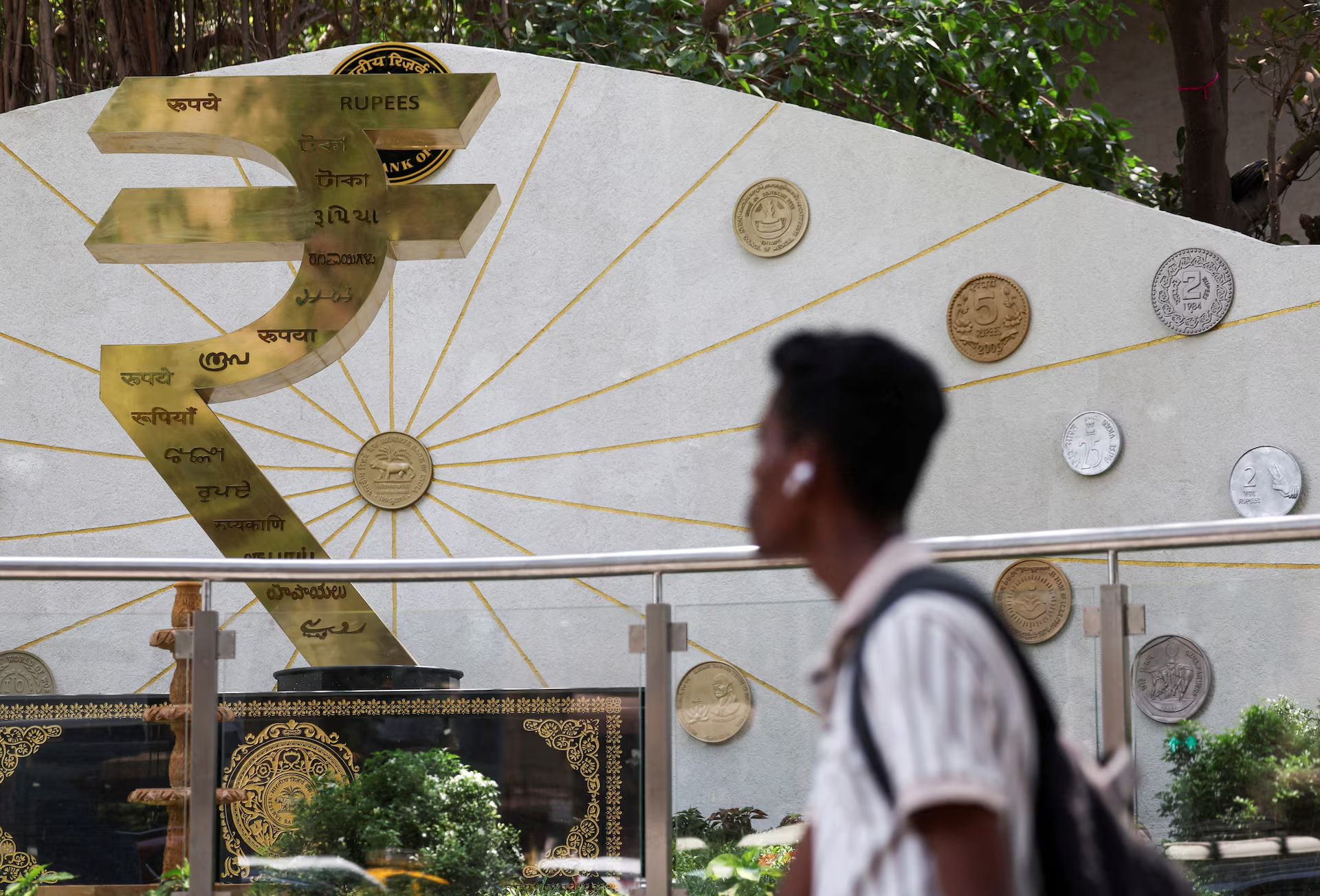
India’s move to cut ultra-long bond supply has become a key financial development at the start of FY26. The decision reflects a strategic shift in government borrowing and signals potential changes in interest rates, bond yields, and overall liquidity conditions in the economy.
India Cuts Ultra-Long Bond Supply in FY26 Borrowing Plan
India cuts ultra-long bond supply as part of its latest borrowing calendar, reducing issuance of securities with maturities of 30 years and above. Instead, the government is increasing its focus on short- and medium-term bonds.
This shift is driven by weak and inconsistent demand for ultra-long securities in recent auctions. Institutional investors such as insurance firms and pension funds typically buy these bonds, but appetite has not been strong enough to absorb large issuances without pushing yields higher.
By reducing supply in this segment, the government aims to avoid upward pressure on long-term yields. This is a tactical move to maintain stability in the bond market while ensuring its borrowing programme remains on track.
Impact on Interest Rates and Yield Curve Dynamics
The decision has direct implications for interest rates in India, especially at the long end of the yield curve. When supply of ultra-long bonds decreases, prices of existing bonds tend to rise, which in turn lowers yields.
This helps stabilise long-term interest rates, which are critical for sectors like infrastructure and housing that rely on long-duration financing. A controlled yield curve also supports better transmission of monetary policy.
At the same time, increased issuance of shorter-duration bonds may lead to slight pressure on yields in the 5 to 15 year segment. However, strong demand from banks and mutual funds is expected to absorb much of this supply.
Overall, the move reflects a calibrated approach to managing interest rate volatility rather than allowing market forces to push yields higher due to excess supply.
Government Borrowing Costs and Fiscal Strategy
Government borrowing costs are closely tied to bond yields. By cutting ultra-long bond supply, India is aiming to optimise its borrowing costs in a high interest rate environment.
Issuing long-term bonds when yields are elevated can lock the government into higher interest payments for decades. By shifting towards shorter maturities, policymakers retain flexibility to refinance debt later if rates soften.
This approach aligns with prudent fiscal management. It balances the need to raise funds with the objective of keeping interest costs under control. However, it also means that refinancing obligations could increase in future years.
The strategy indicates that the government is prioritising cost efficiency and market stability over extending the maturity profile of its debt.
Implications for Banks, Corporates, and Retail Borrowers
The ripple effects of this decision extend beyond the bond market. Banks use government securities as benchmarks for pricing loans, so stable long-term yields can help keep lending rates predictable.
For corporates, especially those in capital-intensive sectors, a stable interest rate environment supports investment planning. Lower volatility in yields reduces uncertainty around project financing costs.
Retail borrowers may not see immediate changes, but over time, home loan and long-term lending rates are influenced by movements in government bond yields. A stable yield environment can prevent sharp increases in borrowing costs.
For savers and fixed income investors, returns on long-term debt instruments may moderate if yields decline due to reduced supply.
Global Factors and RBI Coordination Driving the Move
India’s bond market does not operate in isolation. Global factors such as US interest rates, crude oil prices, and foreign investor flows continue to influence domestic yields.
The decision to cut ultra-long bond supply also reflects coordination with monetary policy. The Reserve Bank of India has been focused on managing inflation while ensuring adequate liquidity in the system.
A balanced issuance strategy helps avoid stress in any particular segment of the yield curve. It also allows policymakers to respond more effectively to external shocks.
This flexibility is critical at a time when global financial conditions remain uncertain and capital flows can shift quickly.
Takeaways
- India has reduced ultra-long bond issuance to manage demand and stabilise yields
- The move is expected to support long-term interest rate stability
- Government borrowing strategy is shifting towards shorter maturities for flexibility
- Impact will be gradual but visible across loans, investments, and financial markets
FAQs
What are ultra-long bonds in India?
Ultra-long bonds are government securities with maturities of 30 years or more.
Why has India reduced their supply?
To prevent high borrowing costs and avoid pushing long-term yields higher due to weak demand.
Will this affect loan interest rates?
Indirectly, yes. Stable bond yields can influence lending rates over time, especially for long-term loans.
Is this a long-term policy change?
It appears to be a tactical adjustment based on current market conditions rather than a permanent shift.












Leave a comment