

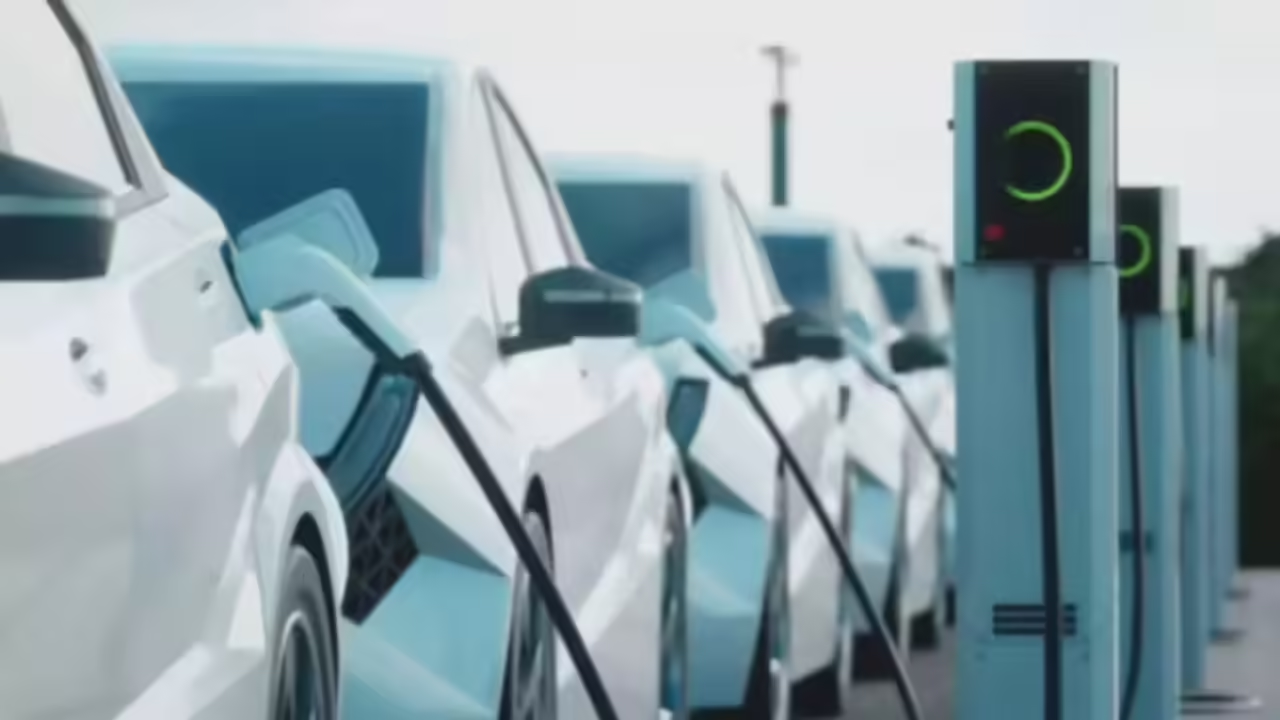
EV adoption in India is expanding beyond metros in 2026, with Tier-2 cities emerging as a major demand driver. Improved affordability, government incentives, and growing charging infrastructure are accelerating electric vehicle penetration in smaller urban markets.
EV adoption in India has moved into a new phase, making this a time-sensitive trend rather than an evergreen shift. While early growth was concentrated in metro cities, recent data from registrations, dealer networks, and financing trends shows clear traction in Tier-2 and Tier-3 regions.
Tier-2 Cities Lead New EV Demand Growth
The expansion of EV adoption in Tier-2 cities is being driven by a combination of economic and practical factors. Unlike metros where EVs are often seen as lifestyle upgrades, buyers in smaller cities are focusing on cost savings and daily utility.
Electric two-wheelers and three-wheelers are leading this growth. These segments cater to commuters, delivery workers, and small business owners who benefit directly from lower running costs compared to petrol or diesel vehicles.
Cities such as Indore, Nagpur, Jaipur, and Coimbatore are witnessing a steady increase in EV registrations. Local dealers are also reporting higher footfall and shorter decision cycles among buyers.
This shift indicates that EV adoption is no longer limited to early adopters but is entering the mass market.
Government Incentives and State EV Policies Support Adoption
One of the key drivers of EV growth in non-metro regions is policy support. Both central and state governments continue to offer subsidies, tax benefits, and incentives under schemes aimed at promoting electric mobility.
State-level EV policies in Maharashtra, Gujarat, and Tamil Nadu provide additional benefits such as road tax exemptions and registration fee waivers. These incentives significantly reduce the upfront cost of EV ownership.
For buyers in Tier-2 cities, where price sensitivity is high, such incentives play a decisive role in purchase decisions.
Additionally, government focus on electrifying public transport and last-mile connectivity is creating awareness and building trust in EV technology.
Charging Infrastructure Expands Beyond Urban Clusters
The availability of charging infrastructure has historically been a barrier to EV adoption. However, this is gradually changing as both public and private players expand charging networks beyond metros.
Oil marketing companies, power utilities, and private startups are setting up charging stations along highways and within smaller cities. Residential charging solutions are also becoming more common.
For two-wheeler and three-wheeler users, home charging remains a practical solution, reducing dependency on public infrastructure.
This expansion is addressing range anxiety, which has been a key concern among potential buyers in non-metro areas.
Lower Running Costs Attract Small Businesses and Individuals
Cost economics remain the strongest driver of EV adoption in Tier-2 markets. Electric vehicles offer significantly lower running costs compared to internal combustion engine vehicles.
For example, delivery operators and small business owners can reduce fuel expenses substantially by switching to electric two-wheelers or cargo three-wheelers.
Maintenance costs are also lower due to fewer moving parts in EVs. This makes them an attractive option for commercial use where vehicles are used extensively.
Financing options tailored for EV buyers are also improving, with NBFCs and fintech lenders offering flexible loan products in smaller cities.
Role of Local Dealerships and Awareness Campaigns
Another important factor in EV growth is the expansion of dealership networks into Tier-2 and Tier-3 cities. Manufacturers are actively increasing their presence in these markets to capture emerging demand.
Test rides, local marketing campaigns, and word-of-mouth recommendations are playing a significant role in influencing purchase decisions.
Awareness about EV benefits, including cost savings and environmental impact, is improving gradually. However, practical considerations such as reliability and service availability remain more important for most buyers.
Brands that invest in after-sales service and local support are likely to gain a competitive advantage in these markets.
Future Outlook for EV Adoption in Non-Metro India
The growth of EV adoption in Tier-2 cities is expected to continue as infrastructure improves and prices become more competitive. Battery costs are gradually declining, which will further reduce vehicle prices over time.
The next phase of growth will likely come from deeper penetration into smaller towns and rural areas. This will depend on continued policy support and infrastructure expansion.
EV adoption in India is transitioning from a metro-driven trend to a nationwide movement, with Tier-2 cities playing a central role in shaping demand.
Takeaways
- EV adoption is तेजी shifting from metros to Tier-2 and Tier-3 cities
- Electric two-wheelers and three-wheelers are leading demand growth
- Lower running costs and government incentives are key drivers
- Charging infrastructure expansion is reducing adoption barriers
FAQs
Why is EV adoption growing in Tier-2 cities?
Lower running costs, government incentives, and improved availability are making EVs more practical for buyers in smaller cities.
Which EV segments are most popular in non-metro areas?
Electric two-wheelers and three-wheelers are seeing the highest adoption due to affordability and utility.
Is charging infrastructure available in Tier-2 cities?
Yes, charging networks are expanding, and home charging solutions are widely used for smaller EVs.
Will EV prices decrease in the future?
Prices are expected to become more competitive as battery costs decline and production scales up.











Leave a comment