

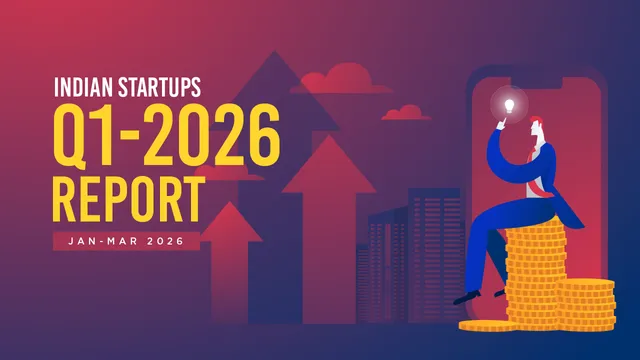
Early-stage vs late-stage funding has become a defining theme in India’s startup ecosystem, with investors increasingly favoring mature companies over new ventures. This shift reflects changing risk appetite, tighter capital conditions, and a stronger focus on profitability.
Early-Stage vs Late-Stage Funding Reflects Investor Priorities
Early-stage vs late-stage funding dynamics in India highlight how investor priorities have evolved in 2026. While funding continues to flow into startups, the distribution of capital has shifted significantly toward later stages.
Late-stage companies with proven business models are attracting larger investments, while early-stage startups face more scrutiny and longer fundraising cycles. This divergence is not accidental. It reflects a broader change in how investors assess risk and returns.
During the previous funding cycle, early-stage investments were abundant due to high liquidity and aggressive growth expectations. Today, the environment is more disciplined, and investors are prioritizing sustainability over rapid expansion.
Why Late-Stage Funding Is Attracting More Capital
Late-stage funding trends in India show that investors are placing bigger bets on companies that have already demonstrated scale and market fit. These startups typically have established revenue streams, strong customer bases, and clearer paths to profitability.
Venture capital firms and private equity investors are increasingly focusing on these opportunities because they offer relatively lower risk compared to early-stage ventures. Companies like Zomato and Nykaa have previously attracted large investments at later stages due to their growth visibility.
Another factor is the potential for exits. Late-stage investments are closer to liquidity events such as IPOs or acquisitions, making them more attractive in uncertain market conditions.
This concentration of capital is helping maintain overall funding volumes even as deal counts decline.
Challenges Facing Early-Stage Startup Funding
Early-stage startup funding in India is facing increased pressure as investors tighten their criteria. Seed and pre-Series A rounds are becoming harder to secure, with more emphasis on product-market fit and early traction.
Founders are expected to demonstrate measurable progress before raising capital. This includes user growth, revenue generation, and clear differentiation in the market.
The availability of capital for early-stage startups has not disappeared, but it has become more selective. Angel investors, micro VCs, and incubators continue to play a role, but funding amounts are often smaller and more conditional.
This environment is forcing early-stage startups to focus on building strong fundamentals before seeking external investment.
Role of Global Economic Conditions in Funding Trends
Global economic factors are influencing early-stage vs late-stage funding decisions. Higher interest rates and tighter liquidity have made investors more cautious, leading to a preference for lower-risk investments.
International investors, who contribute significantly to India’s startup funding, are reallocating capital toward stable opportunities. This has increased the flow of funds into late-stage companies while reducing early-stage deal activity.
Currency fluctuations and geopolitical uncertainties are also affecting investment strategies. In such conditions, investors prioritize capital preservation and predictable returns.
These macroeconomic factors are reinforcing the shift toward late-stage funding dominance.
Sectoral Differences in Investment Allocation
Sectoral trends reveal that both early-stage and late-stage funding are active, but the distribution varies by industry. Fintech, SaaS, and deep tech continue to attract investments across stages due to strong growth potential.
Consumer-focused startups targeting Tier-2 and Tier-3 markets are also receiving attention, particularly at growth stages. Rising consumption in smaller cities makes these businesses attractive for scaling investments.
However, sectors that experienced excessive funding during the boom years are seeing reduced activity, especially at the early stage. Investors are reassessing these segments and focusing on differentiated models.
This selective allocation of capital indicates a more strategic approach to investment.
Impact on Founders and Startup Ecosystem
The shift in early-stage vs late-stage funding has significant implications for founders. Access to capital has become more competitive, requiring stronger preparation and execution.
Early-stage founders need to focus on validating their ideas and achieving traction before approaching investors. This may delay funding but improves the quality of startups entering the ecosystem.
For late-stage companies, the availability of larger investments supports expansion and market leadership. However, it also comes with higher expectations for performance and governance.
Overall, the ecosystem is moving toward maturity, with a greater emphasis on sustainable growth and disciplined investment practices.
What This Means for the Future of Startup Funding
The evolving funding landscape suggests that the gap between early-stage and late-stage investments will continue in the near term. Investors are likely to maintain a cautious approach until global economic conditions stabilize further.
For India, this trend reflects a transition from a high-growth, high-risk funding environment to a more balanced and structured ecosystem. While early-stage innovation may slow down temporarily, the quality of funded startups is expected to improve.
In the long run, a healthier balance between early and late-stage funding will be essential for sustaining innovation and growth.
Key Takeaways
• Late-stage funding is attracting larger investments due to lower risk
• Early-stage startups face stricter evaluation and longer funding cycles
• Global economic conditions are influencing investor preferences
• The ecosystem is shifting toward sustainable and disciplined growth
FAQs
What is the difference between early-stage and late-stage funding?
Early-stage funding supports startups in initial phases, while late-stage funding helps mature companies scale further.
Why are investors favoring late-stage funding?
Late-stage companies offer lower risk and clearer paths to profitability and exits.
Is early-stage funding declining in India?
It is becoming more selective, with stricter criteria and longer fundraising timelines.
Which sectors are attracting funding across stages?
Fintech, SaaS, deep tech, and consumer startups are seeing investment at both early and late stages.










Leave a comment