

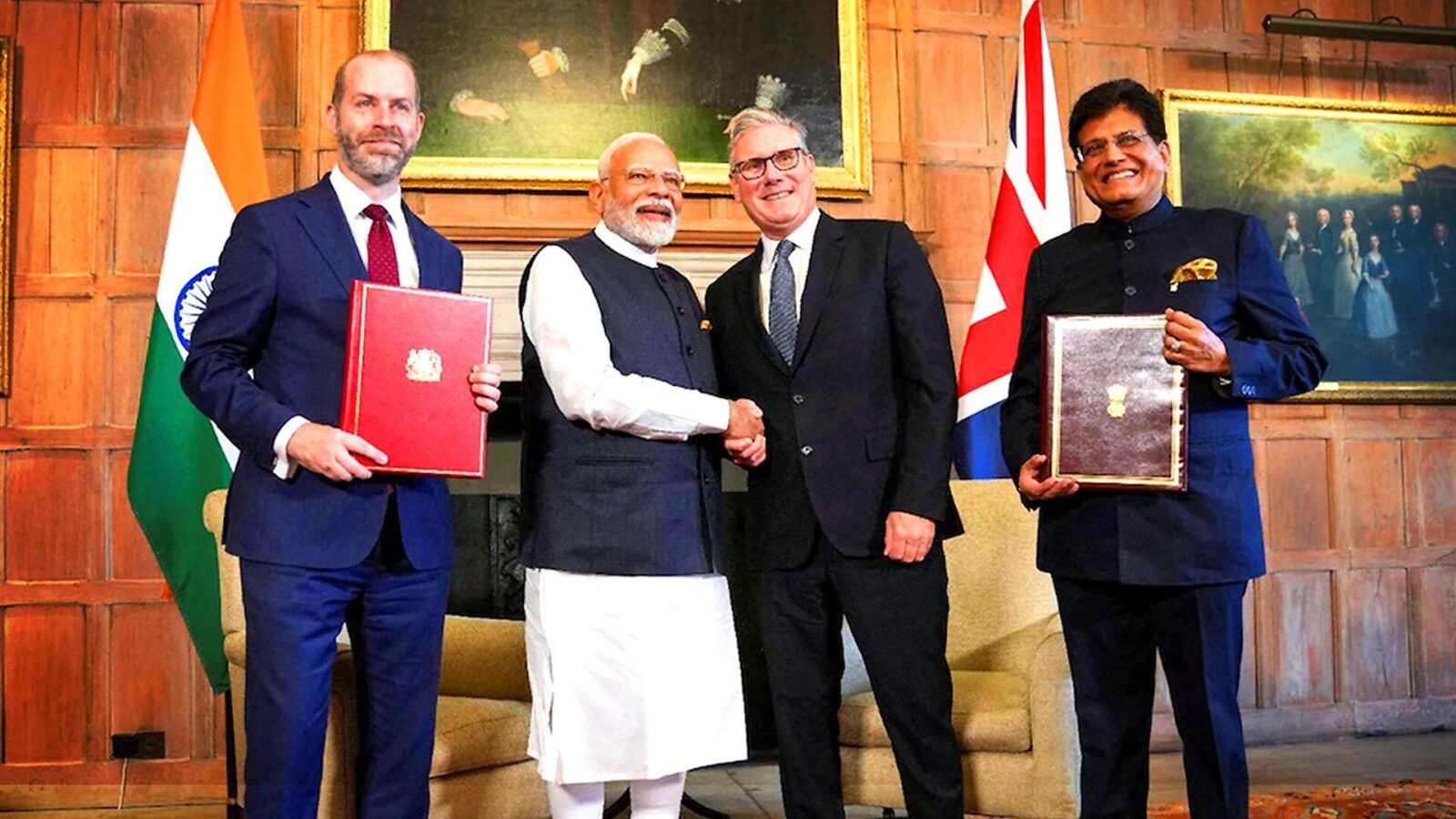
The India-UK Trade Agreement has entered a new phase with the Comprehensive Economic and Trade Agreement (CETA) coming into force on 15 July 2026. For Indian MSMEs and exporters, the agreement brings wider access to the UK market through lower tariffs, improved trade facilitation, and better opportunities across manufacturing, services, agriculture, and technology. While businesses still need to meet quality and compliance requirements, the agreement is expected to strengthen India’s export competitiveness over the coming years.
The India-UK Trade Agreement is expected to become one of the most significant trade milestones for Indian exporters in recent years. With the agreement now operational, businesses ranging from textile manufacturers to engineering companies can benefit from preferential market access to one of India’s largest trading partners. The government has described the agreement as a major step towards expanding exports, attracting investment, and supporting employment across sectors.
India-UK CETA Brings Wider Market Access for Indian Businesses
The Comprehensive Economic and Trade Agreement between India and the United Kingdom officially came into force on 15 July 2026 after years of negotiations. One of its biggest advantages is that nearly 99 percent of India’s exports by value now receive zero-duty access to the UK market. This significantly improves the competitiveness of Indian products against exporters from other countries.
The agreement covers both goods and services. It also includes the Double Contribution Convention, which reduces the burden of dual social security contributions for eligible professionals working temporarily between the two countries. Along with merchandise trade, sectors such as IT services, consulting, education, finance, and professional services are expected to benefit from improved mobility and market access.
Within hours of the agreement becoming effective, exporters across multiple Indian ports dispatched consignments under the new preferential tariff system. According to the Ministry of Commerce, export shipments worth more than 140 million US dollars were flagged off on the first day itself, highlighting strong industry readiness.
What the Agreement Means for MSMEs
Micro, Small and Medium Enterprises account for a significant share of India’s exports. Many of these businesses have traditionally faced challenges because of import duties, pricing pressure, and limited international market access.
The India-UK Trade Agreement reduces one of the biggest barriers by lowering tariffs on eligible products entering the UK. This creates opportunities for MSMEs involved in textiles, leather products, engineering goods, handicrafts, marine products, processed food, chemicals, gems and jewellery, and auto components.
For businesses located in Tier-2 and Tier-3 cities, the agreement could be particularly valuable. Manufacturing clusters in cities such as Surat, Moradabad, Tiruppur, Ludhiana, Kanpur, Rajkot, Coimbatore, Nagpur, Indore and Jaipur may find greater export opportunities if they meet UK quality standards and documentation requirements.
However, lower tariffs alone will not guarantee export success. MSMEs will still need to comply with product standards, rules of origin, packaging norms, sustainability expectations, and customs documentation required by UK authorities.
Key Export Sectors Likely to Benefit
Several labour-intensive industries are expected to gain from the agreement.
The textile and apparel sector could become more competitive because of lower import duties in the UK market. Leather and footwear manufacturers may also benefit through improved pricing compared to global competitors.
India’s gems and jewellery industry has already begun exporting shipments under the new agreement. Engineering goods, pharmaceuticals, chemicals, processed foods, seafood, agricultural products, and machinery manufacturers are also expected to expand exports over time. Industry estimates suggest pharmaceutical exports alone could increase by around 10 percent during FY27 following the implementation of the agreement.
Technology and professional services are another major opportunity. India’s globally competitive IT sector, consulting firms, financial services providers, architects, engineers, and educational institutions may gain from easier business engagement under the services provisions included in the agreement.
Challenges Exporters Should Keep in Mind
Despite the opportunities, exporters should avoid assuming that every shipment automatically qualifies for zero duty.
Businesses must satisfy rules of origin requirements and obtain the necessary certificates through the prescribed export documentation process. They also need to maintain proper product classification and ensure compliance with UK regulations regarding safety, quality, labelling, and environmental standards.
Smaller exporters may require additional support in areas such as digital documentation, export financing, logistics management, and international marketing. Industry experts believe capacity building and awareness programmes will play an important role in helping MSMEs maximise the benefits of the agreement.
Long-Term Impact on India’s Export Economy
The India-UK Trade Agreement represents more than just tariff reductions. It reflects India’s broader strategy of expanding global trade partnerships while strengthening domestic manufacturing under initiatives such as Make in India.
Greater access to the UK market could encourage companies to invest in higher-quality manufacturing, better supply chains, and internationally recognised certifications. Increased exports may also support employment generation across manufacturing hubs, logistics companies, ports, and service providers.
Consumer industries have also indicated that the agreement is unlikely to negatively affect domestic brands. Instead, increased competition may encourage product innovation and higher quality standards within the Indian market.
While the full economic impact will emerge over the next several years, the agreement gives Indian exporters, especially MSMEs, an opportunity to expand beyond traditional markets and strengthen their global presence through improved market access and reduced trade barriers.
Key Takeaways
- India-UK CETA officially came into force on 15 July 2026.
- Nearly 99 percent of India’s exports by value now receive zero-duty access to the UK.
- MSMEs in manufacturing, textiles, engineering, jewellery and food processing stand to benefit significantly.
- Exporters must still comply with rules of origin, quality standards and documentation requirements to claim tariff benefits.
FAQs
Q1. What is the India-UK Trade Agreement?
It is the Comprehensive Economic and Trade Agreement (CETA) between India and the United Kingdom that improves market access through tariff reductions and expanded trade cooperation.
Q2. How does the agreement help Indian MSMEs?
It lowers tariffs on eligible exports, making Indian products more competitive in the UK while creating new opportunities for small manufacturers and exporters.
Q3. Which industries benefit the most?
Textiles, apparel, pharmaceuticals, engineering goods, gems and jewellery, leather products, processed foods, chemicals, IT services and professional services are among the major beneficiaries.
Q4. Can every exporter automatically claim zero duty?
No. Exporters must comply with rules of origin, documentation requirements, and applicable UK regulatory standards before receiving preferential tariff benefits.










Leave a comment