

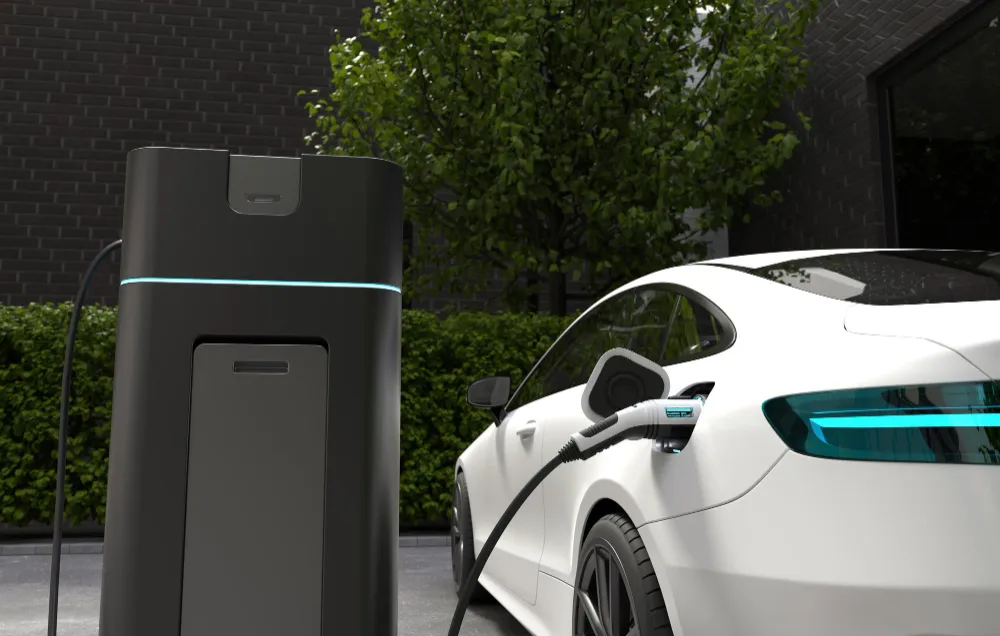
India’s startup funding market remains selective in 2026, but capital continues to move into sectors tied to technology, infrastructure and strategic industries. AI, space tech, electric mobility, deeptech, clean energy and advanced hardware are among the areas attracting continued investor interest.
Startup funding becomes more selective in 2026
India’s startup ecosystem is no longer seeing capital distributed as broadly as it was during the funding boom. Investors are increasingly looking for companies with stronger technology, clearer revenue potential and the ability to build businesses that can scale beyond a single consumer trend.
Data from Inc42 shows that Indian startups raised $5.2 billion across 501 deals in the first half of 2026, a 9% decline in funding from the same period in 2025. At the same time, deal volume increased 7%, while late-stage funding fell 27% to $2.2 billion.
Tracxn data reported by Business Standard presented a different measurement of the broader technology startup ecosystem, putting funding at $7.2 billion across 652 rounds through June 24, up 12% year on year. However, the number of funding rounds fell 43%.
The difference between the datasets reflects different definitions and coverage, but both point to an important trend: investors are becoming more selective about where they deploy capital.
That is helping specialised technology sectors attract attention even while some traditional startup categories face tighter funding conditions.
AI remains one of India’s strongest funding themes
Artificial intelligence has emerged as one of the clearest areas of investor interest in India’s startup ecosystem.
According to Inc42, Indian AI startups raised $676 million across 57 deals in H1 2026, compared with $162 million across 30 deals in H1 2025. That represented a 317% increase in funding and a 90% increase in deal volume.
The interest is not limited to consumer-facing AI applications. Investors are increasingly looking at businesses developing AI infrastructure, enterprise software, specialised models and applications for sectors such as healthcare, finance and industrial operations.
The IndiaAI Mission has also influenced investor thinking around domestic AI development and computing infrastructure. Inc42 reported that a significant proportion of institutional investors surveyed said government initiatives had influenced their AI and deeptech investment theses.
For Indian founders, this creates an opportunity beyond simply building another chatbot. Startups that can solve specific business problems using AI may have a clearer path to enterprise customers and recurring revenue.
Space tech attracts a major funding round
Space technology has moved from being a largely government-led domain to an increasingly important private-sector opportunity in India.
A recent funding round involving Bengaluru-based space startup Pixxel underlines the scale of investor interest. The company raised $100 million in a Series C round led by Temasek and Seraphim Space Investment Trust, according to Reuters. The funding takes Pixxel’s total capital raised to $195 million.
Pixxel is developing satellite systems and Earth-observation technology while expanding its Aurora platform for analysing satellite data. The company plans to use the new capital to expand its satellite constellation and develop additional high-resolution imaging capabilities.
The development comes as India’s private space ecosystem expands following policy changes that opened the sector to private companies.
A recent Jefferies report highlighted space as one of several sectors that could contribute to India’s next industrial investment cycle. The report estimated that India’s space economy could reach $45 billion by 2030 and noted the presence of more than 400 startups in the sector.
The opportunity extends beyond rockets. Satellite manufacturing, Earth observation, communications, geospatial intelligence and space-data applications are creating potential markets for startups.
Electric mobility remains a capital-intensive opportunity
Electric vehicles continue to attract capital, although the sector is also showing investors why scale and execution matter.
Electric motorcycle startup Ultraviolette Automotive announced plans to invest approximately $82 million in a new manufacturing facility in Hosur, Tamil Nadu. The plant is expected to have an initial annual capacity of 250,000 vehicles, with the potential to expand to 500,000.
The company is preparing to move further into the mass-market electric two-wheeler segment, while expanding its product portfolio.
The broader electric two-wheeler market is also becoming more significant. According to data cited by Reuters, India’s electric two-wheeler sales exceeded 1.03 million units during the first eight months of 2026. McKinsey expects electric two-wheelers to account for 40% to 45% of India’s two-wheeler sales by fiscal 2030.
Capital is therefore moving beyond just EV brands. Charging infrastructure, batteries, battery-management systems, power electronics and energy-storage businesses can also benefit as electric mobility expands.
However, recent developments also show that EV funding is not guaranteed. Companies still have to demonstrate demand, manufacturing efficiency and a sustainable path to profitability.
Deeptech and advanced hardware gain investor attention
Deeptech is another area where investors are becoming more comfortable putting money into businesses that require longer development cycles.
Inc42 reported that startups operating in advanced hardware and technology raised $365 million across 66 deals during H1 2026. Funding increased 17% year on year, while deal volume rose 53%.
This category includes technologies that can take years to develop but may eventually create significant competitive advantages.
India’s semiconductor push is also strengthening the broader environment for hardware startups. A recent Jefferies analysis estimated that semiconductor investments in India had crossed $20 billion, with projects involving companies such as Tata Electronics and Micron.
For startups, this can create opportunities in chip design, electronics components, testing, industrial equipment and specialised manufacturing technology.
The shift is important because it represents a move away from a startup economy dominated mainly by digital consumer services toward businesses connected to physical infrastructure and industrial capabilities.
Clean energy and climate tech remain relevant
Clean technology continues to attract capital even as investors become more disciplined.
Inc42’s H1 2026 funding data showed that cleantech startups raised $251 million across 38 deals. Deal volume increased compared with the previous year.
The sector covers a broad range of businesses, including renewable energy, energy storage, electric mobility, waste management, carbon-related technologies and industrial sustainability.
Solar manufacturing is another area gaining strategic importance. Jefferies identified solar manufacturing alongside semiconductors, electronics, space, data centres and aerospace as sectors that could contribute to India’s next industrial expansion.
For startups, the opportunity increasingly lies in solving specific infrastructure problems rather than simply selling a green consumer product.
Battery storage, grid technology and energy-management systems could become particularly important as renewable energy capacity grows.
Data centres and digital infrastructure attract bigger cheques
India’s expanding digital economy is creating another capital-intensive opportunity: data centres.
A Jefferies report cited by Financial Express estimated that India’s data-centre capacity could increase from around 2GW to 10GW over the next five years, representing a potential investment opportunity of about $45 billion.
Although data centres are traditionally associated with large infrastructure companies, the growth of the sector creates opportunities for startups working on cooling systems, energy efficiency, cybersecurity, data management, hardware and specialised software.
The AI boom is also increasing demand for computing infrastructure. AI models require substantial computing capacity, making data centres and related infrastructure strategically important to the wider technology ecosystem.
This is one reason investors are increasingly looking beyond consumer internet businesses and toward the infrastructure supporting India’s digital economy.
Healthtech remains active despite a tougher market
Healthcare technology continues to attract startup capital, although it has not experienced the same funding acceleration as AI.
Inc42’s H1 2026 data showed that healthtech startups raised $247 million across 33 deals.
The sector includes digital healthcare platforms, diagnostics, medical devices and technology-enabled clinical services.
India’s large population and uneven access to specialised healthcare create opportunities for businesses that can improve diagnostics, reduce costs or expand access outside major cities.
This is particularly relevant for Tier-2 and Tier-3 markets, where technology can help connect patients with diagnostics, doctors and specialised healthcare services that may not be readily available locally.
However, healthcare startups also face regulatory and operational challenges that can make the sector different from software-led businesses.
What investors are avoiding is equally important
The sectors receiving capital are only half of the funding story.
Traditional funding leaders have also faced a more cautious environment. Inc42 reported that fintech funding fell 19% year on year to $1.3 billion in H1 2026, while ecommerce funding declined 35% to $779 million.
That does not mean investors have abandoned fintech or ecommerce. Fintech remained the most funded sector by amount in the Inc42 dataset.
The change is more about selectivity.
Investors are increasingly asking whether a company has a strong technology advantage, healthy unit economics, defensible intellectual property, predictable revenue or a path to profitability.
This shift explains why a startup in an emerging sector can attract a large round while another company operating in a much more established category struggles to raise capital.
Tier-2 and Tier-3 India could benefit from the shift
The expansion of capital-intensive sectors could eventually create opportunities outside Bengaluru, Mumbai and Delhi-NCR.
Space companies are already developing in cities such as Hyderabad and Bengaluru, while EV manufacturing is expanding across industrial hubs such as Hosur. Hardware, aerospace, defence and clean-energy businesses can also locate closer to manufacturing clusters, research institutions and supply chains.
This could gradually create a more distributed startup ecosystem.
For Tier-2 and Tier-3 cities, the biggest opportunity may not always be building a consumer internet unicorn. It could involve specialised manufacturing, logistics technology, industrial software, agritech, clean energy or supply-chain businesses solving local problems.
As investors become more focused on real-world applications, startups with strong connections to India’s industrial and infrastructure needs could find a larger opportunity.
The funding market is changing, not disappearing
India’s startup funding environment in 2026 is best described as selective rather than closed.
Capital continues to flow into AI, space technology, EVs, advanced hardware, clean technology, healthcare and digital infrastructure. At the same time, investors are showing greater caution around valuation, late-stage funding and businesses without clear paths to sustainable growth.
The recent $100 million Pixxel round and Ultraviolette’s planned manufacturing investment show how capital is increasingly being deployed toward technology and infrastructure with long-term applications.
For founders, the message is clear. A large market alone may not be enough to attract funding. Investors are increasingly looking for technology, execution, capital efficiency and evidence that a business can build a defensible position.
For India’s startup ecosystem, that could mean fewer speculative bets but more capital going into businesses connected to the country’s next phase of industrial and technological growth.
Takeaways
- AI, space technology, EVs, advanced hardware, clean energy and digital infrastructure remain important areas of investor interest in India.
- Pixxel’s $100 million Series C round highlights growing private investment in India’s space-tech ecosystem.
- Ultraviolette’s planned $82 million manufacturing facility shows continued capital deployment in electric mobility.
- The broader funding market remains selective, with investors increasingly prioritising technology, scalability, capital efficiency and stronger business fundamentals.
FAQs
Which startup sectors are attracting the most investment in India in 2026?
AI is among the fastest-growing funding themes, while fintech remains one of the largest sectors by total funding. Advanced hardware, space technology, EVs, cleantech and digital infrastructure are also attracting significant investor interest.
Is India’s startup funding market growing in 2026?
The answer depends on the dataset and definition used. Tracxn reported $7.2 billion in technology startup funding in H1 2026, up 12% year on year, while Inc42 reported $5.2 billion across the broader Indian startup funding market, down 9%. Both datasets show that investors are becoming more selective.
Why are investors interested in space technology startups?
India’s private space sector has expanded following policy changes that opened the industry to private companies. Startups can now address markets including satellite manufacturing, Earth observation, communications and space-data applications. Pixxel’s recent $100 million funding round is one example of the capital flowing into the sector.
Are EV startups still attracting investors despite funding becoming tighter?
Yes. Electric mobility continues to receive capital, particularly where companies can demonstrate manufacturing scale and consumer demand. Ultraviolette’s planned $82 million manufacturing investment is a recent example. However, EV startups also face intense competition, capital requirements and the need to prove sustainable unit economics.
(Internal keywords: Indian startup funding 2026, startup sectors attracting funding, India startup investment, EV startup funding India, space tech startups India, AI startup funding India, deeptech startups India, cleantech startups India, venture capital India 2026, Indian startup news, space technology funding, electric vehicle startups India, advanced hardware startups, data centre startups India, Tier-2 startup ecosystem India)










Leave a comment