


Deep-tech startups in India are witnessing stronger momentum as government-backed innovation initiatives, improved research funding, and investor interest accelerate growth. From semiconductors and artificial intelligence to space technology and biotechnology, policy support is helping transform research-driven ideas into commercially viable businesses.
India’s deep-tech startups are entering a new phase of growth, supported by a combination of government innovation initiatives, increased venture capital interest, and stronger collaboration between academia and industry. Unlike consumer internet startups, deep-tech companies focus on solving complex scientific and engineering challenges through technologies such as artificial intelligence, robotics, semiconductors, quantum computing, biotechnology, drones, and space technology.
Over the past few years, India’s startup ecosystem has matured significantly. While funding in several consumer-focused sectors has become more selective, investors are increasingly looking toward startups that develop proprietary technologies with long-term commercial potential. Government policies encouraging research, manufacturing, and innovation are reinforcing this shift.
Government Innovation Policies Are Strengthening the Ecosystem
The Indian government has introduced several initiatives aimed at promoting innovation-led entrepreneurship. Programs such as Startup India, Digital India, Atal Innovation Mission, and the National Quantum Mission have helped create an environment where research-driven startups can access incubation, mentorship, grants, and industry partnerships.
The Department for Promotion of Industry and Internal Trade (DPIIT) continues to recognize eligible startups, enabling them to benefit from tax incentives, easier compliance procedures, and access to government-backed support schemes. Meanwhile, institutions including IITs, IISc, and several technology incubators are producing startups focused on advanced engineering and scientific research.
Government support has also expanded through sector-specific policies covering semiconductors, drones, defense technology, electronics manufacturing, and clean energy. These initiatives encourage innovation while reducing India’s dependence on imported technologies.
Deep-Tech Investment Trends Continue to Improve
Investment activity in India’s startup ecosystem has become more disciplined compared to the rapid funding cycle seen a few years ago. Rather than prioritizing fast customer acquisition, investors are placing greater emphasis on technological differentiation, intellectual property, and commercial scalability.
Deep-tech startups typically require longer development timelines because they involve extensive research, product validation, regulatory approvals, and advanced engineering. As a result, investors increasingly evaluate these companies based on technical expertise, patent portfolios, and long-term market opportunities instead of short-term revenue growth.
Venture capital firms, strategic corporate investors, and government-supported funds are showing growing interest in sectors such as artificial intelligence infrastructure, semiconductor design, robotics, aerospace technology, climate technology, cybersecurity, and biotechnology. This reflects increasing confidence that India can build globally competitive technology companies through innovation rather than replication.
Semiconductor and AI Startups Are Emerging as Key Growth Areas
India’s semiconductor ambitions have created fresh opportunities for startups involved in chip design, electronic design automation, advanced manufacturing tools, and semiconductor supply chains. Government incentives aimed at strengthening domestic electronics manufacturing are encouraging entrepreneurs to enter this high-value sector.
Artificial intelligence remains another major growth driver. Indian startups are building AI solutions for healthcare diagnostics, financial services, manufacturing automation, agriculture, logistics, education, and cybersecurity. These applications address both domestic and international markets while solving practical business challenges.
The integration of AI with robotics, industrial automation, and data analytics is also opening opportunities for startups serving small and medium enterprises across Tier-2 and Tier-3 cities, where businesses are increasingly adopting digital technologies to improve productivity.
Research Institutions and Incubators Play a Critical Role
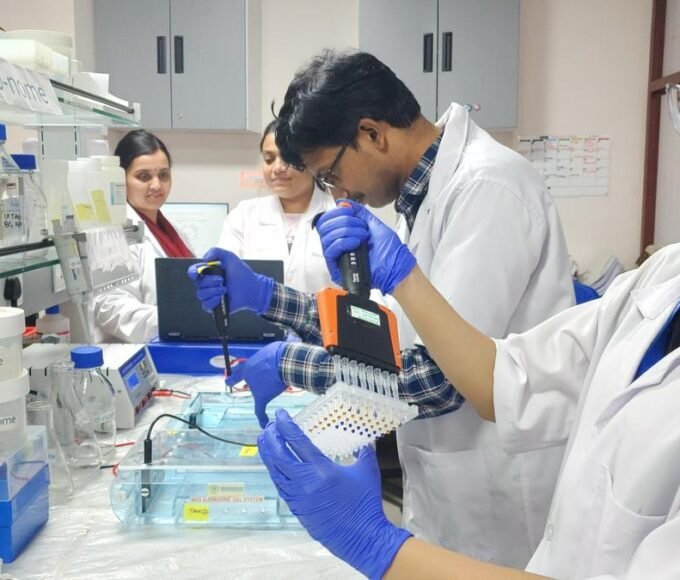
India’s leading educational and research institutions are becoming important contributors to the deep-tech ecosystem. Technology business incubators, university research centers, and innovation labs are helping founders commercialize scientific discoveries through structured mentoring and early-stage funding.
Incubation centers offer startups access to laboratory infrastructure, testing facilities, experienced advisors, and connections with investors. This support reduces barriers that traditionally prevented researchers from transforming laboratory innovations into market-ready products.
Collaboration between academic institutions, industry partners, and government agencies is also improving technology transfer, allowing innovations developed through research to reach commercial markets more efficiently.
Challenges Still Remain for Deep-Tech Entrepreneurs
Despite encouraging progress, deep-tech startups continue to face several obstacles. Research-intensive businesses require larger amounts of patient capital than conventional startups. Product development cycles can extend over several years before commercial revenues begin.
Many startups also face challenges related to regulatory approvals, specialized talent acquisition, advanced manufacturing capabilities, and intellectual property protection. Building globally competitive technology products requires sustained investment in research and development, which increases financial risk during the early stages.
Global competition is another significant challenge. Indian startups compete with companies from established innovation hubs in the United States, Europe, Israel, and East Asia, where deep-tech ecosystems have developed over decades.
Future Outlook for India’s Deep-Tech Economy
India’s long-term outlook for deep-tech innovation appears increasingly positive. Continued government support, improving research infrastructure, rising investor confidence, and expanding industry collaboration are creating favorable conditions for technology-led entrepreneurship.
Emerging sectors such as quantum computing, advanced materials, biotechnology, clean energy, aerospace, defense technology, and next-generation manufacturing are expected to generate significant opportunities over the coming decade.
If policy support continues alongside stronger private-sector investment and research commercialization, India could strengthen its position as a global hub for innovation-driven startups while creating high-value employment and advancing technological self-reliance.
Key Takeaways
- Government initiatives are strengthening India’s deep-tech startup ecosystem through funding, incubation, and policy support.
- Investors are increasingly backing startups with proprietary technology, intellectual property, and long-term growth potential.
- Artificial intelligence, semiconductors, biotechnology, robotics, and space technology remain major growth sectors.
- Continued collaboration between government, academia, investors, and industry will be essential for sustaining India’s deep-tech ambitions.
Frequently Asked Questions
What is a deep-tech startup?
A deep-tech startup develops products based on advanced scientific research or engineering innovations, often involving technologies such as AI, semiconductors, biotechnology, robotics, or quantum computing.
Why are investors focusing on deep-tech startups?
Deep-tech companies typically create proprietary technologies with strong competitive advantages and long-term commercial potential, making them attractive despite longer development cycles.
Which government initiatives support deep-tech startups in India?
Programs including Startup India, Digital India, Atal Innovation Mission, the National Quantum Mission, semiconductor initiatives, and various research incubation schemes support innovation-driven startups.
Which sectors are expected to lead India’s deep-tech growth?
Artificial intelligence, semiconductor technology, biotechnology, defense technology, space technology, robotics, climate technology, and quantum computing are expected to remain among the fastest-growing sectors.










Leave a comment