

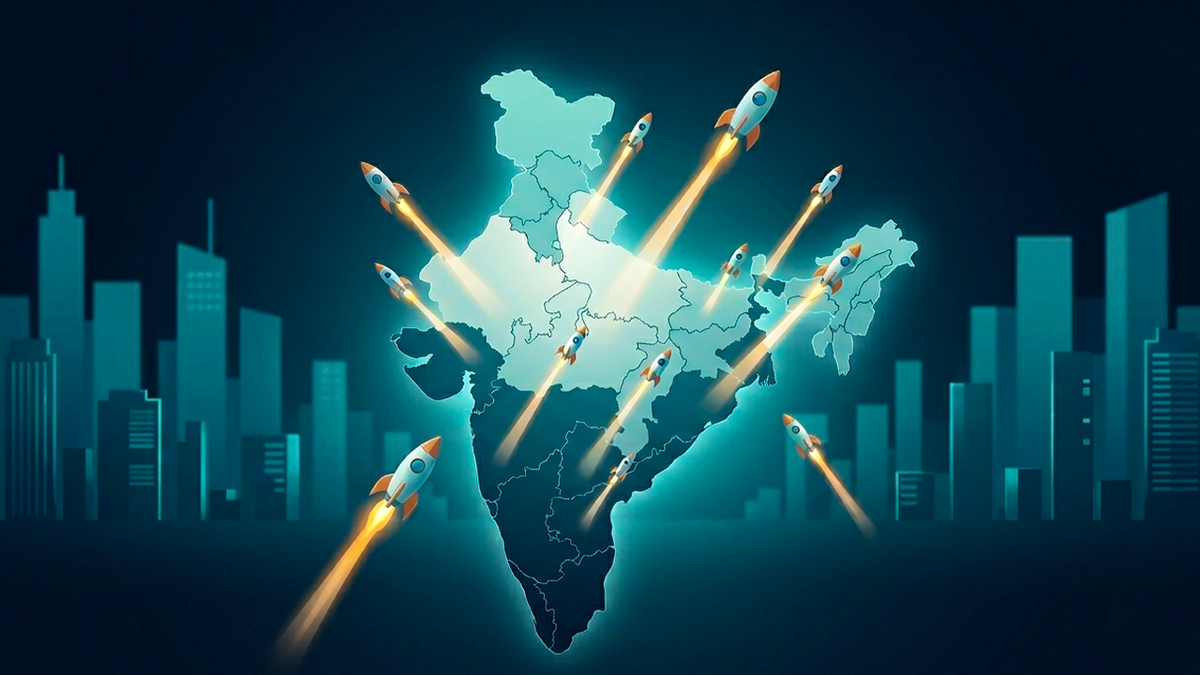
India’s startup ecosystem has reached a new milestone with over 55,000 startups recognised in a single year under the government’s Startup India initiative. The surge highlights rapid entrepreneurial growth, regional expansion, and increasing participation from Tier-2 and Tier-3 cities.
55,000 Startups Recognised Signals Strong Ecosystem Growth
Over 55,000 startups recognised in a year marks a significant expansion of India’s startup ecosystem. The figure reflects official recognition under the Startup India program, which provides benefits such as tax incentives, easier compliance, and access to funding support.
This milestone indicates a sharp rise in entrepreneurial activity across sectors. It also shows how India’s startup landscape has evolved from a metro-centric ecosystem to a more distributed network of innovation.
The increase in recognised startups is not just about numbers. It reflects growing confidence among entrepreneurs, improved access to resources, and a supportive policy environment.
Expansion Beyond Metros Drives Startup Growth
India startup ecosystem growth is increasingly driven by Tier-2 and Tier-3 cities. Regions beyond traditional hubs like Bengaluru and Mumbai are contributing significantly to the surge in recognised startups.
Cities such as Jaipur, Indore, Coimbatore, and Nagpur are emerging as active startup centers. Improved infrastructure, digital connectivity, and access to talent are enabling entrepreneurs to build businesses outside major metros.
This geographic diversification is important for balanced economic development. It ensures that opportunities are spread across regions rather than concentrated in a few urban areas.
Local ecosystems, including incubators and co-working spaces, are supporting this growth by providing resources and mentorship.
Government Policies and Startup India Initiative Impact
Government support has played a crucial role in achieving this milestone. The Startup India initiative has simplified registration processes and reduced regulatory barriers for new businesses.
Startups recognised under the program benefit from tax exemptions, faster patent processing, and access to funding schemes. These incentives lower entry barriers and encourage more individuals to pursue entrepreneurship.
In addition, state governments have launched their own startup policies, offering additional support such as subsidies, grants, and infrastructure development.
This coordinated policy approach has created a favorable environment for startups to emerge and grow.
Sectoral Diversity Strengthens Startup Ecosystem
The growth in recognised startups spans multiple sectors, reflecting the diversity of India’s innovation landscape. Technology-driven sectors such as fintech, SaaS, and artificial intelligence continue to lead.
At the same time, traditional sectors like agriculture, healthcare, and manufacturing are also seeing increased startup activity. This diversification reduces dependence on a few industries and strengthens the overall ecosystem.
Deep-tech and climate-tech startups are gaining traction as India focuses on innovation-driven growth. These sectors require long-term investment but offer significant potential for impact and scalability.
The presence of startups across sectors indicates a mature and evolving ecosystem.
Role of Digital Adoption and Market Demand
Digital adoption in India has been a key driver behind the rise in startups. Increased internet penetration, smartphone usage, and digital payments have created new business opportunities.
Consumers are more open to using online services, which has enabled startups to scale quickly. E-commerce, edtech, fintech, and health-tech platforms have benefited from this shift.
Rising consumption in smaller cities has further expanded market opportunities. Startups are targeting these regions with localized solutions, tapping into unmet demand.
This combination of digital infrastructure and market demand is fueling continuous startup creation.
Challenges Despite Rapid Growth
While the milestone is significant, challenges remain. Access to funding, especially at early stages, continues to be a concern for many startups.
Competition is increasing as more companies enter the market. Startups need to differentiate themselves through innovation and strong execution.
Regulatory compliance, although improved, can still be complex in certain sectors. Additionally, scaling operations and achieving profitability remain key hurdles.
Talent acquisition is another challenge, particularly for startups in specialized fields. Building skilled teams is essential for long-term success.
What This Means for India’s Economic Future
The recognition of over 55,000 startups in a year signals a strong foundation for India’s future economic growth. Startups contribute to job creation, innovation, and increased competitiveness.
The expansion of the ecosystem beyond metros supports inclusive development and reduces regional disparities. It also positions India as a global hub for entrepreneurship.
For investors, the growing number of startups provides a wider pool of opportunities. For policymakers, it highlights the importance of sustaining support mechanisms.
The milestone reflects not just growth but also the potential for long-term transformation.
Key Takeaways
• Over 55,000 startups were recognised in a single year under Startup India
• Tier-2 and Tier-3 cities are driving much of the ecosystem’s expansion
• Government policies and digital adoption are key growth enablers
• Challenges include funding access, competition, and talent acquisition
FAQs
What does it mean for a startup to be recognised?
Recognition under Startup India provides benefits such as tax incentives, easier compliance, and access to funding support.
Why are smaller cities contributing to startup growth?
Improved infrastructure, digital access, and local opportunities are encouraging entrepreneurship in these regions.
Which sectors are seeing the most startup activity?
Technology sectors like fintech and SaaS lead, but agriculture, healthcare, and manufacturing are also growing.
What challenges do startups face despite this growth?
Funding access, competition, regulatory requirements, and talent acquisition remain key challenges.











Leave a comment