

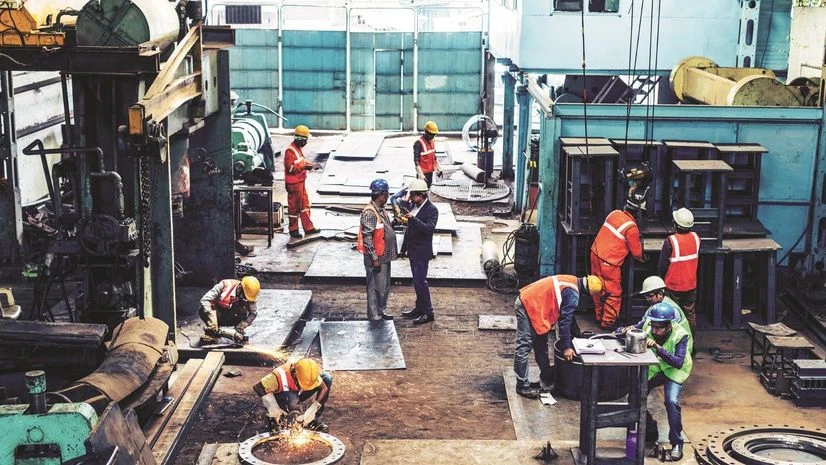
The Indian manufacturing outlook 2026 is strengthening as domestic demand, export recovery and supply chain localisation gain momentum. The main keyword Indian manufacturing outlook 2026 signals a forward looking economic trend, making this topic informational with a news linked tone. Small and medium enterprises in Tier 2 towns are now evaluating whether they can capture this rebound and participate in the next phase of industrial expansion.
Manufacturing is entering a period of steady growth and the role of regional SMEs is expected to become more central as supply chains diversify beyond major metros.
Growth drivers shaping the Indian manufacturing outlook 2026
The Indian manufacturing outlook 2026 is supported by rising capital expenditure, production linked incentives, strong domestic consumption and a steady shift towards indigenous production. These factors are strengthening order pipelines for both large manufacturers and smaller suppliers. Many global companies operating in India are increasing local sourcing to reduce dependency on foreign inputs.
With the government improving logistics connectivity and industrial infrastructure, Tier 2 towns are emerging as viable extensions of national supply chains. Connectivity through dedicated freight corridors, regional airports and improved highways has reduced the cost disadvantages that smaller cities once faced. As manufacturing expands, the availability of skilled labour in Tier 2 towns is becoming a competitive advantage because operating costs remain lower than metro industrial clusters.
Can SMEs in Tier 2 towns scale with new demand
The core question for SMEs in Tier 2 towns is whether they can scale effectively to meet the rising demand in 2026. SMEs in industrial hubs such as Coimbatore, Rajkot, Indore, Aurangabad, Ludhiana and Surat already play a crucial role in machinery, textiles, auto components and engineering goods. Their challenge is not demand but capacity. Many small manufacturers operate with legacy equipment and limited automation, which restricts volumes and quality consistency.
However, the increasing availability of affordable automation tools, access to cloud based systems and government schemes for technology upgrades are helping SMEs modernise. Banks and specialised financial institutions are also offering targeted credit for capital expansion. This environment creates an opportunity for Tier 2 SMEs to scale production and move up the value chain. The willingness to invest in machinery, skill development and compliance will determine how many small manufacturers can convert the rebound into long term growth.
Supply chain localisation and the advantage for regional clusters
Supply chain localisation is accelerating as companies work to reduce import dependency. This shift opens significant space for Tier 2 SMEs that specialise in niche components or labour intensive processes. Regional clusters in states like Tamil Nadu, Gujarat, Maharashtra and Punjab can integrate more deeply with national and global supply networks if they meet quality and delivery standards consistently.
Large companies are increasingly seeking suppliers who can provide flexible production and faster turnaround. Tier 2 clusters offer both these advantages because they operate with shorter decision cycles and lower fixed costs. Many SMEs have already adopted quality certifications to meet global requirements. If the adoption of standards continues, these manufacturers can secure longer term contracts and stable order flows. This can transform regional manufacturing ecosystems and strengthen India’s position in diversified global supply chains.
Challenges that SMEs must overcome to catch the rebound
Despite the positive trajectory, SMEs face several structural challenges. Access to affordable credit remains limited because many lenders perceive small manufacturers as higher risk. Technology adoption is uneven, and a large section of SMEs still rely on manual processes that are not aligned with modern production standards.
Skilled labour availability is improving in Tier 2 towns but retention is an issue because workers often migrate for higher wages. Compliance requirements in areas such as safety, environmental norms and documentation create additional workload for small businesses that operate with limited managerial capacity.
Overcoming these challenges will require policy support, targeted training programs and stronger collaboration between industry bodies and local governments. SMEs that invest in technology, quality and workforce capabilities will be in the best position to benefit from the 2026 manufacturing rebound.
Takeaways
Indian manufacturing is entering a steady expansion phase supported by policy and demand.
Tier 2 SMEs can scale if they invest in automation, quality and skilled labour.
Supply chain localisation offers long term opportunities for regional clusters.
Credit access, compliance and technology gaps remain key hurdles for small manufacturers.
FAQs
Why is the manufacturing outlook stronger for 2026
A combination of higher capital expenditure, production linked incentives, domestic demand and supply chain diversification is improving the growth trajectory for manufacturing.
Which Tier 2 towns are best positioned to benefit
Coimbatore, Rajkot, Surat, Indore, Ludhiana and Aurangabad have strong manufacturing bases and are expanding into engineering, machinery and auto component segments.
What capabilities do SMEs need to expand in 2026
They need upgraded machinery, improved process automation, quality certifications and skilled labour to meet rising demand and secure long term contracts.
Is supply chain localisation a significant opportunity for SMEs
Yes. As companies reduce import dependency, they are seeking reliable local suppliers. SMEs that meet quality and delivery standards can capture a larger share of national supply chains.












Leave a comment