

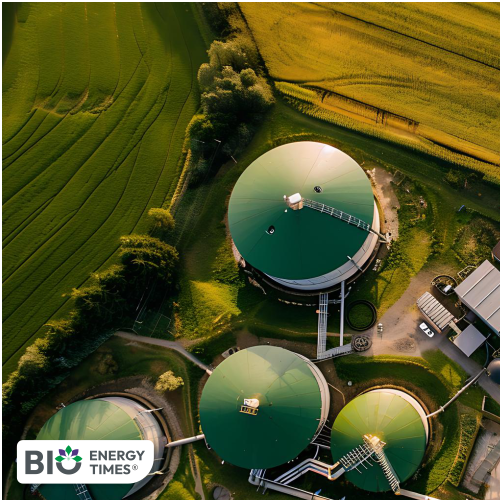
GPS Renewables has raised ₹635 crore in a fresh funding round, highlighting growing investor confidence in India’s compressed biogas (CBG) industry. The investment comes as the country accelerates efforts to reduce fossil fuel dependence, strengthen energy security, and expand renewable fuel infrastructure.
GPS Renewables Secures Major Funding Round
GPS Renewables has raised ₹635 crore in a significant funding round, marking one of the notable investments in India’s clean energy and biofuel sector in recent months. The fresh capital is expected to support the company’s expansion plans, strengthen its compressed biogas infrastructure, and accelerate the development of new projects across the country.
The funding reflects increasing investor interest in businesses working at the intersection of renewable energy, waste management, and sustainable transportation. As India continues to push for cleaner fuel alternatives, companies involved in producing and distributing compressed biogas are attracting attention from both strategic and financial investors.
The latest investment also underscores the belief that biofuels could become an important component of India’s long-term energy transition strategy.
Why Compressed Biogas Is Becoming a Key Renewable Fuel
Compressed biogas, often referred to as CBG, is produced by processing organic waste such as agricultural residue, municipal waste, food waste, and animal waste. After purification, the gas can be used in a manner similar to compressed natural gas (CNG).
The appeal of compressed biogas lies in its ability to address multiple challenges simultaneously. It helps manage waste, reduces greenhouse gas emissions, creates rural economic opportunities, and contributes to domestic energy production.
India generates large volumes of agricultural and organic waste every year. Converting this waste into fuel offers a practical solution that supports both environmental and economic goals. As a result, policymakers and investors increasingly view CBG as a scalable renewable energy source.
The sector has also received support through government initiatives aimed at promoting biofuels and reducing reliance on imported fossil fuels.
Investor Confidence Driven by Long-Term Industry Potential
One of the primary reasons investors are backing companies such as GPS Renewables is the long-term growth potential of the compressed biogas market.
India’s rising energy demand, combined with commitments to cleaner energy adoption, has created favorable conditions for alternative fuel technologies. Industry participants expect demand for sustainable transportation fuels to increase over the coming decade.
Investors are also attracted by the sector’s diversified revenue opportunities. CBG projects can generate income through fuel sales, waste processing services, carbon reduction benefits, and by-products such as organic fertilizers.
The sector benefits from strong alignment with several national priorities, including rural development, circular economy initiatives, waste-to-wealth programs, and energy independence. This alignment reduces policy uncertainty and makes long-term investments more attractive.
GPS Renewables and India’s Biofuel Expansion Strategy
GPS Renewables has emerged as one of the companies actively building infrastructure in India’s renewable gas ecosystem. The company has focused on developing technologies and facilities that convert organic waste into usable fuel.
The latest funding is expected to help scale production capacity, improve project execution, and support future expansion opportunities. As more compressed biogas plants become operational, industry stakeholders anticipate stronger supply networks and broader market adoption.
The company’s growth also reflects a wider trend within India’s clean energy sector. While solar and wind energy continue to dominate renewable investments, bioenergy and waste-to-energy projects are increasingly gaining relevance because they solve multiple infrastructure challenges simultaneously.
Industry experts believe that a mature compressed biogas ecosystem could play an important role in supporting transportation, industrial fuel requirements, and rural economic development.
What This Means for India’s Renewable Energy Future
The ₹635 crore investment in GPS Renewables sends a broader signal about the direction of clean energy investments in India. Investors are no longer focusing solely on traditional renewable technologies. Increasing attention is being given to solutions that combine sustainability, waste management, and energy production.
Compressed biogas infrastructure remains in a relatively early stage compared with other renewable energy segments. However, rising policy support, technological improvements, and growing commercial demand are creating favorable conditions for expansion.
For India, the development of a strong CBG ecosystem could contribute to cleaner cities, better waste management practices, reduced fuel imports, and new employment opportunities across rural regions.
As a result, investments such as the one received by GPS Renewables are being viewed not only as company-specific milestones but also as indicators of broader confidence in the future of India’s biofuel economy.
Key Takeaways
- GPS Renewables has raised ₹635 crore to expand its compressed biogas business.
- Investors see strong long-term potential in India’s renewable gas and biofuel sector.
- Compressed biogas helps address waste management, energy security, and sustainability goals.
- Growing policy support and rising demand are driving increased investment in CBG infrastructure.
Frequently Asked Questions
What is compressed biogas (CBG)?
Compressed biogas is a renewable fuel produced from organic waste after purification. It can be used similarly to compressed natural gas for transportation and industrial applications.
Why are investors interested in the CBG sector?
Investors see long-term growth opportunities due to rising energy demand, government support, waste management needs, and the push toward cleaner fuels.
How will GPS Renewables use the new funding?
The company is expected to use the capital to expand infrastructure, increase production capacity, and accelerate the development of compressed biogas projects.
How does compressed biogas benefit India?
CBG supports cleaner energy production, reduces waste, lowers emissions, creates rural employment opportunities, and helps reduce dependence on imported fuels.
(Internal Keywords: GPS Renewables funding, compressed biogas infrastructure, CBG sector India, renewable energy investment, biofuel industry India, waste to energy projects, clean energy startup funding, sustainable fuel market, biogas plant expansion, renewable gas sector)












Leave a comment